bam Demanding level

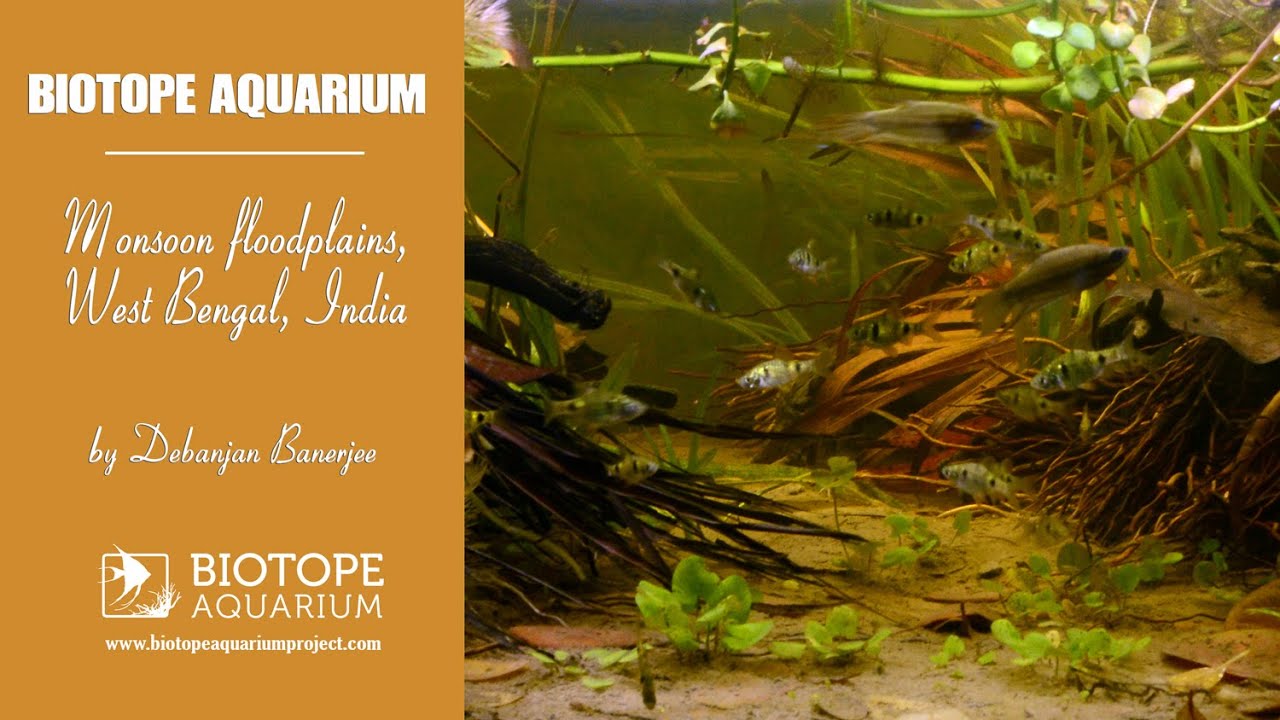
Monsoon floodplains, West Bengal, India

Sponsored by

India, West Bengal, Kolkata

The biotope aquarium which has been made influenced by the seasonal submerged and rapid growth of aquatic plants has inspired me a lot to conserve and understand the local habitat.

I got motivated by the way the plants change themselves from emersed to submerged during the months from July to october. Also the ecological threat has inspired me to made an aquarium so that the future generaions can know what they are loosing gradually on a vast scale.

Keeping this in mind I have tried to imitate the habitat into a glassbox using mudclay soil as a substrate and have put two big driftwoods on both sides to create a major shadowy part so that fishes can feel a lot safe on the shades.

I think this is the most satisfying thing to do to provide a darker zone so that my presense on the aquarium does not freak them out as in the wild. I have also added banyan tree roots called prop roots two decor in the hollow parts of the driftwood to creatre a much more dense safer hide out for the fishes.

Submitted by
Debanjan Banerjee
Approved by
Friedrich Bitter & Sujoy Banerjee
GPS
22.5749454, 88.3605652
Geographical region
Southern Asia
Drainage Basin
Ganges River basin
River catchment
Hooghly iver
Water body type
Pond
Water body name
Monsoon Marshes
Water body part
Marsh land
Water body course
Water body: tributary of
Tributary name

Videos above and below water
Water Chemistry

Water information

Water type
fresh-water
Water color
Clear water
Water transparency
Medium
Concentration of sediments
Low
Water temperature
29 °C
Water flow/curent
Slow

Chemical parameters

pH
8.0
Conductivity
2
GH
142 mg/l
KH
6 mg/l
Dissolved Oxygen
8 %

Aquarium information

Aquarium description

Set-up date
March, 2023
Aquarium decoration

I have purchased a bag of River Ganges clay as substrate and have added water to sink in all the suspended clay particles till the water gets clear. After that two spiderwood driftwoods were added to the aquarium as a hideout zone for the fishes.

Also couple days later I have added Betel nut leaves on both sides of the hardscape to give it a natural look. Also to give the substrate a rugged look I have added Banyan tree roots and let them rot in the water so the substrate may not look just made out of sheer soil and plants. Those prop roots eventually melted and got part of the ecosystem. The melted root looks gave an additional wild ambience to the tank.

After 2 months I started to add some leaves above the substrate layer to give my biotope aquarium an ultimate ambience. In the meantime before adding the fish dried up banana leaves have been added in the backside of the aquarium because banana leaves have antimicrobial, antiulcerogenic and antioxidant properties.

Aquarium equipment

For the filtration of the biotope aquarium a single SUNSUN HBL 803 6W 500L/H hang on back filter was active 24/7. The inside of the filter contained two layers of aquarium filter floss and 3 layers of Seachem Matrix biological filtration pumice stones.

Fish care

To recreate the ideal healthy habitat for my fish I have added Water Lettuce or Pistia sp. to cover up some of the surface area to cover up the extra light to reach the bottom of the tank.

Also the hardscape was built in a manner to reduce the territorial aggresion of some fish species and provide shelter at night. I have feed them mostly tubifex worms, mosquito larvae and mosquito because most of the fishes were wild caught and they are not habituated with packaged foods. Also the vallisneria in the tank was grown in bulk to reduce the water current so fishes can be less stressed after the photo period.

Fishlist:

  • Pethia phutunio (Cyprinidae) – 20
  • Badis badis (Badidae) – 2
  • Macrognathus pancalus (Mastacembelidae) – 2
  • Trichopsis vittata (Osphronemidae) – 2

Molluscs:

  • Planorbarius corneus (Planorbarius ) – 14
Plant care

All of the aquatic plants that has been used in the biotope aquarium does not need fertilization or Carbon dioxide charge. A photo period of 8 hours daily was enough for them to thrive on the rich nutrient filled clay soil.

Plant list:

  • Vallisneria natans (Hydrocharitaceae)
  • Nymphaea nouchali (Nymphaeaceae)
  • Eleocharis palustris (Cyperaceae)
  • Sagittaria natans (Alismataceae)
  • Ceratophyllum demersum (Ceratophyllaceae)
Water care

The water of the aquarium has been changed 50% every week. After the changing of water, required amount of bacteria was added to the tank untill its matured enough. Also the filter of the aquarium has been cleaned once in a month. The front glasses of the aquarium has been scraped because of green dust algae and clay spores.

Dimensions

Length
90 cm
Depth
60 cm
High
25.4 cm
Volume
135 L

Substrate in aquarium

Sand
None
Pebble/Gravel
None
Stone
None
Stone form
Silt/Mud
Grey
Leaves
Many
Driftwood
Few
Submerged terrestrial vegetation
Yes

Bibliography

  • Agricultural and Ecological Research Unit, Indian Statistical Institute, 203 B.T. Road, Kolkata 700 108, India - AQUATIC FLORA IN TWO INDIAN PONDS NEAR KOLKATA, WEST BENGAL: IMPLICATIONS FOR CONSERVATION by GAUTAM MUKHOPADHYAY, SOURAV SENGUPTA AND ANJANA DEWANJI
  • entomoljournal.com - Freshwater fish diversity of West Bengal by HS Mogalekar, J Canciyal, CP Ansar, D Bhakta, I Biswas and Deepak Kumar

Comment by the expert

Friedrich Bitter: The realisation in the aquarium is worth seeing and very harmonious.

Sujoy Banerjee: Well researched balanced tank has the right plants and fishes. Can add some coconut shells or pebbles forming a hiding place (cave) for the Badis to hide and spawn. Adding a few shrimps will be beneficial in providing natural food to the fish (shrimplets). A well made biotope tank.