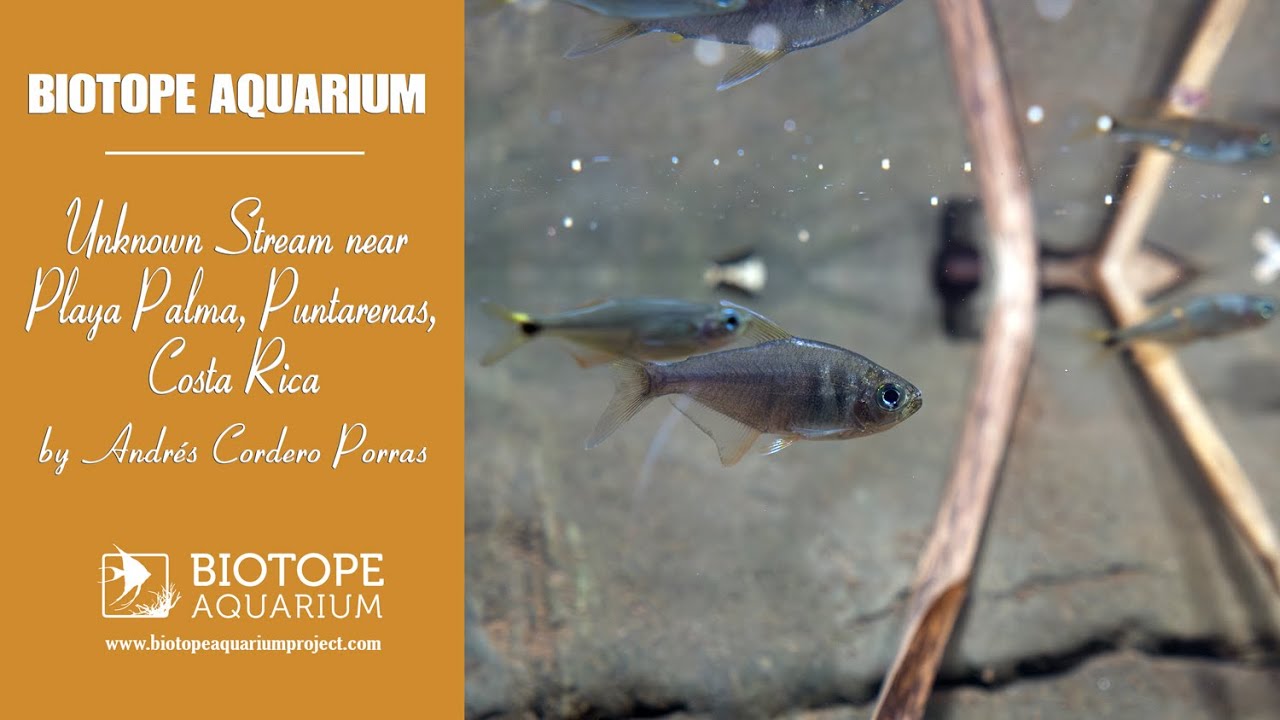
Parrita, in Costa Rica’s central Pacific region, an area known for both its rich biodiversity and increasing anthropogenic pressure. Parrita is one of the most developed zones in the country for the African oil palm industry (Elaeis guineensis), with vast monoculture plantations replacing native forests. This agricultural expansion has resulted in widespread deforestation, contributing to habitat fragmentation and placing significant pressure on the region’s rivers and small freshwater systems.
In addition to agriculture, the area surrounding Palma Beach, Palo Seco Beach, and Bejuco Beach is experiencing rapid urban and touristic development. Forests are being cleared not only for crops but also to build homes, roads, and tourist infrastructure. The unnamed stream where this biotope was documented is a clear example of this impact: it is crossed by a paved road and partially piped underground, which alters its natural flow and reduces its ecological function.
Despite this transformation, the Parrita region remains highly biodiverse, home to a wide range of species. In the surrounding landscape, it is common to observe birds such as the Mangrove Warbler (Setophaga petechia castaneiceps), the Northern Jacana (Jacana spinosa), and the Gray-capped Flycatcher (Myiozetetes granadensis), which still find refuge in remaining patches of riparian vegetation. However, protection and conservation efforts for small streams like this one remain very limited, and most of these microhabitats are unprotected, poorly monitored, and highly vulnerable to further degradation.
The climate in this region is humid and tropical, with average annual temperatures ranging from 26 to 28°C. The rainy season typically extends from May to November, with the dry season occurring between December and April. Annual rainfall is high, usually between 3.500 and 4.000 mm, with the most intense precipitation in September and October. These seasonal shifts influence the hydrology of the region’s streams, many of which become completely dry during the dry season, leaving only small isolated pools as critical refuges for aquatic life.
The underwater habitat in this biotope is very shallow, with only about 10-15cm of water. The streambed is composed of numerous rounded stones, abundant submerged vegetation, sand, and a significant amount of detritus. During the rainy season, rivers in this region are typically fast-flowing with clear waters, a common characteristic of streams in the central Pacific of Costa Rica.
However, in this particular case, the river was found completely dry, with only scattered pools remaining. The exposed bed consisted of large rocks, a compact and structured bottom, and plenty of organic matter, especially leaf litter, highlighting the seasonal transformation of the habitat.
Fish list:
- Pterobrycon myrnae (Characidae)
- Brachyrhaphis terrabensis (Poeciliidae)
Terrestrial vegetation list:
- Bactris major (Arecaceae)
- Pennisetum purpureum (Poaceae)
This type of environment holds exceptional ecological importance, supporting species such as the Semaphore Tetra (Pterobrycon myrnae), which gained some recognition after appearing on the cover of William Bussing’s Freshwater Fishes of Costa Rica. Despite this visibility, both the species and its habitat remain largely overlooked and receive little to no formal protection.
One of the most critical threats to these ecosystems is the widespread and accelerating loss of natural habitats, driven by the rapid expansion of African oil palm (Elaeis guineensis) plantations, residential development, and road construction. The oil palm industry has dramatically reshaped Costa Rica’s central Pacific lowlands and now occupies much of the range where Pterobrycon myrnae occurs. Although there are no plantations immediately adjacent to this biotope site, they begin just a short distance downstream and extend across nearly the species’ entire known distribution.
Among the most pressing ecological pressures are large-scale agriculture, urban sprawl, and expanding road infrastructure. In the case of Pterobrycon myrnae, the transformation of its surrounding landscape into monocultures presents a major threat to its survival. These land-use changes lead to habitat fragmentation, declining water quality, and a significant reduction in suitable microhabitats.
Another serious concern is the impact of the Inter-American Highway, which cuts across this region and intersects numerous small streams, including the one at this biotope. In many instances, these streams are channelized or diverted through culverts and pipes, severely disrupting natural hydrological flow and connectivity. This fragmentation restricts water movement, isolates populations, and drastically reduces available habitat – an especially critical issue for a species with such a narrow and fragmented distribution.
These threats are further compounded by a lack of research, monitoring, and conservation focus on small streams in Costa Rica. While larger rivers often benefit from protective policies due to their recognized economic and ecological value – such as for ecotourism, fisheries, or water supply – small, unnamed watercourses like this one are frequently ignored, lacking both formal protection and regular ecological assessments.
The Semaphore Tetra inhabits shallow creeks with low to moderate flow, typically characterized by dense leaf litter, organic detritus, and submerged vegetation. It is an insectivorous species, and its reproductive behavior is highly unusual among characins. According to Bussing, Pterobrycon myrnae likely practices internal fertilization—a rare trait within the Characidae family – although this reproductive strategy remains poorly studied and not yet fully understood.
Since 2020, Pterobrycon myrnae has been classified as Endangered (EN) on the IUCN Red List, primarily due to its restricted range and ongoing habitat degradation. It is found only along a limited stretch of Costa Rica’s Pacific slope, from the Jicote River basin near Esterillos to the Esquinas River in the Osa Peninsula. It is the only representative of its genus known to occur so far from the Amazon Basin in Colombia, underscoring its high degree of endemism and urgent conservation priority.
This species occurs at elevations between 8-10m above sea level – a range that overlaps directly with areas heavily affected by agriculture and infrastructure. Though modest in size, these lowland stream habitats are micro-ecosystems of exceptional ecological value. Yet they continue to disappear – unrecognized, unprotected, and largely unstudied.