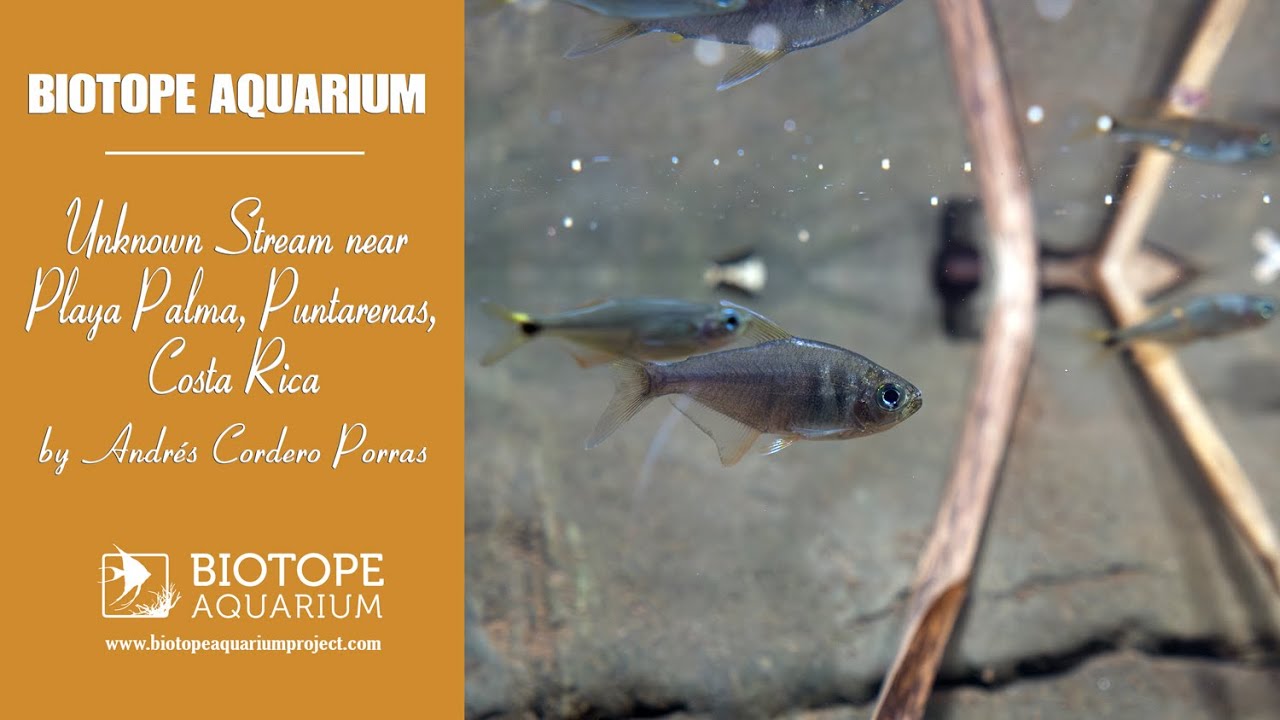
- Set-up date
- May, 2025
- Aquarium decoration
The stones chosen for this aquarium are large, intended to represent the rocky walls found in the natural river habitat, where the water has almost completely dried up, leaving only a small remaining pool. Stones of various colors were used to recreate the diversity of this rock-dominated ecosystem. Each stone is carefully positioned so that one half remains submerged while the other is exposed – just as observed in the actual environment.
Within the water, different types of leaves have been added to simulate the accumulation of organic matter naturally present in the habitat. Over time, these decompose into detritus. As Bussing noted, these fish are insectivores, so the aquascape includes open areas to allow for naturalistic foraging behavior, mimicking how they hunt insects in the wild. In captivity, their diet consists primarily of floating pellets, and the setup is designed to reflect the static, shallow pool conditions typical of the dry season.
The scene is crafted to appear still, with no visible water movement, while ensuring sufficient circulation to maintain proper oxygenation – crucial for this highly active species. A strong light source illuminates the substrate but is angled to avoid direct contact with the water. Instead, it produces a backlit effect reminiscent of sunlight filtering through layers of falling leaves in the wild. This play of shadows and diffused light creates a richly textured underwater landscape, where leaves and stones form pathways for the tetras to navigate, echoing the serene, intricate beauty of their natural habitat.
- Aquarium equipment
Filtration:
Aquael Ultramax 2000 external filter, equipped with the standard filter media supplied by the manufacturer.
A protective sponge is used as a pre-filter to prevent small fish from being drawn into the intake, as the species housed in this aquarium are particularly small.
Lighting:
Two 35-watt LED floodlights
Color temperature: 6500 Kelvin
Heating:
Eheim 300-watt thermostat heater
- Fish care
The care of these fish is relatively straightforward but requires careful attention to their natural behavior and dietary needs. These insectivorous species feed primarily at the surface and in the midwater column. Since they are not well-adapted to foraging on the substrate, their diet should consist of floating or slow-sinking pellets, as well as frozen foods like bloodworms or daphnia that remain suspended long enough to be captured. A protein-rich diet is essential, closely replicating the abundance of invertebrates they would consume in the wild.
Territoriality, particularly among males, is a defining aspect of their behavior. To minimize constant aggression, the aquarium layout includes open swimming areas interspersed with natural visual barriers such as large rocks and layers of leaf litter. These features create both physical and visual separation, allowing each male to establish and defend its own territory. At the same time, the environment provides ample shelter and shaded zones, mirroring the structural complexity of their native habitat and fostering a sense of security.
Fishes:
- Pterobrycon myrnae (Characidae)
- Plant care
- Water care
Maintaining high water quality in this biotope aquarium is essential, particularly due to the substantial amount of organic matter from decomposing leaf litter. Weekly water changes are performed to manage tannin accumulation. Although tannins are present in significant quantities, they are not visually dominant in this setup. These regular changes help maintain crystal-clear water, preserving the aesthetic of a shallow, pristine pool while supporting a healthy biological balance.
Leaf litter is intentionally left undisturbed during substrate maintenance, as the gradual accumulation of detritus is a key component of the biotope’s natural structure. Instead of siphoning, leaves are replenished approximately every 15 days, replacing those that have fully decomposed and maintaining the ecological and visual integrity of the habitat.
Filtration plays a critical role in this system. The Aquael Ultramax 2000 external filter provides strong mechanical and biological filtration. It includes a pre-filter sponge, which must be checked frequently, as it tends to clog with organic debris and leaf fragments. A consistent water flow is crucial—not only for keeping the environment clean but also for ensuring proper oxygenation, which is vital for this highly active species that thrives in well-oxygenated conditions.
Temperature stability is equally important. A 300-watt Eheim heater maintains the aquarium within the optimal range for tropical freshwater fish, supporting both metabolic health and natural behaviors.