bam Advanced/Expert level

#10826 Clearwater stream, Brahmaputra tributary, Assam, India

Sponsored by

India, Assam

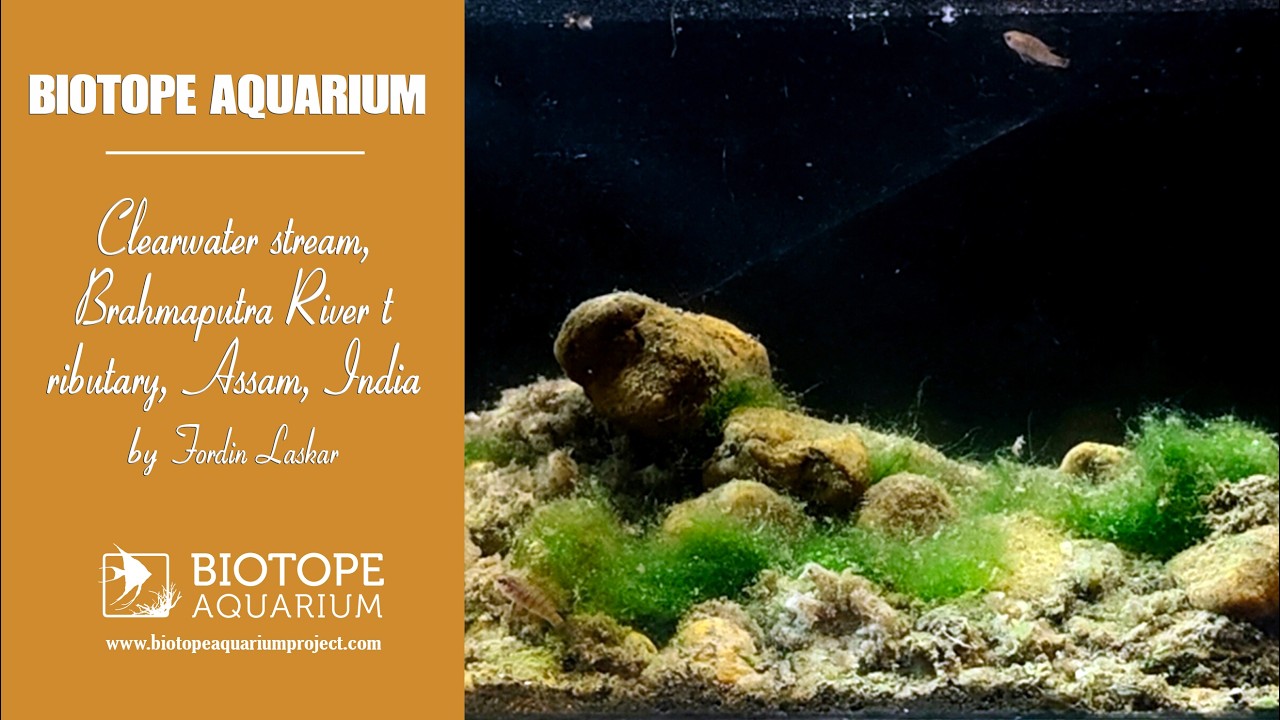
This biotope aquarium replicates a shallow, clear-water backwater channel within the Brahmaputra River basin in Assam, India, designed as a wild microhabitat simulation for the Scarlet Badis (Dario dario). The aim of the composition is to reproduce the quiet, low-flow margins of these river systems rather than a conventional planted aquarium.

The layout features a natural substrate composed of a clay base mixed with scattered smooth grey and brown gravel, recreating the undisturbed river channels where these micro-predators forage. To reproduce the specific hydrological conditions of the habitat, the aquarium maintains exceptionally clear water with a gentle current through a custom sump filtration system.

The sump provides high biological filtration capacity while avoiding excessive water movement, creating a balance between pristine water quality and the calm conditions required by the fish. The overall design focuses on accurately representing the subtle structure and ecological characteristics of a shallow Brahmaputra basin stream habitat.

Submitted by
Fordin Laskar
Geographical region
Southern Asia
Drainage Basin
Bay of Bengal
River catchment
Brahmaputra River
Water body type
Stream
Water body name
Unnamed
Water body part
Channel
Water body course
Lower course
Water body: tributary of
River
Tributary name
Brahmaputra

Videos above and below water

Warning: Undefined variable $fish_parent in /home/biotopea/public_html/wp-content/themes/bap/content-bam.php on line 85

Water Chemistry

Water information

Water type
Freshwater
Water color
Clear water
Water transparency
High
Concentration of sediments
Medium
Water temperature
26 °C
Water flow/curent
Slow

Chemical parameters

pH
6.8
Conductivity
GH
dGH
KH
dKH
Dissolved Oxygen

Aquarium information

Aquarium description

Set-up date
5 January, 2026
Aquarium decoration

The aquarium layout strictly mimics a shallow stream-margin backwater habitat. The substrate consists of a natural clay base covered with a scattered layer of smooth grey and brown gravel pebbles of different sizes, recreating the texture of an undisturbed shallow channel in Assam.

The layout is intentionally minimalist, without large pieces of wood or rocks, focusing entirely on the natural substrate structure where the fish forage. This simple composition reflects the open, clay-bottomed microhabitats inhabited by Dario dario in the wild.

Fish:

Dario dario (Badidae)

Aquarium equipment

The system operates on a custom-built sump filtration system, specifically designed to provide exceptional biological filtration capacity while reducing water movement through a baffled output system to maintain a very low, gentle current. Lighting is provided by custom-designed LEDs calibrated to simulate bright, direct sunlight penetrating a shallow water column, promoting the natural growth of biofilm.

Fish care

To keep the Scarlet Badis (Dario dario) healthy and active, the aquarium replicates their calm natural habitat with minimal water movement. They are fed a specialised diet consisting of live and high-quality frozen foods such as microworms, Daphnia, and baby brine shrimp to encourage their natural hunting behaviour. The open clay and gravel substrate provides ample space for natural territorial interactions.

Plant care

This setup is designed as a minimalist, non-planted biotope model that replicates the natural substrate channel of the wild habitat. No rooted aquatic plants are maintained. Plant care is not required; instead, maintenance focuses on managing the custom lighting schedule to encourage the development of a healthy layer of natural biofilm and microalgae on the gravel surface, supporting the microfauna population.

Water care

Maintenance consists of a regular 20% water change every 10 days using aged, soft water adjusted to a target pH of 6.8. The custom sump’s mechanical filtration media is rinsed regularly to ensure excellent water clarity and a low concentration of suspended sediments, while the large biological capacity of the sump provides long-term parameter stability.

Dimensions

Length
34 cm
Depth
16 cm
High
16 cm
Volume
8.7 L

Substrate in aquarium

Sand
Beige
Pebble/Gravel
Beige
Stone
None
Stone form
Silt/Mud
None
Leaves
None
Driftwood
Few
Submerged terrestrial vegetation
None