- Set-up date
- June, 2024
- Aquarium decoration
I found gravel of a similar consistency to that found in the habitat, as well as irregularly shaped rocks that seemed to fit. In observing many of the crevices at the brook, I found many Etheostoma olmstedi pairs and juveniles taking refuge and nesting. So, I fit the rocks so that there would be plenty of crevices formed for the two tesselated darters to nest in, as well as a place where the blacknose dace could find a place of lesser current to conserve energy.
The rocks were placed on a layer of bricks so that I could make a steeper edge, mimicking the edge of a deeper pool in a creek. Not being able to afford any kind of special lighting to illuminate the background, I secured a piece of cardboard to the back in order to sort of match the gray-ish brown feel of the entire aquarium. The shallowness of the aquarium is also intentional, as many of the shallow pools I observed in the area were carrying the majority of the fish.
- Aquarium equipment
Fluval CP2 Circulation Pump – 425 GPH, provides sufficient oxygenation to keep up with oxygen levels in natural ecosystem. And considering the large tank size, high water flow, high surface area, and extremely small bioload, I came to the conclusion that I did not need an extra filter. In doing that, I minimized electricity usage (fewer wires) and thus was able to make the biotope look more natural.
Generic LED Lights – Unsure of wattage, but it is synced with outdoor brightness so as to cycle my fish as they would be seasonally.
- Fish care
This tank recreates the ideal conditions for the fish I am keeping. Along with being kept in an environment accurate to their natural habitat, they are placed on a day/night cycle synced with that of their habitat. All parameters have been tested to ensure the fish experience as smooth a transition as possible from their wild to captive environment. The temperature will inevitably fluctuate through the year, ranging from 18.3-23.8°C.
A heater was deliberately omitted; they are temperate fish, a seasonal temperature change is essential to their breeding cycle, and may also just be beneficial to their overall health. This yearly temperature change will be enough to induce natural behaviors, but not enough to induce stress.
The fish get fed exclusively live food. The darters will accept frozen bloodworm, but it seems like they have trouble swallowing it. Not to mention frozen foods tend to have less nutrition than their fresh counterparts. They are fed a mixture of daphnia, whiteworms, and grindal worms every other day so as to prevent obesity.
Fishlist:
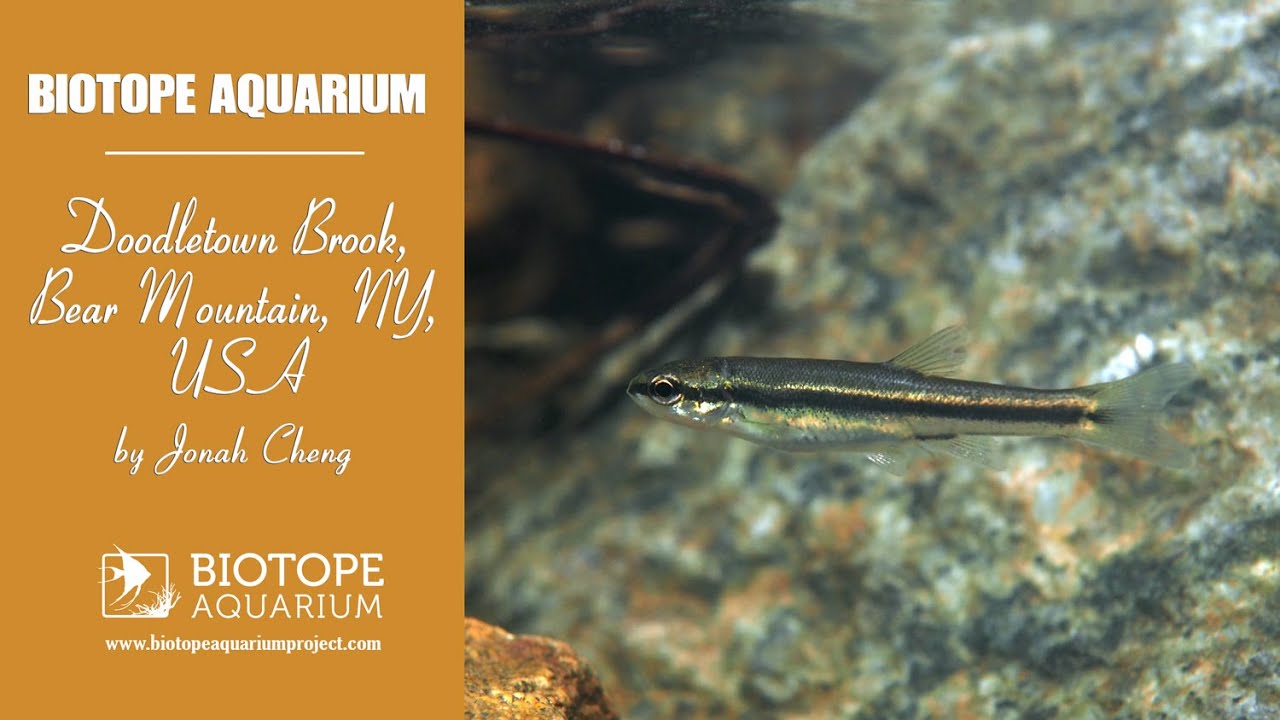
- Rhinichthys atratulus (Cyprinidae)
- Etheostoma olmstedi (Etheostomatidae)
- Plant care
There are no plants housed in this enclosure.
- Water care
In order to not interfere with the tank, I try to avoid water changes whenever possible. So I tend to do them every 20 days. Water parameters are monitored every week, and the behavior of the fish is closely scrutinized daily. If something is awry, a water change would be done immediately. When it rains, I add some 1.2-2.5cm of RO water to trigger any behaviors associated with a low pressure system: sounds of rain, lowering pH, lowering TDS, etc.