bam Advanced/Expert level

Munchingiputtu Stream, Andhra Pradesh, India

Sponsored by

India, Andhra Pradesh , Eastern Ghats, Alluri Sitharama Raju District

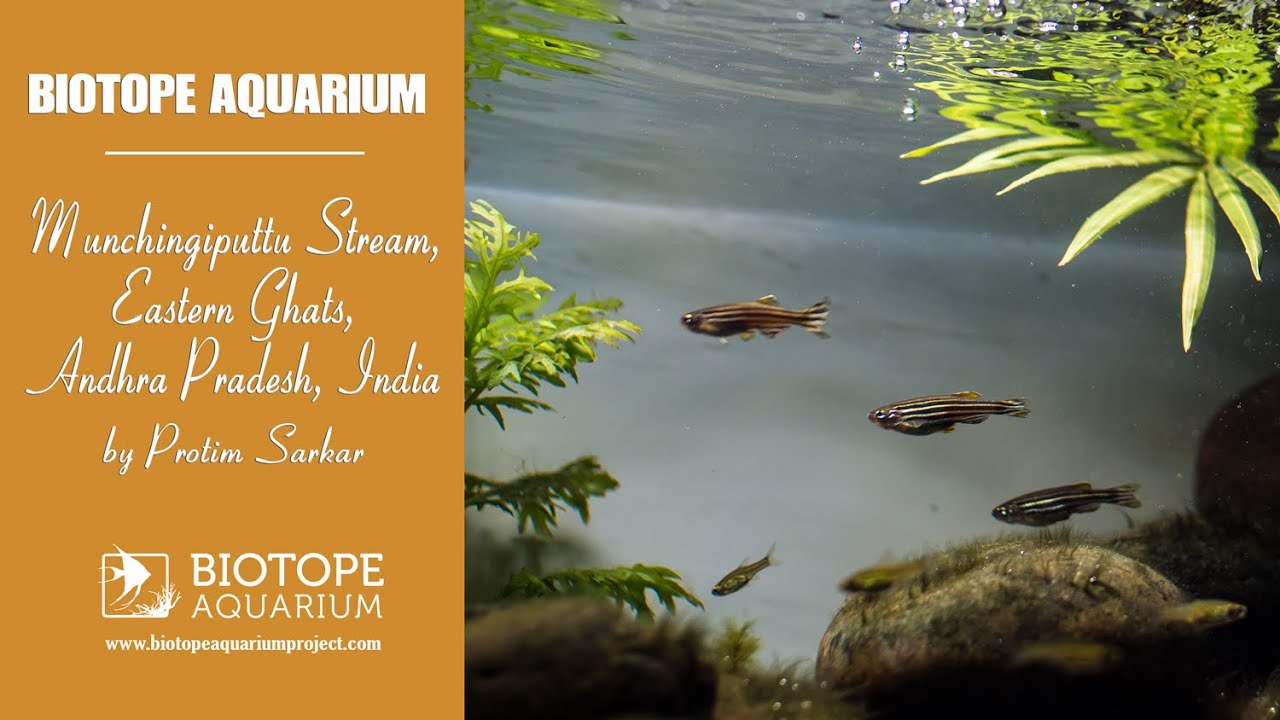
This 102L biotope aquarium replicates the natural habitat of Danio rerio (Zebra Danio), Horadandia brittani, and Carinotetraodon travancoricus (Pea Puffer) found in the untouched Munchingiputtu Stream of the Eastern Ghats, Andhra Pradesh, India.

The biotope features large river-worn boulders and coarse gravel substrate, imitating a shallow, rocky hill stream bed. Native aquatic plants like Hygrophila difformis and Vallisneria spiralis provide natural cover, oxygenation, and visual depth. The water is maintained at a cool 20-22°C with a pH ranging from 6.65 to 7.7, supported by a high-flow filter system to simulate oxygen-rich, fast-moving waters.

The tank houses a school of 6 Zebra Danios, 7 Horadandia brittani, and 2 Pea Puffers, each displaying natural behaviours and vibrant colours in this well-balanced ecosystem. Regular maintenance, including weekly water changes and a varied diet of high-quality pellets and live/frozen worms, ensures the continued health and authenticity.

Submitted by
Protim Sarkar
Approved by
Hans-Georg Evers & Friedrich Bitter
GPS
18.3660984, 82.5084610
Geographical region
Southern Asia
Drainage Basin
Godavari River Basin
River catchment
Sileru River Catchment
Water body type
Stream
Water body name
Munchingiputtu Hill Stream
Water body part
Channel
Water body course
Upper course
Water body: tributary of
Hill streams
Tributary name
Sileru River

Videos above and below water
Water Chemistry

Water information

Water type
Water color
Clear water
Water transparency
High
Concentration of sediments
Low
Water temperature
20–22 °C
Water flow/curent
Strong

Chemical parameters

pH
6.85
Conductivity
106
GH
35 mg/l
KH
28 mg/l
Dissolved Oxygen
6.80 %

Aquarium information

Aquarium description

Set-up date
29/11/2024
Aquarium decoration

This 102L biotope aquarium faithfully replicates the Munchingiputtu Stream in the Eastern Ghats of Andhra Pradesh, India – home to Danio rerio, Horadandia brittani, and Carinotetraodon travancoricus.

The substrate was hand-collected from the Eastern Ghats during a personal field excursion and includes a natural mix of coarse mineral-rich river gravel, small pebbles, and fine sand that mirrors the actual streambed composition. Larger rounded boulders, also collected from the same region, were carefully arranged to form natural-looking crevices, slopes, and flow pathways – mimicking erosion patterns seen in hill streams. These boulders not only contribute to the authenticity of the aquascape but also promote biofilm growth and shelter for fish.

Native aquatic plants like Vallisneria spiralis and Hygrophila difformis are rooted directly into this inert, unfertilized substrate. They have adapted well and continue to grow steadily without the use of commercial fertilizers or CO₂ injection, thriving solely on ambient light and natural nutrients generated from fish waste and microbial activity. A powerful filter is used to simulate the oxygen-rich fast-flowing waters, maintaining a cool temperature of 20-22°C, ideal for the species selected. The entire layout aims to recreate a low-nutrient, high-flow stream ecosystem, celebrating the resilience of native flora and fauna in their untouched natural environment.

The white background was deliberately chosen to create contrast and highlight the vibrant movements and colors of the fish, while also offering a clean, open feel to the aquascape. Overhead, palm leaves are suspended to simulate a light forest canopy, contributing to the immersive, biotope-correct visual experience.

Aquarium equipment

Filter: Sunsun internal power filter
Flow rate: 450 L/hr
Outlet: Directional nozzle to simulate stream current
Media: Fine sponge, ceramic rings, and activated charcoal
Purpose: Mechanical, biological, and chemical filtration; strong oxygenation

Lighting: Neo Helios S3 Pro+
Wattage: 13W
Runtime: 6 hours per day
Purpose: Supports plant growth and maintains a natural diurnal rhythm

Heating: No thermostat used
Purpose: Tank remains naturally cool (20–22°C), simulating hill stream conditions

Fish care

To maintain the health and natural behavior of the fish, I perform regular weekly water changes (30-40%) using dechlorinated, temperature-matched water to ensure stability in water parameters. The high-flow internal filter keeps the water well-oxygenated and clean, simulating their natural habitat and supporting gill function and activity.

The fish are offered a varied, high-quality diet, including live and frozen worms, micro-pellets, and occasional natural detritus, mimicking the diversity of food available in the wild. Feeding is done in small portions twice daily to avoid overfeeding and ensure digestive health.

I maintain a cool water temperature (20-22°C) and ensure natural lighting cycles with a 6-hour photoperiod, which supports circadian rhythms and stress reduction. No chemicals, medications, or artificial fertilizers are added to the system, preserving a stable, low-nutrient ecosystem. Observing the fish daily allows early detection of any unusual behavior or health concerns.

Fishlist:

  • Danio rerio (Cyprinidae)
  • Horadandia brittani (Cyprinidae)
  • Carinotetraodon travancoricus (Tetraodontidae)
Plant care

To support healthy plant growth, I use only native, hardy aquatic plants like Vallisneria spiralis and Hygrophila difformis, which are well-adapted to low-nutrient environments. These plants are rooted directly into the inert, mineral-rich substrate collected from the Eastern Ghats, allowing them to grow naturally without the need for fertilizers or enriched soil.

The aquarium receives 6 hours of light daily from a Neo Helios S3 Pro+ (13W) fixture, providing sufficient energy for photosynthesis. The high-flow filter enhances oxygen circulation around the plant roots and leaves, supporting respiration and nutrient uptake from fish waste and decomposing organic matter.

No CO₂ injection or commercial plant supplements are used, keeping the system fully natural. The balance of stable temperature (20-22°C), good light, and low-nutrient water closely mirrors the conditions these plants experience in the wild, allowing them to thrive with minimal intervention.

Aquatic plant list:

  • Hygrophila difformis (Plantaginaceae)
  • Vallisneria spiralis (Hydrocharitaceae )
Water care

To preserve the natural balance of the biotope and keep the environment healthy for both fish and plants, I follow a regular and careful maintenance schedule:

Weekly water changes of 30-40% are done using dechlorinated, temperature-matched water (20-22°C) to maintain stable parameters and remove dissolved waste and organic buildup. The refill is done slowly to avoid disturbing the substrate or stressing the fish.

The filter is rinsed gently every 2–3 weeks using tank water (never tap water) to preserve beneficial bacteria while clearing trapped debris from the fine sponge and refreshing the ceramic rings and activated carbon.

The aquarium glass is cleaned as needed with a soft sponge to remove biofilm or algae, avoiding the use of any chemicals.

Dead plant leaves or excess detritus on the substrate are manually removed with tweezers during water changes to maintain water clarity and prevent decay.

The lighting is kept on a timer for exactly 6 hours daily to support plant growth while minimizing algae.

Fish health is observed daily, and any behavioral changes, signs of stress, or water quality issues are addressed promptly.

No fertilizers or CO₂ are added, so plant growth is monitored naturally, and trimming is rarely required due to the low-light, slow-growing nature of the setup.

This low-intervention but consistent routine helps maintain a stable, self-regulating ecosystem, mirroring the rhythms of the Eastern Ghats stream from which this biotope draws its inspiration.

Dimensions

Length
76 cm
Depth
30 cm
High
45 cm
Volume
102 L

Substrate in aquarium

Sand
Beige
Pebble/Gravel
Beige
Stone
Grey
Stone form
Roundish
Silt/Mud
Beige
Leaves
None
Driftwood
None
Submerged terrestrial vegetation
None

Bibliography

Comment by the expert

Hans-Georg Evers: Fulfilling the demands of the inhabitants very well. Horadandia brittani is not a usual sight!

Friedrich Bitter: Unfortunately, this point is difficult to assess without a photo of the entire aquarium.