bam Demanding level

#10386 Neyyar Dam, Neyyar River Basin, Western Ghats, Kerala, India

Sponsored by

India, Kerala, Neyyar

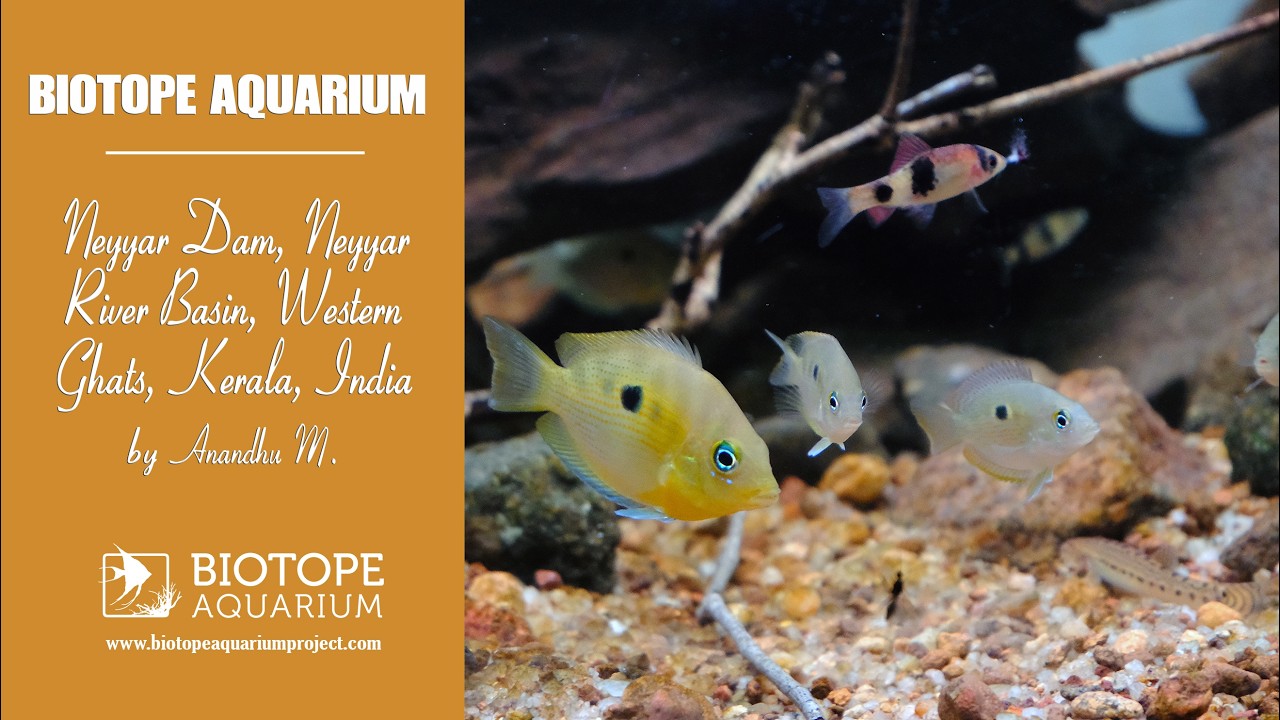
This 300-litre biotope aquarium is inspired by a summer stream section of the Neyyar River, located downstream of Neyyar Dam in the Western Ghats. It recreates the appearance of a shallow tropical rocky stream during the low-water season, with exposed stones, driftwood, and open swimming areas reflecting the natural habitat observed in the field.

Large rounded stones were carefully arranged to imitate the granite boulders and rocky margins of the original stream. Driftwood represents fallen branches and submerged woody debris commonly found along tropical riverbanks. The substrate consists of mixed gravel and pebbles, recreating the coarse structure of the natural riverbed.

The aquarium is designed both as a biotope reconstruction of a southern Western Ghats stream ecosystem and as a naturalistic representation of the unique character of Kerala’s tropical rocky rivers during the dry season.

Submitted by
Anandhu M.
GPS
8.5323372, 77.1454163
Geographical region
Southern Asia
Drainage Basin
Neyyar river basin
River catchment
Neyyar River
Water body type
Stream
Water body name
Neyyar River
Water body part
Channel
Water body course
Middle course
Water body: tributary of
Stream
Tributary name
Neyyar River

Videos above and below water

Warning: Undefined variable $fish_parent in /home/biotopea/public_html/wp-content/themes/bap/content-bam.php on line 85

Water Chemistry

Water information

Water type
Freshwater
Water color
Clear water
Water transparency
High
Concentration of sediments
Low
Water temperature
26 °C
Water flow/curent
Slow

Chemical parameters

pH
2.2
Conductivity
GH
dGH
KH
dKH
Dissolved Oxygen
90 %

Aquarium information

Aquarium description

Set-up date
May, 2026
Aquarium decoration

Stones with similar colour, texture, and shape to those found in the Neyyar River were selected to construct the hardscape of the aquarium. Rounded rocks and pebbles of different sizes were carefully arranged to imitate the natural rocky streambed observed downstream of Neyyar Dam during the summer low-water season.

A large piece of driftwood was added to represent submerged roots and fallen branches commonly found along tropical river margins, while also providing shaded areas and shelter for the fish. The substrate consists of coarse sand, gravel, and small stones arranged irregularly to recreate the natural structure of a stream bottom. Leaf litter and small twigs were added to simulate organic material accumulated in calmer areas of the river.

The central open area was intentionally maintained to resemble shallow pools that form between exposed rocks during periods of reduced water flow. The aquarium uses minimal planting because the original habitat is characterised mainly by exposed stones, woody debris, and sparse marginal vegetation rather than dense aquatic plant growth.

Earth-toned materials were selected throughout the layout to reflect the natural appearance of tropical rocky streams in the southern Western Ghats. Water movement and open swimming space were key elements of the design, creating a calm stream-like environment suitable for native and regionally associated fish species such as Haludaria fasciata and Pseudetroplus maculatus.

The overall composition aims to reproduce the visual character and ecological structure of a seasonal tropical stream ecosystem from Kerala in a natural and realistic way.

Fish:

  • Haludaria fasciata (Cyprinidae) – 4
  • Pseudetroplus maculatus (Cichlidae) – 10
  • Lepidocephalichthys thermalis (Cobitidae) – 3
Aquarium equipment

Filtration: SunSun HW-3000 canister filter with fine filtration mesh and ceramic rings used as biological filtration media.

Fish care

The fish were collected from the biotope, and water parameters were adjusted to closely replicate their natural environment. The fish are fed with live foods such as mosquito larvae to maintain a natural feeding behaviour similar to that found in the wild.

Plant care
Water care

The filter condition is regularly checked, and water changes are performed only when necessary to maintain stable water quality.

Dimensions

Length
120 cm
Depth
50 cm
High
50 cm
Volume
300 L

Substrate in aquarium

Sand
Orange
Pebble/Gravel
Mixed
Stone
Mixed
Stone form
Roundish
Silt/Mud
None
Leaves
Few
Driftwood
Few
Submerged terrestrial vegetation
None