bin
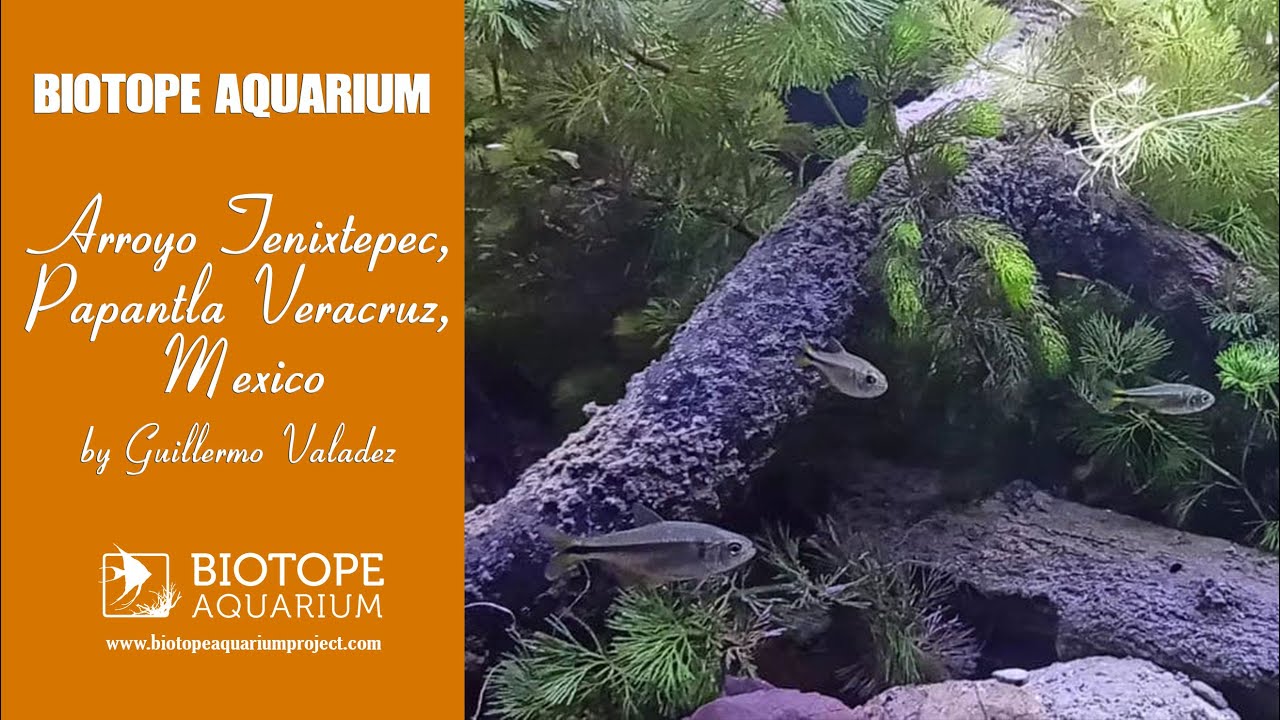
Arroyo Tenixtepec, Papantla Veracruz, Mexico
Mexico, Veracruz, Papantla
Sponsored by Planeta Azul Aquarium.
Arroyo Tenixtepec named after the closest town that is 19.7 km southeast of the municipality of Papantla Veracruz. The town is at a medium height of sea level.
- Submitted by
- Guillermo Valadez Mendez
- Approved by
- Juan Miguel Artigas Azas & Jairo Arroyave
- GPS
- 20.5789509, -97.1730042
- Geographical region
- Central America
- Drainage Basin
- Tenixtepec
- River catchment
- Rio Tenixtepec
- Water body type
- Stream
- Water body name
- Nameless affluent
- Water body part
- Channel
- Water body course
- Lower course
- Water body: tributary of
- Stream
- Tributary name
- Rio Tenixtepc
Videos above and below water
Warning: Undefined variable $fish_parent in /home/biotopea/public_html/wp-content/themes/bap/content-bin.php on line 55
Water Chemistry
Water information
- Water type
- fresh-water
- Water color
- Clear water
- Water transparency
- Medium
- Concentration of sediments
- High
- Water temperature
- 28 °C
- Water flow/curent
- Slow
Chemical parameters
- pH
- 8.2
- Conductivity
- GH
- 160 mg/l
- dGH
- KH
- 180 mg/l
- dKH
- Dissolved Oxygen
- 92.04 %
Substrate in nature
- Sand
- no
- Pebble/Gravel
- Beige
- Stone
- Beige
- Stone form
- Roundish
- Silt/Mud
- Grey
- Leaves
- Many
- Driftwood
- Many
- Submerged terrestrial vegetation
- Yes
Aquatic Biotope
- Date of collecting
- 17.07.2020
- Collecting area
- Edge of reservoir
- Water depth
- 0,5m
- Air temperature
- 33 °C
- Sunlight
- Partial shade
Environment
- Environment
- Affected by human activity
- Affected by human activity
- Pollution
- Pollution
- Little
- Surrounding area
Three important cichlids inhabit the Tenixtepec Stream. Vieja fenestrata, Herichthys tepehua and Thorichthys maculipinnis among other species of poecilids that are attractive to aquarists due to their behavior in their reproduction.
- Underwater landscape
The aquatic vegetation is mainly composed of three species Cabomba palaeformis, Ceratophyllum demersum and Najas guadalupensis which serve as a refuge for its inhabitants.
Fishes:
- Vieja fenestrata abundant
- Astyanax mexicanus abundant
- Poecilia mexicana abundant
- Eleotris pisonis few
- Xiphophorus variatus abundant
- Thorichthys maculipinnis few
- Gobiomorus dormitor few
- Herichthys tepehua abundant
- Dajaus monticola rare
Molluscs:
- Pomacea flagellata abundant
- Melanoides tubercolata abundant
Crustacean
- Macrobrachium acanthurus abundant
- Threats to ecology
Today the hand of man has not greatly affected the Tenixtepec stream, remaining almost intact.
Riparian zone
- Trees near the aquatic habitat
-
Many - Selaginella sp.
- Trees near the aquatic habitat
-
Many - Thelypteris palustres
- Trees near the aquatic habitat
-
Many - Guazuma ulmifolia
- Trees near the aquatic habitat
-
Many - Philodendron sp.
- Trees near the aquatic habitat
-
Many - Cojoba arborea
- Trees near the aquatic habitat
-
Many - Inga edulis
- Trees near the aquatic habitat
-
Many - Pontederia sagittata
- Trees near the aquatic habitat
-
Many - Calocasia esculenta
Bibliography
-
Flora de veracruz, 1984
by Haynes, R.R
-
Sistematica de la Familia Pontederiaceae en Mexico, 1996
by Novelo, R.A.
Comment by the expert
Juan Miguel Artigas Azas: It is a beautiful description of the habitat. My main comments are that it is not mentioned that two of the cichlid species present (Vieja fenestrata and Thorichthys maculipinnis) are in fact newly arrivals introduced by man. I would have also like to see a more complete list of species; for example the beautiful crustacean Atya scabra can be found in Rio Tenixtepec. Some fish (e.g. Pseudoxiphophorus jonesii) and plant (e.g. Riccia fluitans, Ludwigia repens) species are missing from the description as well.
Jairo Arroyave: Media could have been of better quality, but nonetheless conveyed all the essential information about the BIN, including the terrestrial surrounding area and the inderwater habitat in detail. The participant did a good job at thoroughly documenting the caharacteristics of the BIN, which included a long list of fauna and flora. Documentation of chemical parameters is complete. Bibliography and sitography was sufficient, but like in the case of most other participants, it could have been more extensive.