bin
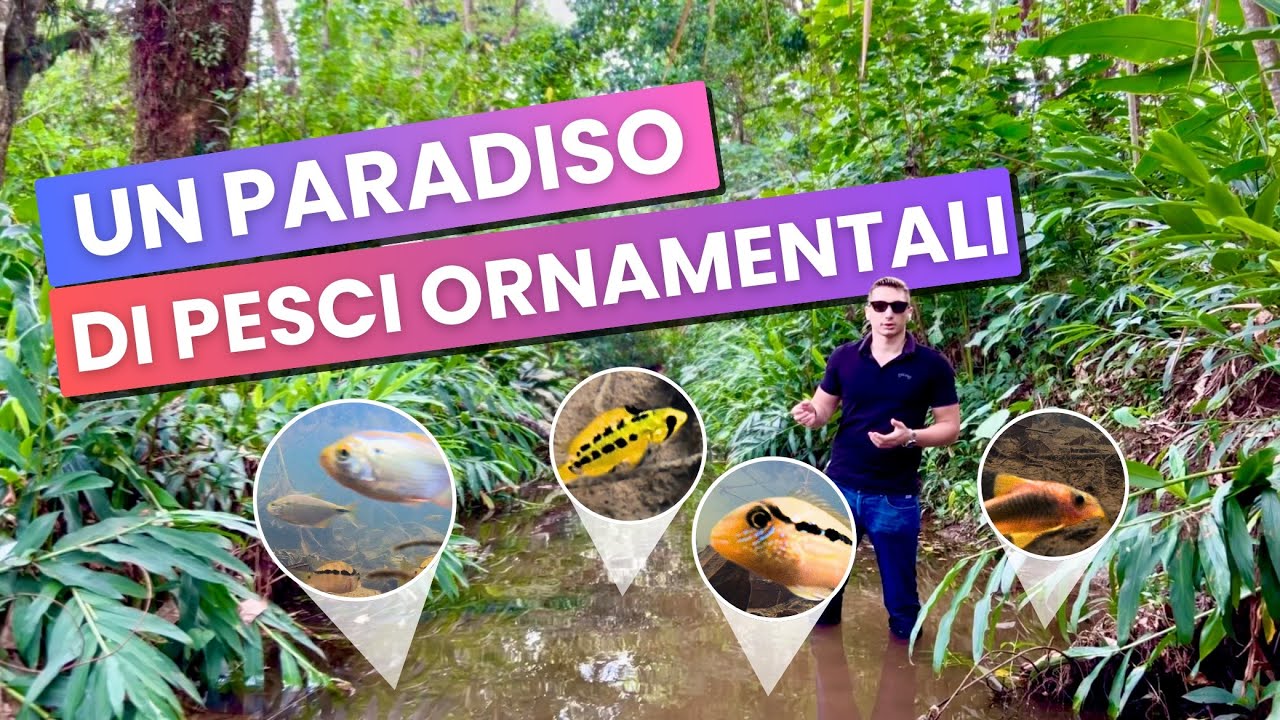
Clear water stream, Acacías, Meta, Colombia
Colombia, Meta/Acacias, Meta/Acacias
The streams near the foothills of the Andes in Colombia are filled with beautiful flora and fauna. Quite a lot of aquarium fish occur here, such as Apistogramma macmasteri, Osteogaster melanotaenia, Farlowella sp., and tetra species.
These streams have a diverse habitat depending on the seasons. Some of my favorite fish come from this area, and that was also the reason I did this biotope. Unfortunately, these beautiful waters are in danger due to the increasing amount of agriculture.
- Submitted by
- Manoah Grootjans
- Approved by
- Roberto E. Reis & Pablo C. Lehmann
- GPS
- 3.9430561, -73.6966705
- Geographical region
- South America
- Drainage Basin
- Río Meta
- River catchment
- Río Acacías
- Water body type
- Stream
- Water body name
- Clearwater
- Water body part
- Channel
- Water body course
- Upper course
- Water body: tributary of
- River
- Tributary name
- Río Guayuriba
Videos above and below water
Warning: Undefined variable $fish_parent in /home/biotopea/public_html/wp-content/themes/bap/content-bin.php on line 55
Water Chemistry
Water information
- Water type
- Water color
- Clear water
- Water transparency
- High
- Concentration of sediments
- Low
- Water temperature
- 23-28 °C
- Water flow/curent
- Strong
Chemical parameters
- pH
- 6.0
- Conductivity
- GH
- 0
- dGH
- KH
- 2 mg/l
- dKH
- Dissolved Oxygen
Substrate in nature
- Sand
- Beige
- Pebble/Gravel
- Grey
- Stone
- Grey
- Stone form
- Roundish
- Silt/Mud
- None
- Leaves
- Few
- Driftwood
- Few
- Submerged terrestrial vegetation
- Yes
Aquatic Biotope
- Date of collecting
- Collecting area
- Water depth
- Air temperature
- Sunlight
Environment
- Environment
- Affected by human activity
- Affected by human activity
- Agriculture
- Agriculture
- Advanced
- Surrounding area
These streams are located near the foothills of the Andes and the beginning of the llannos, which are floodplains in Colombia and Venezuela. The landscape is flat, with more hills as you get closer to the Andes. The surrounding landscape is covered in fields, streams, farms and small gallery forests.
The infrastructure is good compared to other parts of Colombia. The fields are covered in sages and grasses such as Trachypogon spicatus and Paspalum sp. And trees such as Mauritia flexuosa and Byrsonima crassifolia. Some common mammals from this area are: Hydrochoerus hydrochaeris (Capybara), Sylvilagus floridanus and Odocoileus virginianus. Also, some beautiful water birds are found here, such as Eudocimus rubber and Phelpsia inornata.
- Underwater landscape
The streams here are not very big. They are between 1-3m wide. Of course, there are some exceptions. They have a fine sandy bottom and are often covered with fist-sized peables. Some slower-moving streams have leaves on the bottom and near the banks. Aquatic vegetation can also be found in the streams, even in fast-flowing water. The banks are often covered with aquatic, semi-aquatic and terrestrial vegetation.
Small fish like small tetras and pencilfish will seek cover between the vegetation. Smaller cichlids such as Apistogramma make their habitat around the rocks and leaves. Osteogaster play among the leaves, and bigger tetras, such as Bryconops, hunt on the surface for small insects. Wood can also be found, but not in big numbers – mainly branches, driftwood and roots.
In the rainy season, the streams in this area have a strong current with a lot of aquatic vegetation. In the peak dry season, only small puddles are left of most streams. These puddles have no vegetation due to the high temperature, and a high amount of fish. Some fish, like corydoras, will survive in these puddles since they are air beathers.
Fish list:
- Corydoras melanotaenia (Callichthyidae)
- Corydoras metae (Callichthyidae)
- Corydoras melini (Callichthyidae)
- Corydoras axelrodi (Callichthyidae)
- Axelrodia risei (Acestrorhamphidae)
- Apistogramma macmasteri (Cichlidae)
- Apistogramma viejita (Cichlidae)
- Apistogramma alacrina (Cichlidae)
- Aequidens metae (Cichlidae)
Plant list:
- Cabomba aquatica (Cabombaceae)
- Elodea sp. (Hydrocharitaceae)
- Najas sp. (Hydrocharitaceae)
- Heteranthera sp. (Pontederiaceae)
- Eleocharis sp. (Cyperaceae)
- Sagittaria sp. (Alismataceae)
- Nymphaea sp. (Nymphaeaceae)
- Nymphoides sp. (Nymphaeaceae)
- Threats to ecology
The main threat to the flora and founa here is agriculture. There are mainly cattle farms, but also plantations. They use pesticides that will end up in the water and kill the fish. Also, cattle waste contains a lot of nitrogen that will pollute the water.
Riparian zone
- Trees near the aquatic habitat
-
Few -