bin
Clearwater Forest Creek, Southern Province, Sierra Leone
Sierra Leone, Southern Province, Semabu
Located near the village of Mecca in Sierra Leone’s Southern Province, this clearwater forest creek represents a typical aquatic habitat of the Upper Guinean rainforest, one of the world’s most significant tropical forest ecosystems and a recognised biodiversity hotspot.
The creek flows through dense riparian forest, where towering rainforest trees, oil palms (Elaeis guineensis), raffia palms (Raphia sp.), shrubs, and ferns create a continuous canopy. The shaded environment limits light penetration and contributes to stable, cool water conditions throughout the year.
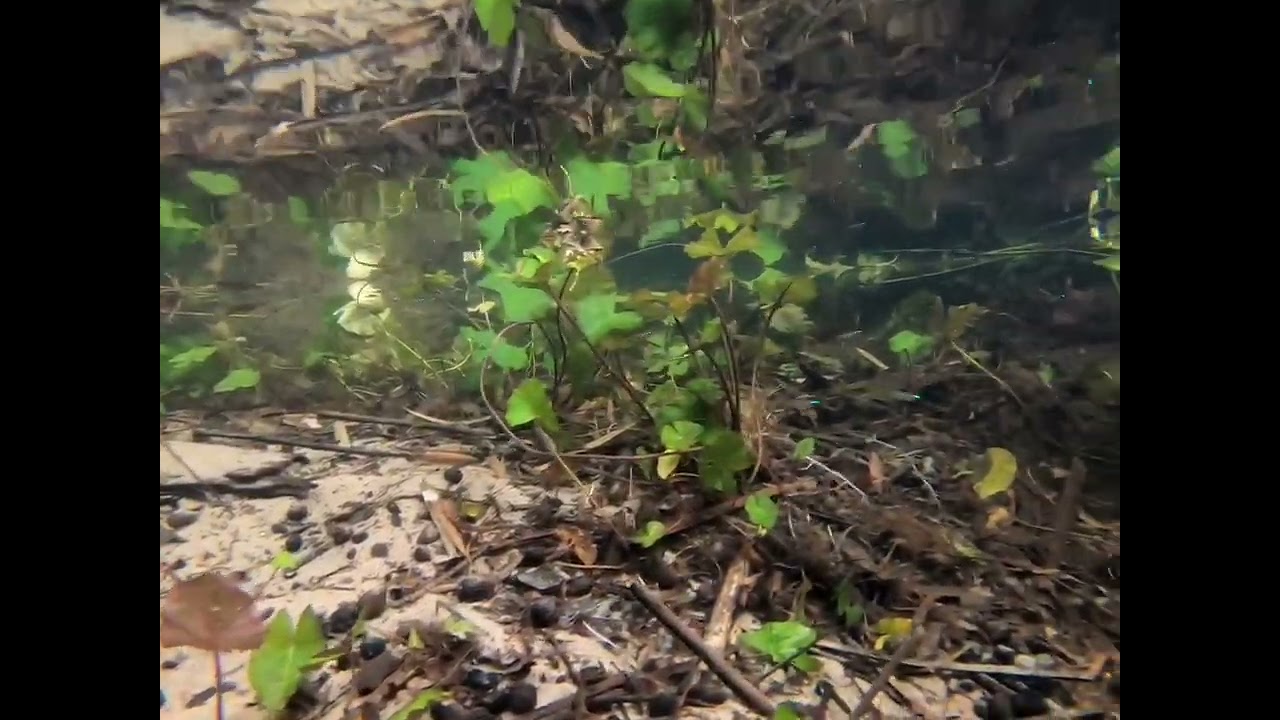
The stream is characterised by gentle currents flowing over a substrate of fine sand, scattered leaf litter, submerged roots, fallen branches, and occasional silt deposits. Seasonal rainfall influences water levels and flow dynamics, with connections to surrounding wetlands during the rainy season.
This forest creek provides essential habitat for a diverse community of freshwater organisms, including endemic and specialised fish species, aquatic invertebrates, amphibians, reptiles, and birds. Its complex structure of submerged woody debris, leaf accumulation, and shaded margins reflects the ecological characteristics of Sierra Leone’s inland rainforest waterways and highlights the importance of conserving these fragile freshwater ecosystems.
- Submitted by
- Kishalay Das
- Approved by
- Ad Konings & Anton Lamboj
- GPS
- 7.6352706, -12.1204634
- Geographical region
- Western Africa
- Drainage Basin
- Jong River/Taia River
- River catchment
- Water body type
- Creek
- Water body name
- Clearwater Forest
- Water body part
- Pool
- Water body course
- Lower course
- Water body: tributary of
- Tributary name
Videos above and below water
Warning: Undefined variable $fish_parent in /home/biotopea/public_html/wp-content/themes/bap/content-bin.php on line 55
Water Chemistry
Water information
- Water type
- Freshwater
- Water color
- Clear water
- Water transparency
- High
- Concentration of sediments
- High
- Water temperature
- 25.7 °C
- Water flow/curent
- Slow
Chemical parameters
- pH
- 5.27
- Conductivity
- 3
- GH
- dGH
- KH
- dKH
- Dissolved Oxygen
Substrate in nature
- Sand
- White
- Pebble/Gravel
- None
- Stone
- None
- Stone form
- Silt/Mud
- Leaves
- Many
- Driftwood
- Few
- Submerged terrestrial vegetation
- Yes
Aquatic Biotope
- Date of collecting
- April, 2022
- Collecting area
- River bank
- Water depth
- 0,5m
- Air temperature
- Sunlight
- Filtered/dappled sun
Environment
- Environment
- Affected by human activity
- Affected by human activity
- Agriculture
- Agriculture
- Advanced
- Surrounding area
The collection site is located near Mattru Jong in southern Sierra Leone, within the Upper Guinean Forests, one of the world’s most important tropical forest biodiversity hotspots. The surrounding landscape is characterised by dense tropical rainforest interspersed with seasonally flooded forest, freshwater wetlands, and small natural ponds. The forest floor is covered by thick accumulations of leaf litter, decaying wood, and organic debris, while pond margins are bordered by submerged roots and fallen branches that provide shelter for aquatic organisms.
Seasonal rainfall strongly influences the hydrology of the area. During the wet season, rising water levels connect ponds, swamps, and nearby streams, creating temporary aquatic corridors that facilitate the movement and reproduction of many freshwater species. These habitats support a diverse assemblage of fishes, amphibians, reptiles, aquatic invertebrates, and birds, reflecting the exceptional biodiversity of the Upper Guinean Forest ecosystem. Although small villages and areas of subsistence agriculture occur in the surrounding landscape, the immediate habitat remains largely undisturbed, retaining the ecological characteristics of a natural West African rainforest freshwater ecosystem.
- Underwater landscape
The underwater habitat is characterised by shallow, clear water over a substrate composed primarily of fine silt and mud, with scattered patches of fine sand. Thick accumulations of decomposing leaf litter and organic detritus cover much of the bottom, while submerged roots and fallen branches create a complex structure that provides shelter and breeding sites for aquatic organisms. The water is typically clear, with high visibility and little to no current, allowing fine sediments to settle naturally.
Aquatic vegetation is sparse and concentrated in open areas, where Nymphaea lotus forms small stands. Along the margins, Anubias spp. grow attached to submerged roots and woody debris. Seasonal rainfall raises water levels and introduces additional leaf litter and organic material, increasing habitat complexity and nutrient availability. The combination of soft sediments, submerged woody debris, aquatic vegetation, and clear, slow-moving water supports a diverse assemblage of fishes, aquatic invertebrates, and microorganisms typical of the freshwater forest habitats of southern Sierra Leone.
Fishes:
- Pelvicachromis roloffi (Cichlidae)
- Rubricatochromis guttatus (Cichlidae)
- Hemichromis fasciatus (Cichlidae)
- Coptodon sp. (Cichlidae)
- Channa africana (Channidae)
- Ctenopoma kingsleyae (Anabantidae)
- Enteromius leonensis (Cyprinidae)
- Brycinus longipinnis (Alestidae)
- Neolebias unifasciatus (Distichodontidae)
- Kribia nana (Cichlidae)
- Papyrocranus afer (Notopteridae)
- Clarias sp. (Clariidae)
- Scriptaphyosemion roloffi (Nothobranchiidae)
- Epiplatys annulatus (Nothobranchiidae)
- Epiplatys barmoiensis (Nothobranchiidae)
- Epiplatys fasciolatus (Nothobranchiidae)
- Poropanchax normani (Procatopodidae)
Aquatic vegetation
- Nymphaea lotus (Nymphaeaceae)
- Bolbitis heudelotii (Dryopteridaceae)
- Limnophila sessiliflora (Plantaginaceae)
- Anubias sp. (Araceae)
- Drymaria cordata (Caryophyllaceae)
- Phoenix reclinata (Arecaceae)
- Commelina africana (Commelinaceae)
- Dracaena surculosa (Asparagaceae)
- Threats to ecology
Freshwater habitats around Mattru Jong are increasingly affected by human activities and environmental change. Expansion of subsistence agriculture and oil palm cultivation has led to localized deforestation, reducing riparian vegetation and increasing soil erosion and sediment input into aquatic habitats. Unsustainable timber harvesting and fuelwood collection further contribute to habitat degradation and can alter the hydrology of forest pools and small streams.
Seasonal bushfires may degrade surrounding vegetation and increase surface runoff during the rainy season, while domestic waste and agricultural runoff from nearby settlements can locally affect water quality. Climate change is expected to influence rainfall patterns, prolong dry periods, and modify seasonal flooding, potentially reducing habitat connectivity and water availability. Although many freshwater ecosystems in the region remain relatively intact, ongoing land-use change and habitat degradation represent significant long-term threats to the biodiversity and ecological integrity of the Upper Guinean Forests in southern Sierra Leone.
Riparian zone
- Trees near the aquatic habitat
-
Many -
Bibliography
-
→ Freshwater fishes of Sierra Leone and Liberia: Annotated checklist and distribution
by Paugy, D., Lévêque, C., Teugels, G.G., Bigorne, R., & Romand, R. (1990).
-
Environmental Biology of Fishes - The ecology, distribution and diversity of fish species in Sierra Leone rivers and response to human impacts
by Payne, A.I.
-
DKG Journal - Das ist Afrika! Sierra Leone März-April 2022
by Karsten Dinesen
Comment by the expert
Ad Konings: This entry is a perfect example of how a BIN presentation should be.