bin
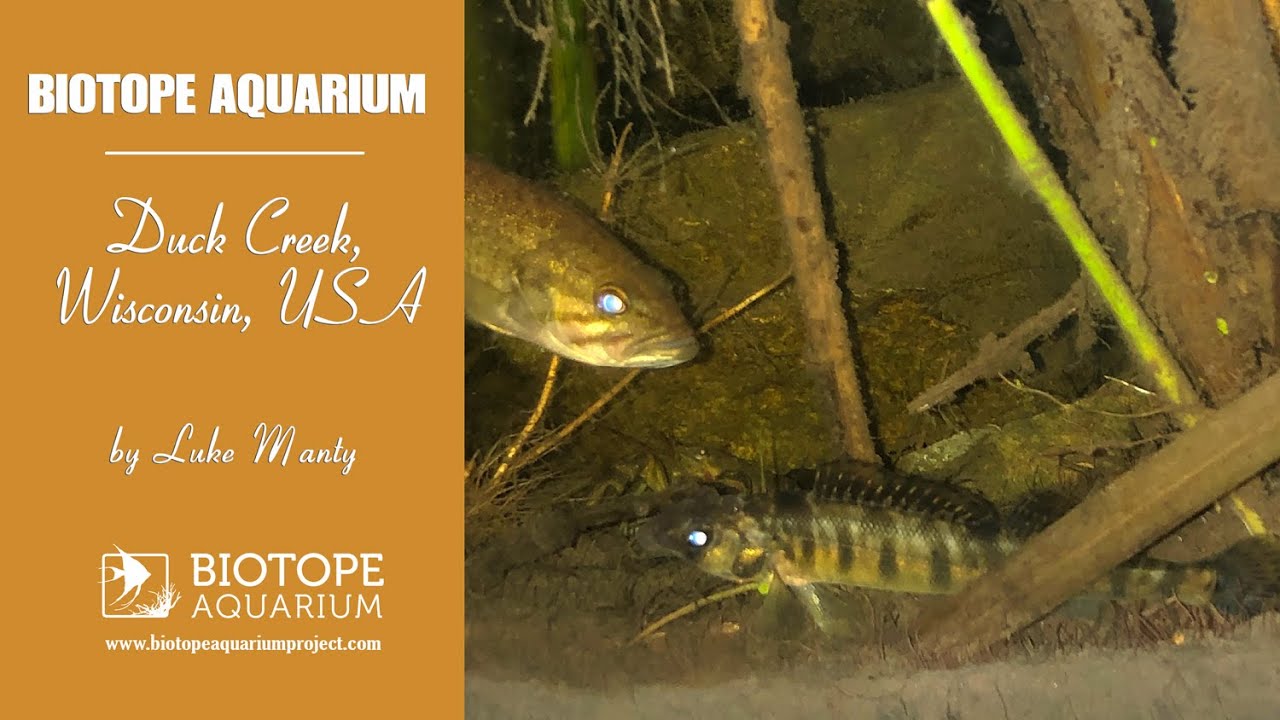
Duck Creek, Wisconsin, USA
United States, Wisconsin, Brown County
Duck Creek feeds into Green Bay, an arm of Lake Michigan. The creek supports the surrounding wetlands that circle the bottom of the bay. The greenery is most notably made up of cat tails, lily pads, duckweed, as well as various aquatic plants and macroalgaes. Decades ago the river was teeming with healthy game fish due to a rocky river bottom that supplied numerous sources of food.
However in the 2010s, an upstream dam was removed causing a high pressure flow of water. It wasn’t long before the current kicked up a significant amount of substrate producing a primarily muddy bottom. The river has gradually been settling over time, returning to its natural state. The dam removal project was intended to allow a clearer path for migrating fish, and appears to be paying off.
- Submitted by
- Luke Manty
- Approved by
- Fritz Rohde & Lawrence Kent
- GPS
- 44.5618782, -88.0623932
- Geographical region
- Northern America
- Drainage Basin
- Green Bay
- River catchment
- Duck Creek
- Water body type
- Creek
- Water body name
- Duck Creek
- Water body part
- Marsh land
- Water body course
- Lower course
- Water body: tributary of
- Tributary name
- Duck Creek
Videos above and below water
Warning: Undefined variable $fish_parent in /home/biotopea/public_html/wp-content/themes/bap/content-bin.php on line 55
Water Chemistry
Water information
- Water type
- fresh-water
- Water color
- Clear water
- Water transparency
- Medium
- Concentration of sediments
- Low
- Water temperature
- 72 °C
- Water flow/curent
- Slow
Chemical parameters
- pH
- 6.5
- Conductivity
- GH
- dGH
- KH
- dKH
- Dissolved Oxygen
Substrate in nature
- Sand
- Beige
- Pebble/Gravel
- Mixed
- Stone
- Grey
- Stone form
- Irregular
- Silt/Mud
- Brown
- Leaves
- Few
- Driftwood
- Few
- Submerged terrestrial vegetation
- Yes
Aquatic Biotope
- Date of collecting
- 17 July, 2023
- Collecting area
- River bank
- Water depth
- 0,2m
- Air temperature
- 25 °C
- Sunlight
- Partial shade
Environment
- Environment
- Human settlements
- Human settlements
- Compacted
- Surrounding area
Duck creek is a tributary of Green Bay. The area is surrounded by wetlands made up of cattails and pampas grass. Along the river banks are birch, maple, and oak trees as well as others.
The location experiences all 4 seasons reaching high 30s at times in the summers, then freezing over in the subzero temperatures of winter. Rainfall reaches about 88cm per year, during dry spells however the river will drop in level as water drains and stays out into the bay, this can also been seen in the spring when the ice thaws. Average year-round temperature is about 7°C.
Wetland plant:
- Typha latifolia (Typhaceae) – cattail
- Underwater landscape
The river is made up of large rocks and sunken trees in certain areas. It stays relatively shallow but has deep pockets that go past 3m. The floor is flat and muddy, dams upstream were modified and removed causing a new flow of sediment to be introduced creating a mucky almost slimy bottom. This has resulted in cloudy water that is gradually settling over time. Large bushels of aquatic vegetation can be found near the river banks.
Fish:
- Micropterus dolomieu (Centrarchidae) – smallmouth bass
- Perca flavescens (Percidae) – yellow perch
- Percina caprodes (Percidae) – common logperch
- Lepomis macrochirus (Centrarchidae) – bluegill
Crustacean:
- Faxonius rusticus (Cambaridae) – rusty crayfish
Aquatic plant:
- Cortaderia selloana (Poaceae) – pampas grass
- Cortaderia selloana (Lemnaceae)– pampas grass
- Salvinia minima (Salviniaceae)
- Threats to ecology
The river serves as a channel for migrating fish and a place for feeding among its inhabitants. The wetlands surrounding the river also have a crucial role to the local ecosystem. The wetlands literally keep things from drying up during the hot seasons acting as a barrier between the water and dry upper land. It also hosts many species of animals from birds, frogs, and small mammals like muskrats.
Riparian zone
- Trees near the aquatic habitat
-
Many -
Comment by the expert
Lawrence Kent: Personal connection to location is special.
Fritz Rohde: Not sure how much research was carried out based on bibliography etc. but designer knows the creek very well without it.