bin
Mobile River basin, Alabama, USA
United States, Alabama
The Mobile River basin supports exceptional freshwater biodiversity, providing habitat for a wide variety of fish, molluscs, and aquatic plants. Its conservation is particularly important, as it serves as an evolutionary refuge where complex biological interactions maintain the ecological balance of the region.
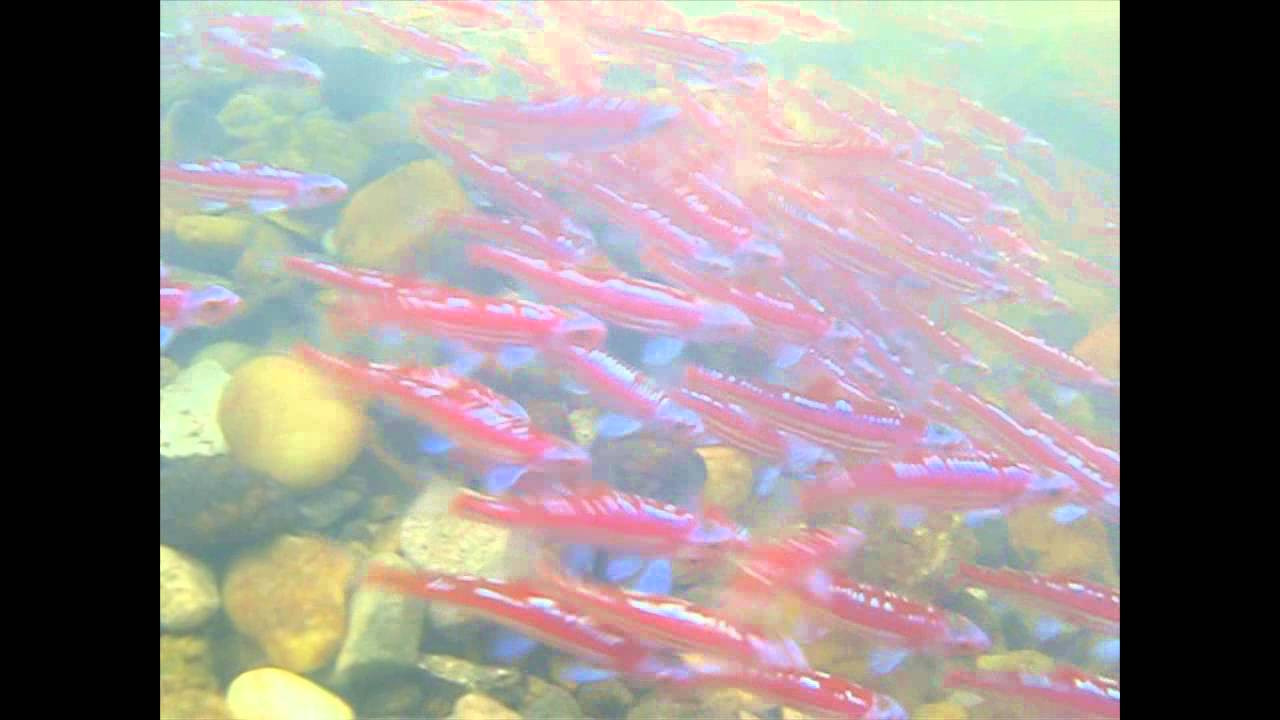
The basin is characterised by dynamic watercourses with waters ranging from crystal clear to lightly amber-coloured, depending on local conditions. Dense riparian vegetation contributes leaf litter and organic matter, supporting the natural functioning of the ecosystem. Suitable physicochemical conditions, seasonal temperatures, and high levels of dissolved oxygen create an ideal habitat for Notropis chrosomus.
This species is one of the basin’s most representative fishes, with a life cycle closely linked to the dynamics of flowing water. It offers an excellent opportunity to observe natural behaviour, including the striking colour changes displayed during the breeding season.
- Submitted by
- Sebastián Javier López
- Approved by
- Lawrence Kent, Fritz Rohde & John T. Baxter
- Geographical region
- Northern America
- Drainage Basin
- Gulf of Mexico
- River catchment
- Rio Mobile
- Water body type
- River
- Water body name
- Mobile
- Water body part
- Outflow
- Water body course
- Lower course
- Water body: tributary of
- Tributary name
Videos above and below water
Warning: Undefined variable $fish_parent in /home/biotopea/public_html/wp-content/themes/bap/content-bin.php on line 55
Water Chemistry
Water information
- Water type
- Freshwater
- Water color
- Clear water
- Water transparency
- High
- Concentration of sediments
- No
- Water temperature
- 16-24 °C
- Water flow/curent
- Strong
Chemical parameters
- pH
- 6.0
- Conductivity
- GH
- dGH
- KH
- dKH
- Dissolved Oxygen
Substrate in nature
- Sand
- Beige
- Pebble/Gravel
- Mixed
- Stone
- Mixed
- Stone form
- Roundish
- Silt/Mud
- None
- Leaves
- Few
- Driftwood
- Few
- Submerged terrestrial vegetation
- None
Aquatic Biotope
- Date of collecting
- Collecting area
- Water depth
- Air temperature
- Sunlight
Environment
- Environment
- Affected by human activity
- Affected by human activity
- Deforestation
- Deforestation
- Advanced
- Surrounding area
The Mobile River basin is of great economic importance to Alabama, supporting commercial fisheries, navigation, and industry. The Port of Mobile is one of the busiest ports in the United States. Today, the basin also plays an important role in recreation, tourism, and other water-based activities.
Fish:
- Notropis chrosomus (Leuciscidae)
Aquatic plants:
- Vallisneria americana (Hydrocharitaceae)
- Ceratophyllum demersum (Ceratophyllaceae)
- Underwater landscape
The Mobile River basin is rich in biodiversity, supporting numerous species of fish, crayfish, mussels, and other aquatic organisms. It also contains several endemic species, meaning they are found nowhere else in the world, such as the Alabama sturgeon.
The rivers of this basin are essential for maintaining aquatic biodiversity and play a vital role in the conservation of many species and their habitats.
- Threats to ecology
The construction of large hydroelectric dams and navigation systems has significantly altered the natural flow dynamics of the river. These modifications have transformed sections of fast-flowing rivers into slow-moving reservoirs, disrupting natural habitats and blocking fish migration routes.
Deforestation of riparian areas for agriculture and urban development has increased erosion, resulting in high levels of suspended sediments. This reduces water clarity, limiting photosynthesis in aquatic plants such as Vallisneria americana, and can also smother sensitive spawning areas.
As an important waterway for transportation and industry in the United States, the Mobile River basin is also affected by chemical discharges, heavy metals, and urban pollution from nearby cities. These pressures have a direct impact on the aquatic fauna, flora, and overall ecological balance of the ecosystem.
Sitography