bin
Río Atabapo, Guainía, Colombia
Colombia, Departamento de Guainía
The Rio Atabapo biotope is a classic blackwater environment, characterized by very acidic and soft water, with an amber or dark tea coloration resulting from the high concentration of tannins released by decomposing leaf litter—a tone that closely matches the appearance of your aquarium.
This ecosystem is typically found within gallery forests or seasonally flooded rainforests, where dense tree cover and organic debris dominate the landscape. The riverbed is layered with dry leaves, branches, and roots, creating a rich, natural structure but with little visible aquatic vegetation. The substrate consists mostly of fine sand or gravel, often mixed with decaying organic material.
The typical fish species inhabiting the Rio Atabapo include:
- Apistogramma hongsloi, a colorful dwarf cichlid well adapted to these conditions;
- Paracheirodon axelrodi (Cardinal tetra), known for its vibrant coloration and schooling behavior;
- Various Nannostomus species (pencilfish), which prefer calm, tannin-rich waters;
- Hatchetfish from the genus Carnegiella, often seen near the surface;
- And some loricariid catfish, particularly those specialized for life in nutrient-poor, blackwater environments.
- Submitted by
- Luis Sequeira
- Approved by
- Roberto E. Reis, Pablo C. Lehmann & Antonio Machado-Allison
- GPS
- 3.5262356, -67.4127808
- Geographical region
- South America
- Drainage Basin
- Rio Orinoco
- River catchment
- Atabapo River
- Water body type
- River
- Water body name
- Atabapo
- Water body part
- Flood plain
- Water body course
- Lower course
- Water body: tributary of
- River
- Tributary name
- Atabapo River
Videos above and below water
Warning: Undefined variable $fish_parent in /home/biotopea/public_html/wp-content/themes/bap/content-bin.php on line 55
Water Chemistry
Water information
- Water type
- fresh-water
- Water color
- Black water
- Water transparency
- Medium
- Concentration of sediments
- Medium
- Water temperature
- 26 °C
- Water flow/curent
- Slow
Chemical parameters
- pH
- 6.0
- Conductivity
- GH
- dGH
- KH
- dKH
- Dissolved Oxygen
- 70 %
Substrate in nature
- Sand
- White
- Pebble/Gravel
- White
- Stone
- Grey
- Stone form
- Roundish
- Silt/Mud
- None
- Leaves
- Adundant
- Driftwood
- Few
- Submerged terrestrial vegetation
Aquatic Biotope
- Date of collecting
- 21/06/2025
- Collecting area
- River bank
- Water depth
- 0,5m
- Air temperature
- 27 °C
- Sunlight
- Partial shade
Environment
- Environment
- Untouched
- Surrounding area
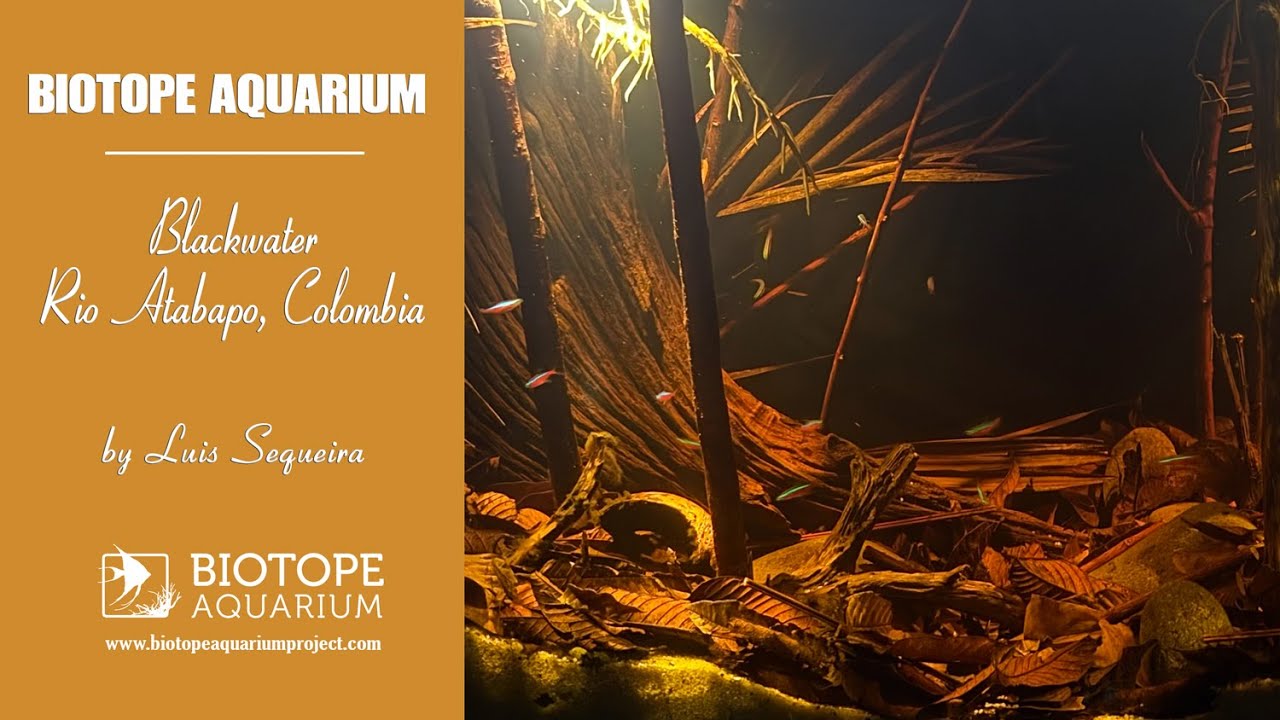
This aquarium replicates a blackwater flooded forest environment inspired by the Atabapo River basin, located in the Colombian-Venezuelan Amazon. The setup mimics the submerged forest floor during the rainy season, with soft white sand as the substrate and a thick layer of dried leaves, mimicking leaf litter accumulation.
Vertical branches and roots simulate the flooded trunks and submerged branches of riparian trees, creating natural cover and microhabitats. The water is amber-colored, rich in tannins from decomposing plant matter, which closely resembles the low-light, tea-stained appearance of blackwater systems.
The surrounding atmosphere is enhanced by emergent plants and floating roots, simulating the gallery forest canopy. Lighting is warm and subdued, giving the impression of filtered sunlight penetrating through dense foliage. Overall, the setup reflects a natural, nutrient-poor, acidic, and organic-rich ecosystem – perfect for Amazonian species like Apistogramma hongsloi, cardinal tetras, and dwarf catfish.
- Underwater landscape
The underwater landscape of this biotope aquarium authentically recreates the submerged forest floor of the Atabapo River, part of the blackwater systems of the Amazon. The aquascape features a fine sand substrate enriched with a thick, scattered layer of dried leaves from native Amazonian tree species, simulating natural leaf litter accumulation during seasonal flooding.
Numerous vertical and angled branches rise from the substrate, mimicking the submerged roots and trunks of flooded gallery forest vegetation. These structures provide shelter, territories, and shaded areas — key elements for blackwater-dwelling species like dwarf cichlids and small characins.
The tea-colored water, stained by tannins and humic substances from the decaying leaves and wood, creates a soft, low-visibility environment that enhances a sense of depth and naturalism. Overhead, floating plants and hanging roots cast dappled shadows, replicating the subdued light conditions found under the forest canopy.
This layout fosters a tranquil, shaded, and organic underwater habitat – perfect for simulating the calm, acidic, and mineral-poor waters of the Atabapo region.
Fish list:
- Apistogramma hongsloi (Cichlidae)
- Paracheirodon axelrodi (Characiformes)
- Farlowella acus (Loricariidae)
Aquatic plant list:
- Limnobium laevigatum (Hydrocharitaceae)
- Salvinia minima (Salviniaceae)
- Threats to ecology
These threats can lead to the collapse of highly specialized ecological networks and the loss of endemic and undescribed species. Conservation of these blackwater habitats is vital not only for biodiversity but also for local indigenous communities who depend on them.
Riparian zone
- Trees near the aquatic habitat
-
Many -