bin
Rio Poranga, upper Rio Negro, Brazil
Brazil, State of Amazonas, Sao Gabriel da Cachoeira
The Rio Poranga in the vicinity of Sao Gabriel da Cachoeira, Sao Gabriel is considered the third largest municipality of Brazil in territorial extension, according to the Brazilian Institute of Geography and Statistics. The Rio Poranga is a small affluent of the upper Rio Negro.
It is quite small and compared to other rivers in Brazil it is only a stream, it has a astonishing number of species including two Corydoras species described from this stream namely Corydoras duplicareus and Corydoras serratus.
The area is surrounded by dense jungle and a, as any rainforest, astounding number of tree species. The stream itself is quite fast flowing and therefore has less tannins than the rest of the Rio Negro, although the bottom is littered with leaves and branches.
- Submitted by
- Johannes H Steen
- Approved by
- Roberto E. Reis, Pablo C. Lehmann and Flávio Lima
- GPS
- 1.1269666, -66.8424759
- Geographical region
- South America
- Drainage Basin
- Rio Amazonas
- River catchment
- Upper Rio Negro
- Water body type
- Stream
- Water body name
- Rio Poranga
- Water body part
- Channel
- Water body course
- Upper course
- Water body: tributary of
- Rio
- Tributary name
- Rio Poranga
Videos above and below water
Warning: Undefined variable $fish_parent in /home/biotopea/public_html/wp-content/themes/bap/content-bin.php on line 55
Water Chemistry
Water information
- Water type
- fresh-water
- Water color
- Black water
- Water transparency
- Medium
- Concentration of sediments
- Low
- Water temperature
- 26 °C
- Water flow/curent
- Strong
Chemical parameters
- pH
- 5
- Conductivity
- 20
- GH
- 2 mg/l
- dGH
- KH
- 0
- dKH
- Dissolved Oxygen
- 40 %
Substrate in nature
- Sand
- White
- Pebble/Gravel
- None
- Stone
- None
- Stone form
- Silt/Mud
- Brown
- Leaves
- Adundant
- Driftwood
- Many
- Submerged terrestrial vegetation
- Yes
Aquatic Biotope
- Date of collecting
- Not sure but 1995
- Collecting area
- River bank
- Water depth
- 0,2m
- Air temperature
- 28 °C
- Sunlight
- No sunlight
Environment
- Environment
- Affected by human activity
- Affected by human activity
- Agriculture
- Agriculture
- Little
- Surrounding area
The surrounding area is a dense jungle totally surrounding the upper Rio Negro of which the Rio Poranga is a affluent of. It is located roughly 8 kilometres north of the Nobuo Oba (Área Capitão Nobuo Oba s/nº – Cachoeirinha – São Gabriel da Cachoeira). It is very close to the border of Venezuela and Colombia.
Terrestrial vegetation:
- Hevea sp. (Euphorbiaceae)
- Bertholletia excelsa (Lecythidaceae)
- Underwater landscape
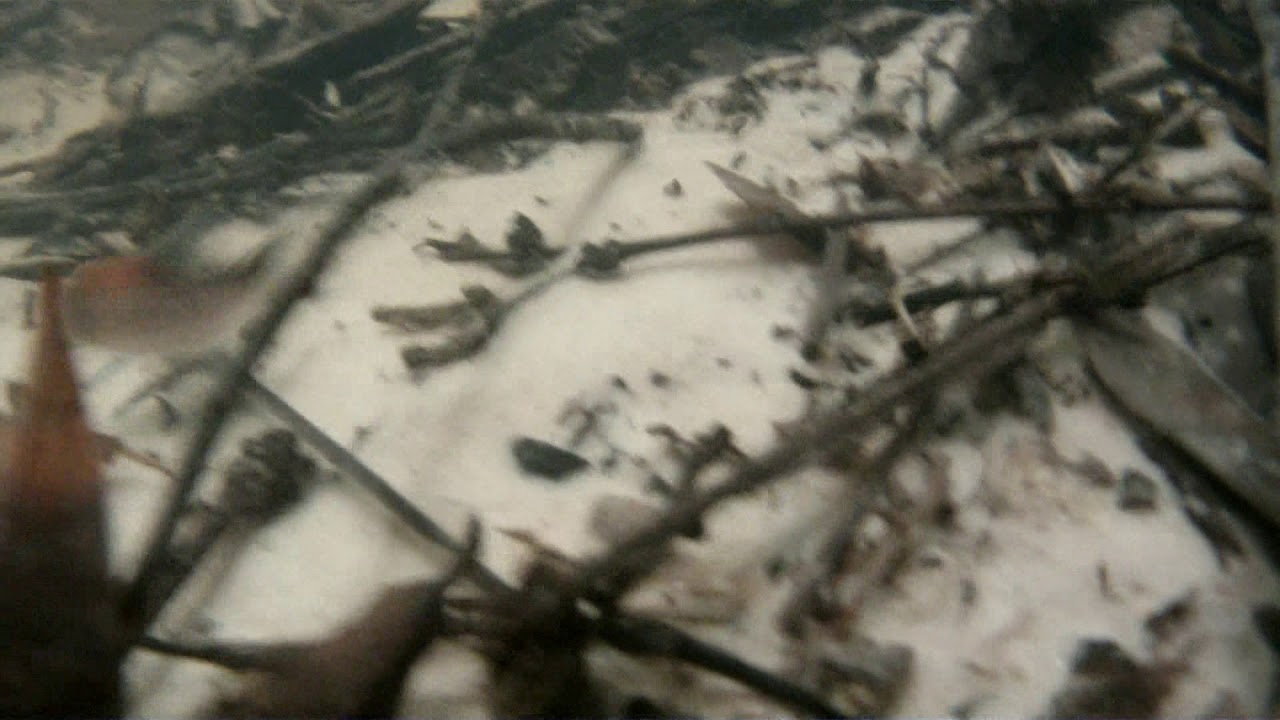
The water course of this river and generally the whole Rio Negro bottom is covered in leaf litter, twigs and branches. The banks have an astonishing amount of fallen tree and the root systems of trees.
The typical biotope of the Rio Poranga is fast flowing and also includes a lot of mimicry specifically in catfishes there of two wich are described from here, the species that mimic eachother are: Brachyrhamdia imitator, Corydoras duplicareus, Corydoras serratus and a species similar to Corydoras imitator.
Fish:
- Apistogramma mendezi (Cichlidae)
- Nannostomus sp. (Lebiasinidae)
- Hemigrammus coeruleus (Characidae)
- Hyphessobrycon sp. (Characidae)
- Hyphessobrycon epicharis (Characidae)
- Corydoras duplicareus (Callichthyidae)
- Corydoras serratus (Callichthyidae)
Aquatic vegetation:
- Alternanthera reineckii (Amaranthaceae)
- Myriophyllum sp. (Haloragaceae)
- Threats to ecology
Rivers like this are extremely important to the ecosystem and biodiversity as a whole. These streams run through the forest and distributes nutrients which are a scarce source in the Amazon, the river also hosts several species or subspecies wich are only found there.
The major threats to the ecology of the Amazon is logging wich dries out and erodes whole rivers and goldmining which pollutes the river to an extent which makes it dangerous for even humans to live there.
Riparian zone
- Trees near the aquatic habitat
-
Many -
Comment by the expert
Roberto E. Reis: Description of the location general, and description of surroundings too wide. Description of threats include logging and mining. One video and four photos of the biotope. Seven fish and two aquatic plant species listed. Description of the aquatic habitat, riparian zone, and underwater landscape reasonable. Bibliography/Sitography weak.
Flávio Lima: The participant has done na adequate research job, using videos from the locality that he recreated and the sparse literature available for this specific habitat.
Pablo C. Lehmann: Very well characterized natural biotope, with good quality visual supports representative of the natural habitat.