bin
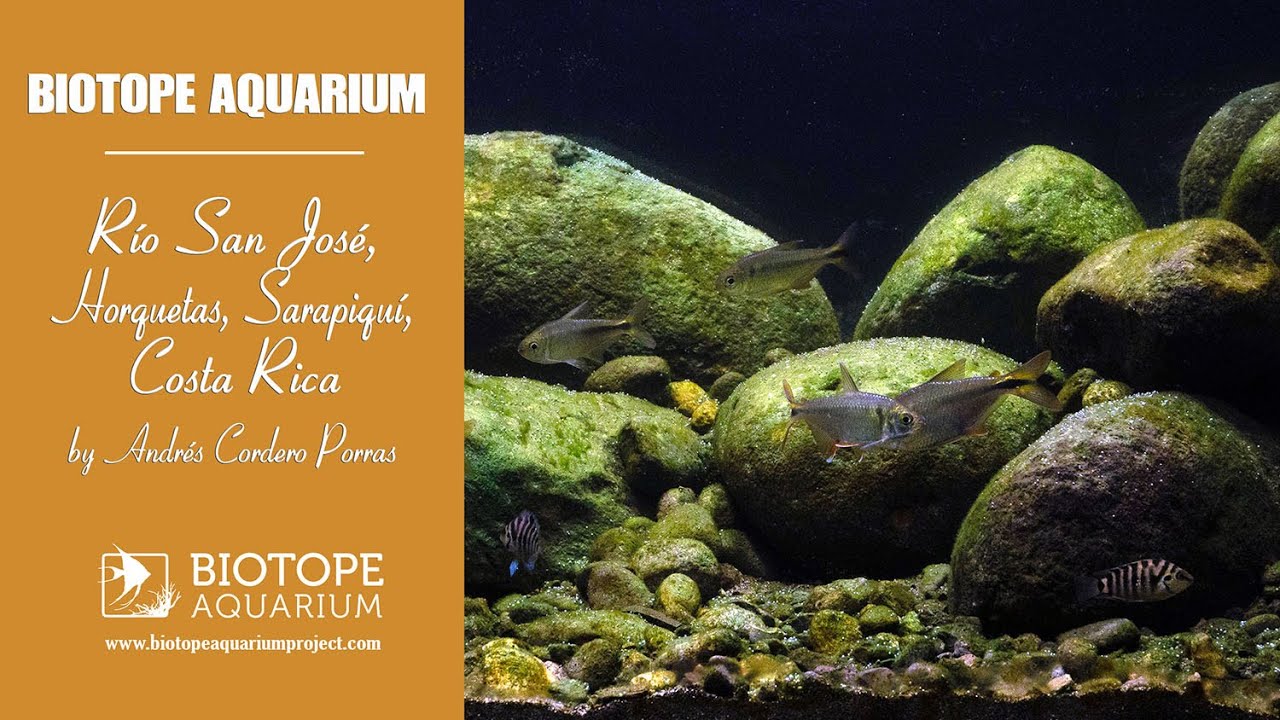
Río San José, Horquetas, Sarapiquí, Costa Rica
Costa Rica, Heredia, Horquetas / Sarapiquí / Heredia
The San José River is part of the Sarapiquí River basin in the northern part of Costa Rica. This basin has an extension of 2.025km².
This area is very calm, here you can see the interactions of flora and fauna with humans. There are clear, clean waters that people use for recreation. In this sector you can find many fish interactions and especially the cichlids which are my favorites.
- Submitted by
- Andrés Cordero Porras
- Approved by
- Juan M. Artigas Azas, Jairo Arroyave & Michael Köck
- GPS
- 10.3182783, -83.8910141
- Geographical region
- Central America
- Drainage Basin
- Río San Juan
- River catchment
- Braulio Carrillo National Park in Heredia
- Water body type
- River
- Water body name
- San José
- Water body part
- Rapids
- Water body course
- Middle course
- Water body: tributary of
- River
- Tributary name
- Río Sarapiquí
Videos above and below water
Warning: Undefined variable $fish_parent in /home/biotopea/public_html/wp-content/themes/bap/content-bin.php on line 55
Water Chemistry
Water information
- Water type
- fresh-water
- Water color
- Clear water
- Water transparency
- High
- Concentration of sediments
- Low
- Water temperature
- 25 °C
- Water flow/curent
- Strong
Chemical parameters
- pH
- 7
- Conductivity
- 79
- GH
- 534 mg/l
- dGH
- KH
- dKH
- Dissolved Oxygen
- 9 %
Substrate in nature
- Sand
- Beige
- Pebble/Gravel
- Mixed
- Stone
- Grey
- Stone form
- Roundish
- Silt/Mud
- None
- Leaves
- Few
- Driftwood
- None
- Submerged terrestrial vegetation
Aquatic Biotope
- Date of collecting
- January, 2023
- Collecting area
- Middle waters
- Water depth
- 0,5m
- Air temperature
- 28 °C
- Sunlight
- Full sun
Environment
- Environment
- Affected by human activity
- Affected by human activity
- Agriculture
- Agriculture
- Advanced
- Surrounding area
This area is located in one of the strongest agricultural sectors in Costa Rica. It is a site that is surrounded by roads and large banana farms. Despite this, it is a site with a lot of biodiversity. On the banks of the river, green iguanas and howler monkeys are easily found.
This ecosystem consists of pure round stones, there are no plants in it due to strong currents, and at any time of the year there are floods that drag everything in their path. For these reasons, the fish found here are adapted to hide in small crevices between the rocks and hold on to strong currents.
This territory is characterized by its high temperatures, which range from 20.3-30.3°C. It is a place in Costa Rica that rains all year round and has an annual rainfall of 3.500-4.000mm per year. The climate of this place is known as very Humid, very hot. The life zones around this point are very humid tropical forests.
- Underwater landscape
The watercourses in the area are strong and do not have aquatic plants. But there are a lot of plants on the river bank, all their roots create a lot of shelters for aquatic creatures. There are also many trees that have their roots in the river.
In the water there are stones completely covered with algae, river sand, sunken pieces of wood and fallen leaves in the crevices of rock structures. The clear water shows all the colors of the fishes with the sun shining without any shadow. Due to the lack of shade, the water flowing down to the river bank is very hot and does not allow anything to live in these places. But the little ponds that get shade are full of tadpoles.
Fishlist:
- Neetroplus nematopus (Cichlidae)
- Amatitlania siquia (Cichlidae)
- Astyanax aeneus (Acestrorhamphidae)
- Tomocichla tuba (Cichlidae)
- Amatitlania septemfasciata (Cichlidae)
- Alfaro cultratus (Poeciliidae)
- Threats to ecology
Water is a super important resource for life. This site is full of diversity, has a lot of reptiles, amphibians, mammals and birds. They all meet to feed and hydrate near the river.
For these same reasons, wildlife crossings have been created in this same spot. During the visit, howler monkeys were observed using them and crossing from one side of the river to the other.
Despite this great importance for wildlife and for humans, the water resource has been degraded by human progress. Pollution, erosion from monocultures, and poor solid waste management threaten this ecosystem.
Another big problem is that this river is used for spearfishing for human consumption. The number of species they extract in each fishing trip is incomprehensible. This causes a great impact on the ichthyofauna populations of the place. They also use chemicals to catch shrimp for consumption. This ends up poisoning the river and is a huge threat to this beautiful ecosystem.
Riparian zone
- Trees near the aquatic habitat
-
Few - Erythrina berteroana (Fabaceae)
- Trees near the aquatic habitat
-
Few - Cascabela ovata (Apocynaceae)
- Trees near the aquatic habitat
-
Few - Zygia longifolia (Fabaceae)
Comment by the expert
Michael Köck: The description of the habitat is clear and I guess everyone has a clear picture of what to expect. The threats are understandably described. A mistake with the GH in the water parameters happened, probably caused by translation, but the cited literature is well chosen.
Juan M. Artigas Azas: It has been 21 years since I last was at this beautiful river wanting to go back and the video has brought to me a beautiful reminder, thank you! I need to say however that the video is a little distressing since the videographer apparently approached breeding Tomocichla tuba very much, causing the pair to lose coordination and with this the Astyanax to eat most (the whole?) spawn. One should always be respectful and never approach so much as to allow this to happen. I found the list of the fish short, perhaps just a reflection of a description of a very specific place, but shouldn’t at least Poecilia gilli be present? As a recommendation, the wonderful book by William Bussing “Peces de las aguas continentales de Costa Rica” would be a great source of information about the fish fauna of this wonderful place — and all of Costa Rica.
Jairo Arroyave: As pointed out by Juan Miguel, species list seems a bit short, although consistent with the actual BIN based on the video. Bibliography is perhaps missing the most important resource of this kind: Bussing’s book in the freshwater fishes of Costa Rica. Other than that, and the stress incurred on the fishes (as mentioned by Juan Miguel) the documentation of both surface and underwater habitat is superb.