bin
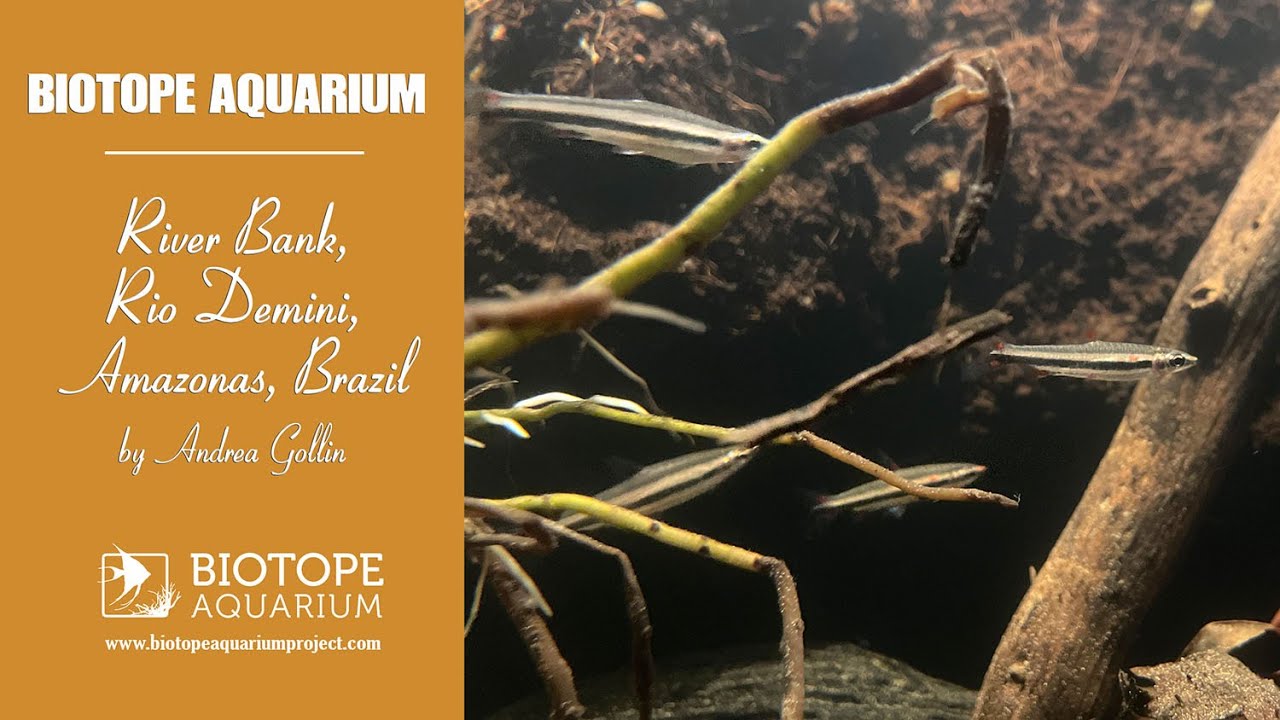
River Bank, Rio Demini, Amazonas, Brazil
Brazil, Amazonas, Barcelos
River banks along the igarapè, such as Rio Demini, offer great shelter and food sources for many fish. On the banks of the river the water flows more slowly and leaves, branches, fruits and pods of the plants above fall into the water, settling on the bottom.
The water is tinged with the tannins released by these botanicals. Several species are found to swim among the dead submerged nature, species of the genus Nannostomus (Nannostomus eques and Nannostomus trifasciatus), characids like Hyphessobrycon copelandi, Carnegiella strigata and Carnegiella marthae, even cichlids (Pterophyllum sp.) and plecos (Ancistrus sp.). The flora is only terrestrial, and we can find Ficus sp., Monstera sp., Bromelia sp., lianas and giant trees (Calycophyllum sp. and many more).
- Submitted by
- Andrea Gollin
- Approved by
- Roberto E. Reis, Pablo C. Lehmann and Flávio Lima
- GPS
- -0.1759183, -62.7900314
- Geographical region
- South America
- Drainage Basin
- River banks
- River catchment
- Rio Demini
- Water body type
- Igarapè
- Water body name
- River bank of Rio Demini
- Water body part
- Flood plain
- Water body course
- Middle course
- Water body: tributary of
- Rio
- Tributary name
- Rio Negro
Videos above and below water
Warning: Undefined variable $fish_parent in /home/biotopea/public_html/wp-content/themes/bap/content-bin.php on line 55
Water Chemistry
Water information
- Water type
- fresh-water
- Water color
- Black water
- Water transparency
- Medium
- Concentration of sediments
- Medium
- Water temperature
- 28 °C
- Water flow/curent
- Slow
Chemical parameters
- pH
- 6.2
- Conductivity
- GH
- dGH
- KH
- dKH
- Dissolved Oxygen
Substrate in nature
- Sand
- Beige
- Pebble/Gravel
- Stone
- Brown
- Stone form
- Silt/Mud
- Leaves
- Adundant
- Driftwood
- Many
- Submerged terrestrial vegetation
- Yes
Aquatic Biotope
- Date of collecting
- September, 2021
- Collecting area
- River bank
- Water depth
- 0,2m
- Air temperature
- Sunlight
- Filtered/dappled sun
Environment
- Environment
- Human settlements
- Human settlements
- Dispersed
- Surrounding area
Rio Demini is a natural area, present in the Amazon forest, and is a tributary of the Rio Negro. In this area there are human settlements and activities, but very sparse and non-industrialized, they are all activities mainly related to ecotourism or native activities.
The area is rich in avifauna and terrestrial fauna, in amphibians, reptiles and mammals. Hundreds of plant species thrive and cover the river and its small igarapés.
- Underwater landscape
In areas with shallower and sheltered water we can find different species of characins, lebiasinids and gastropelecids. Where the water is slightly higher we can find many species of plecos and cichlids.
The slow-flowing areas are covered by vegetation. Leaves, branches and fruits of these plants fall into the water and form a sediment leaf bed. The water then becomes cloudy and full of tannin. There are no submerged plants, but some land plants have roots directly in the water.
Fishlist:
- Carnegiella strigata (Gasteropelecidae)
- Carnegiella marthae (Gasteropelecidae)
- Hyphessobrycon spp. (Characidae)
- Nannostomus trifasciatus (Lebiasinidae)
- Nannostomus eques (Lebiasinidae)
- Threats to ecology
The main ecological problems of these areas are always linked to anthropic activity, from the exploitation of natural resources (deforestation and monoculture), to excessive fishing and abandoned plastic up to the very serious problem of the release of alien species.
Riparian zone
- Trees near the aquatic habitat
-
Many -
Comment by the expert
Roberto E. Reis: Description of the location fair, with mentions to the surroundings. Description of threats to ecology general, of Amazon wide-scope, and not much applicable to mid Negro River. One photo and one short, not very informative video. Five fish species listed; no plants or invertebrates. Description of the aquatic habitat, riparian zone, and underwater landscape acceptable. Bibliography/Sitography reasonable.
Flávio Lima: The participant has apparently based the reconstruction of the biotope based on its field experience, as the references he listed are not really informative. It should be mentioned that it is a biotope from the Rio Negro basin which is not blackwater, so it was interesting choice by the participant. Regarding fishes, the participant included only Nannostomus trifasciatus, but in the video provided the Nannostomus species present is rather Nannostomus marginatus. The video also shows Hemigrammus ocellifer, Hemigrammus aff. bellottii, and Hemigrammus schmardae, which I imagine were not available for the participant to include in his biotope.
Pablo C. Lehmann: I was confused why both BIN and BAM were exposed in the same video. The information on the Demini River bank is comprehensive and provides valuable information about this specific biotope. It describes the habitat, water chemistry, species and threats in detail, increasing its reliability. The video of the environmental biotope is not very good. I was unable to get a clear understanding of the ecosystem through the video.