bin
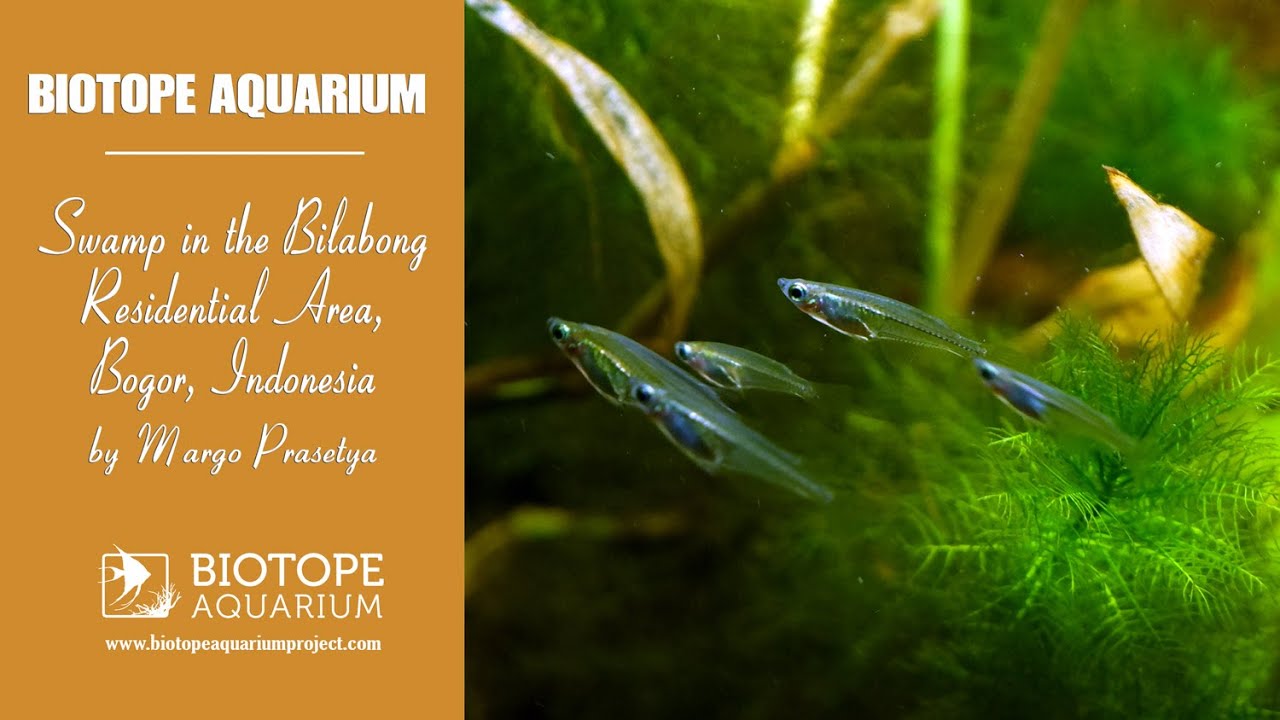
Swamp in the Bilabong Residential Area, Bogor, Indonesia
Indonesia, Bogor, Jawa Barat
Bogor, historically known as Buitenzorg, was a center for biological research during the Dutch East Indies era. The fish diversity in western Java is much higher compared to other parts of Java, but over time, this diversity has drastically declined due to urbanization dominated by the areas from Jakarta to Bogor.
Swamps have been converted into human settlements, with no one paying attention. Therefore, at home, I am trying to create a biotope aquarium to give endangered fish a chance at life, study them, and reintroduce them to the local community.
- Submitted by
- Margo Prasetya
- Approved by
- Heiko Blessin, Heok Hee Ng & Greg Martin
- GPS
- -6.4987221, 106.7669144
- Geographical region
- Southeastern Asia
- Drainage Basin
- Jabodetabek
- River catchment
- DAS Ciliwung
- Water body type
- Pond
- Water body name
- Setu Tonjong
- Water body part
- Marsh land
- Water body course
- Upper course
- Water body: tributary of
- Lake
- Tributary name
- Kali Pesanggrahan
Videos above and below water
Warning: Undefined variable $fish_parent in /home/biotopea/public_html/wp-content/themes/bap/content-bin.php on line 55
Water Chemistry
Water information
- Water type
- fresh-water
- Water color
- Mixed water
- Water transparency
- Medium
- Concentration of sediments
- Medium
- Water temperature
- 28 °C
- Water flow/curent
- None
Chemical parameters
- pH
- 6
- Conductivity
- GH
- 120 mg/l
- dGH
- KH
- 80 mg/l
- dKH
- Dissolved Oxygen
Substrate in nature
- Sand
- Black
- Pebble/Gravel
- Mixed
- Stone
- Mixed
- Stone form
- Irregular
- Silt/Mud
- Brown
- Leaves
- Many
- Driftwood
- Many
- Submerged terrestrial vegetation
- Yes
Aquatic Biotope
- Date of collecting
- 14 January, 2024
- Collecting area
- Edge of reservoir
- Water depth
- 0,5m
- Air temperature
- 27 °C
- Sunlight
- Full sun
Environment
- Environment
- Human settlements
- Affected by human activity
- Agriculture
- Deforestation
- Pollution
- Human settlements
- Dispersed
- Surrounding area
This swamp is the upstream part of Setu Tonjong and the Pesanggrahan River, which will flow into the capital region of Indonesia, Jakarta. Before 1990, this area was a plantation for fruits, bamboo, and rubber, supplying the needs of Jakarta’s population. At that time, these swamps were untouched. Entering the 2000s, urbanization began to transform this area into a densely populated settlement, with almost all the swamps filled in or given concrete embankments.
I heard complaints from the local community that the swamps, which are the habitat of Oryzias hubbsi, always pose a potential danger of malaria and dengue fever mosquitoes, and thus they will be drained and the lakebanks will be concreted. This is a very dilemmatic situation.
Vegetation list:
- Musa paradisiaca
- Mangifera indica
- Ficus benjamina
- Underwater landscape
During the dry season, the barren land becomes parched, and the Limnophila plants transition to terrestrial leaves and root themselves in the soil. When the rainy season arrives, the area is filled with submerged shrubs, and the Limnophila plants become a place for Oryzias to lay their eggs.
Fishlist:
- Oryzias hubbsi (Adrianichthyidae)
- Dermogenys pusilla (Zenarchopteridae)
- Trichopsis vittata (Osphronemidae)
- Trichogaster trichopterus (Osphronemidae)
- Aplocheilus armatus (Aplocheilidae)
- Brachygobius xanthomelas (Oxudercidae)
- Barbodes binotatus (Cyprinidae)
- Rasbora argyrotaenia (Danionidae)
- Channa striata (Channidae)
- Amphilophus labiatus (Cichlidae) – introduced
Crustaceans:
Aquatic plants:
- Limnophila aquatica (Plantaginaceae)
- Persicaria attenuata (Polygonaceae)
Wetland plants:
- Threats to ecology
This area is crucial for the sustainability of Jakarta. Historically, Jakarta to Bogor was an area of swamps and very fertile land. The current exploitation and land conversion have led to uncontrollable flooding. As a resident of this area, I experience a dilemma: if the swamps are preserved, tropical diseases like malaria become uncontrollable.
Efforts to eradicate malaria have been made since the Dutch East Indies era by introducing Gambusia sp. and Poecilia sp. fish, which proved ineffective and even suppressed the local ecosystem, including Oryzias hubbsi. We should protect these native fish and house them in home aquariums to help them survive longer.