bam Beginner-friendly level

Blackwater affluent, Rio Ucayali, Peru

Sponsored by

Peru, Ucayali, Coronel Portillo

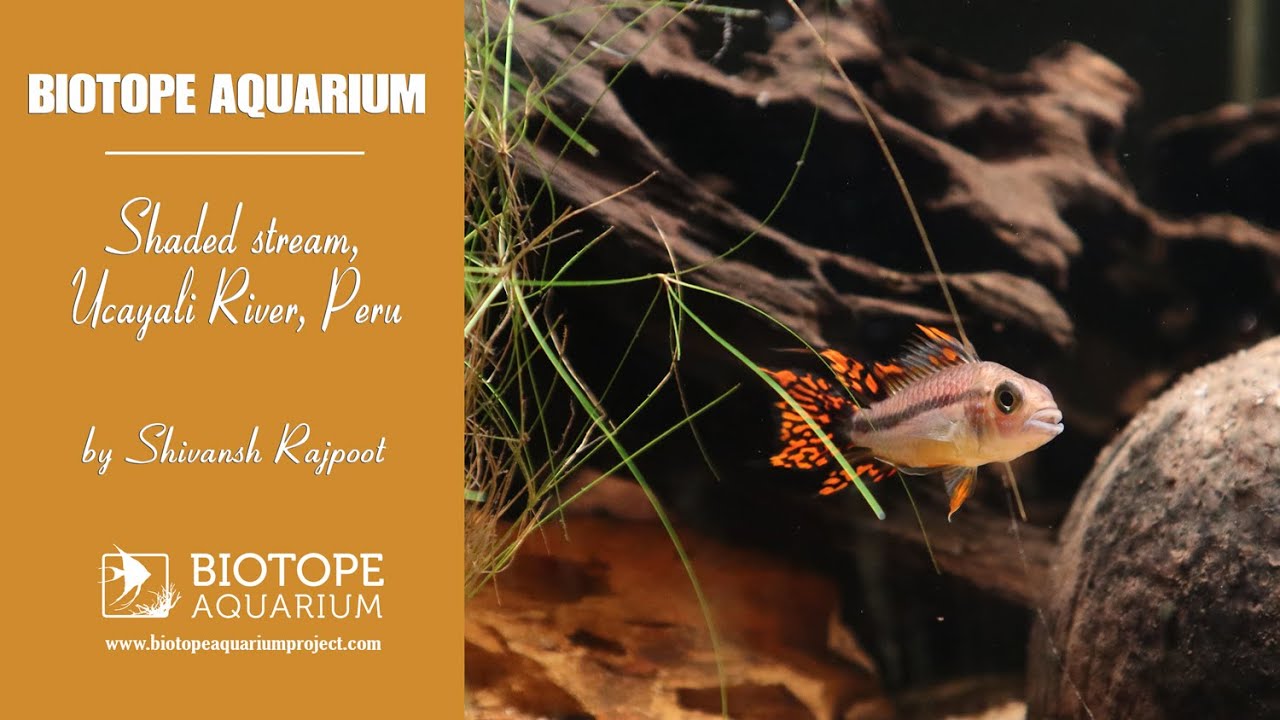
This aquarium recreates a shallow, slow-flowing forest stream from the Ucayali River basin in Peru. These blackwater creeks are tucked under dense rainforest canopy, where leaf litter, branches, and driftwood naturally accumulate over pale sand. The tea-colored water is rich in tannins, low in pH, and almost completely free of minerals.

The composition focuses on simplicity and realism—open sandy foreground, leaf-covered mid-ground, and driftwood structure providing shelter and spawning areas. A small population of Apistogramma panduro, Apistogramma cacatuoides, and schooling Paracheirodon simulans reflect the actual species diversity of such a habitat.

Low light, filtered through moss and overhanging grasses (Eleocharis), mimics the dim and stable conditions typical of these streams. This setup not only captures the mood of the Amazonian forest floor but highlights the ecological balance and fragility of blackwater systems.

Submitted by
Shivansh Rajpoot
Approved by
Roberto E. Reis, Pablo C. Lehmann & Antonio Machado-Allison
GPS
-6.3428555, -76.0068893
Geographical region
South America
Drainage Basin
River catchment
Amazon River Basin
Water body type
Stream
Water body name
Igapó forest stream
Water body part
Flood plain
Water body course
Middle course
Water body: tributary of
River
Tributary name
Ucayali River

Videos above and below water

Warning: Undefined variable $fish_parent in /home/biotopea/public_html/wp-content/themes/bap/content-bam.php on line 85

Warning: Undefined array key "additional_species" in /home/biotopea/public_html/wp-content/themes/bap/functions/bap-fields.php on line 349

Water Chemistry

Water information

Water type
brackish-water
Water color
Black water
Water transparency
Low
Concentration of sediments
Low
Water temperature
24 °C
Water flow/curent
Slow

Chemical parameters

pH
5.5
Conductivity
10
GH
319 mg/l
dGH
KH
3.6 mg/l
dKH
Dissolved Oxygen
85 %

Aquarium information

Aquarium description

Set-up date
May, 2025
Aquarium decoration

This setup replicates a shallow side-channel of the Ucayali River in Peru, capturing the essence of a calm, tannin-rich blackwater stream. The base is a layer of fine beige sand, chosen to match natural sediment in the region. Driftwood was placed to simulate submerged tree roots and fallen branches, offering shelter and structure for fish like Apistogramma panduro and Paracheirodon simulans.

To enhance realism, a light scattering of botanicals and leaves has been added, mimicking seasonal litterfall from the overhanging rainforest canopy. Low vegetation such as Eleocharis and mosses are placed to echo sparse aquatic flora typically found under low-light forest cover. The lighting is subdued, warm-toned, and filtered through tinted glass and surface shade to simulate the natural dappled light of an Amazonian understory.

Aquarium equipment
  • Tank Size: Dual tank stepped layout
  • Upper tank: 60 × 45 × 25 cm
  • Lower tank: 60 × 45 × 25 cm
  • Filtration: 2 units of SUNSUN HW-604B EXTERNAL CANISTER FILTER(800L/H) + surface skimmer (air-driven) to maintain flow and oxygenation with minimal surface agitation, replicating natural conditions.
  • Lily Pipe Sets
  • Lighting: Soft-spectrum LED with warm diffusion to preserve tannin tone and encourage moss growth(Sunsun)
  • Heating: Thermostat-controlled 50W heater maintaining 24–25 °C
  • Additional Setup: Natural almond leaves and alder cones for tannin leaching and pH buffering.

Fish list:

  • Apistogramma cacatuoides (Cichlidae)
  • Apistogramma panduro (Cichlidae)
  • Paracheirodon simulans (Characidae)
  • Paracheirodon axelrodi (Characidae)

Aquatic plant list:

  • Eleocharis acicularis (Poaceae)
Fish care

The aquarium is designed to mimic the natural blackwater streams of the Ucayali basin, providing shaded cover, soft sandy substrate, and plenty of hiding spots through driftwood and leaf litter.

Fish such as Apistogramma panduro and Paracheirodon simulans are kept in soft, acidic water conditions, with stable temperatures around 24°C. Water current is minimal to replicate calm stream conditions.

Fish are fed once daily with a varied diet including live and frozen daphnia, bloodworms, and high-quality micro pellets. Care is taken not to overfeed. Weekly observation ensures health, color, and natural behavior remain optimal.

Plant care

Plants used are minimal and biotope-accurate: Eleocharis acicularis and native mosses that grow in low-light, nutrient-poor waters. No artificial fertilizers or CO₂ are added, preserving water softness.

Lighting is dim and filtered to simulate the natural forest canopy. Any melting or decay is trimmed during water changes, and plants are misted with aquarium water when exposed above the surface. Plant health is judged by new shoots and natural color retention.

Water care

Water is changed weekly by 20-25%, using RO water re-mineralized to match blackwater conditions. TDS is kept below 80ppm. Parameters (pH, GH, KH) are tested monthly to ensure stability.

Filter sponge is cleaned gently once a month to preserve beneficial bacteria, and driftwood is occasionally rinsed to avoid biofilm buildup. No carbon or chemical filtration is used—only mechanical and biological media to maintain a natural microenvironment.

Water surface is left calm to preserve tannin-rich clarity while ensuring oxygenation through gentle sponge-driven airlift.

Dimensions

Length
60 cm
Depth
40 cm
High
20 cm
Volume
60 L

Substrate in aquarium

Sand
Beige
Pebble/Gravel
None
Stone
None
Stone form
Silt/Mud
None
Leaves
Few
Driftwood
Many
Submerged terrestrial vegetation
Yes

Bibliography

  • Cichlid Atlas Vol. 1 - Apistogramma panduro profile by Uwe Römer
    ISBN 978-3882440684
  • Bleher’s Biotopes - Amazonian Biotopes by Heiko Bleher
    ISBN 978-8890312350

Comment by the expert

Roberto E. Reis: Fish and few plants can coexist well for a long time but the aquarium but the aquarium is not large. It includes four fish species, but one is not native to the corresponding BIN. Aquarium is well decorated with logs and few plants, making it beautifully composed and similar to the natural environment. The details, equipment and chemicals used, and care taken are properly described. Reasonable visual support, with one video and five photos.

Pablo C. Lehmann: This is a well-executed and ecologically faithful BAM, with strong descriptive support and solid technical design. Nonetheless, the limited biodiversity, modest visuals, and lack of seasonal realism keep it below the highest tier.