bam Beginner-friendly level

#10399 Cape Kabogo, Lake Tanganyika, Tanzania

Sponsored by

Tanzania, Kigoma Region, Kigoma Rural

Motivation: This layout recreates the dynamic microhabitat of Cape Kabogo, with particular emphasis on the behavioural ecology of Lamprologus callipterus. The hardscape contrasts a dominant rock formation on one side of the aquarium with a scattered field of smaller rubble on the other, reflecting the intermediate transition zone of Lake Tanganyika. This composition naturally draws the eye toward the sandy depression containing the shell bed.

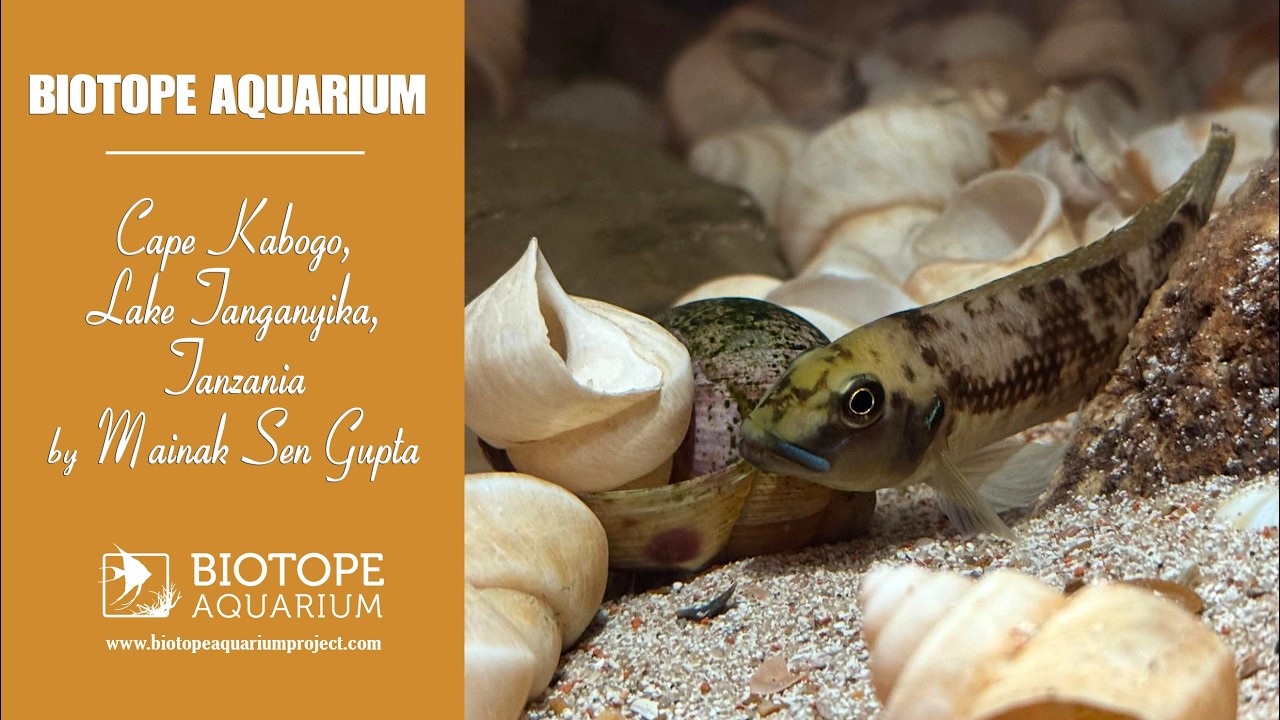
Key Features: The focal point of the aquarium is the central shell bed, where a large male Lamprologus callipterus continuously rearranges empty Neothauma tanganyicense shells to establish and maintain his breeding territory. This remarkable behaviour is complemented by the movements of the smaller female L. callipterus and the opportunistic Telmatochromis vittatus, which weave through rocky crevices and around the shell bed. Together, these interactions create an authentic display of territorial behaviour and habitat use typical of this Lake Tanganyika shoreline.

Submitted by
Rens van Duren
GPS
-5.4616671, 29.7472229
Geographical region
Eastern Africa
Drainage Basin
River catchment
Water body type
Lake
Water body name
Tanganyika
Water body part
Open water
Water body course
Water body: tributary of
Tributary name

Videos above and below water

Warning: Undefined variable $fish_parent in /home/biotopea/public_html/wp-content/themes/bap/content-bam.php on line 85

Water Chemistry

Water information

Water type
Freshwater
Water color
Clear water
Water transparency
High
Concentration of sediments
No
Water temperature
26 °C
Water flow/curent
Slow

Chemical parameters

pH
8.0
Conductivity
455
GH
120 mg/l
dGH
KH
220 mg/l
dKH
Dissolved Oxygen

Aquarium information

Aquarium description

Set-up date
June 2025
Aquarium decoration

To recreate the transition zone of Cape Kabogo, the aquarium uses a fine, light-coloured alkaline sand substrate that gently slopes away from the rockwork. The hardscape is intentionally asymmetrical, with a large vertically oriented boulder dominating one side to represent a fallen section of the Rift Valley shoreline, gradually transitioning into a field of smaller fractured rocks and rubble.

This arrangement forms a sheltered sandy depression containing a dense accumulation of authentic Neothauma tanganyicense shells, positioned to replicate the shell beds naturally maintained by male Lamprologus callipterus. The composition directs attention toward this behavioural focal point, while the surrounding rocky crevices provide natural shelter and territorial boundaries for females and Telmatochromis vittatus.

Fish:

  • Lamprologus callipterus (Cichlidae)
  • Telmatochromis vittatus (Cichlidae)
Aquarium equipment

Filtration: Oase BioMaster Thermo 600 external canister filter.

Lighting: Radion XR15 Freshwater LED and Fluval Plant 3.0 LED, with the latter used to provide subtle blue accent lighting.

Fish care

The fish are provided with a varied diet and abundant hiding spaces, allowing females that are not ready to breed and Telmatochromis vittatus to retreat and establish secure territories. Weekly 20% water changes help maintain stable water conditions and long-term aquarium health.

Plant care
Water care

Weekly 20% water changes are performed, with Seachem Tanganyika Buffer added as needed to maintain the target pH of approximately 8.0 and preserve stable alkaline water conditions.

Dimensions

Length
90 cm
Depth
60 cm
High
30 cm
Volume
162 L

Substrate in aquarium

Sand
Beige
Pebble/Gravel
Beige
Stone
Reddish
Stone form
Irregular
Silt/Mud
Beige
Leaves
None
Driftwood
None
Submerged terrestrial vegetation
None

Bibliography

  • Tanganyika chichlids in their natural habitat by Ad Konings
    ISBN 0-9668255-0-0

Sitography

→ Tanganyika