bam Beginner-friendly level

Cienegas del Rio Lerma, Toluca Valley, México

Sponsored by

Mexico, Estado de México, Lerma

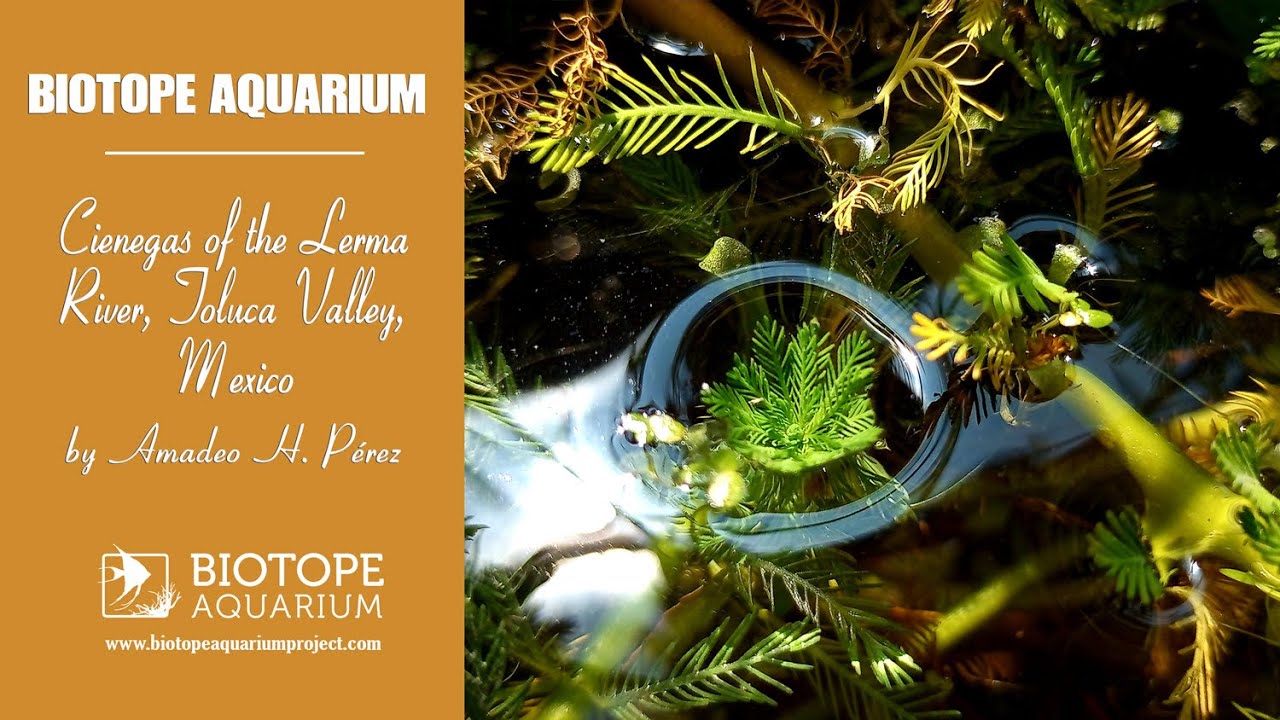
This Biotope Aquarium is inspired by the “Chimaliapan” wetland of the Lerma River, specifically during the rainy season when the flora becomes especially lush along the water’s edge. The layout recreates the marginal zone of the wetland, where abundant vegetation grows in moderately shallow water.

To recreate this biotope, a field visit was conducted, including a thorough survey of the local plant life. A responsible collection was then carried out to avoid disturbing the natural ecosystem. In addition, data on the physicochemical parameters of the water were gathered, and a small quantity of water from the original habitat was collected to be used in the aquarium setup.

Submitted by
Amadeo Hernández Pérez
Approved by
Michael Köck, Jairo Arroyave & Juan M. Artigas Azas
GPS
19.1424484, -99.4989624
Geographical region
Central America
Drainage Basin
Cuenca Alta
River catchment
Rio Lerma
Water body type
Laguna
Water body name
Ciénega Chimaliapan
Water body part
Flood plain
Water body course
Headwaters
Water body: tributary of
Laguna
Tributary name
Lerma River

Videos above and below water

Warning: Undefined variable $fish_parent in /home/biotopea/public_html/wp-content/themes/bap/content-bam.php on line 85

Water Chemistry

Water information

Water type
fresh-water
Water color
Clear water
Water transparency
High
Concentration of sediments
High
Water temperature
12 °C
Water flow/curent
None

Chemical parameters

pH
7.4
Conductivity
GH
125 mg/l
dGH
KH
12 mg/l
dKH
Dissolved Oxygen
2.15 %

Aquarium information

Aquarium description

Set-up date
May, 2025
Aquarium decoration

All the elements used in the aquarium setup – including the water – were collected directly from the natural environment.

Aquarium equipment

No equipment (filter, lamp) is used in the aquarium.

Fish care

No specific actions are required, as there are no organisms that demand intensive care.

Mollusc list:

  • Physa acuta (Physidae)

Crustacean list:

  • Gammarus sp. (Gammaridae)
  • Daphnia pulex (Daphniidae)

Flatworm list:

  • Planaria sp. (Planariidae)
Plant care

The aquarium is located in an area where it receives sunlight for 3-4 hours a day. Weekly pruning is carried out.

Aquatic plants:

  • Arenaria paludicola (Caryophyllaceae)
  • Hydromystria laevigata (Hydrocharitaceae)
  • Ludwigia peploides (Onagraceae)
  • Myriophyllum aquaticum (Haloragaceae)

Wetland plants:

  • Berula erecta (Apiaceae)
  • Eleocharis sp. (Cyperaceae)
  • Epibolium sp. (Onagraceae)
  • Hydrocotyle ranunculoides (Araliaceae)
  • Typha latifolia (Typhaceae)

Aquatic mosses:

  • Lemna sp.(Araceae)
  • Pontederia crassipes (Pontederiaceae)
Water care

Damaged parts or excess plants are carefully removed. The substrate is siphoned to eliminate excess sediment. Partial water changes (70%) are performed weekly, using rainwater for the replacements.

Dimensions

Length
100 cm
Depth
40 cm
High
40 cm
Volume
160 L

Substrate in aquarium

Sand
Beige
Pebble/Gravel
None
Stone
None
Stone form
Silt/Mud
Beige
Leaves
Adundant
Driftwood
None
Submerged terrestrial vegetation
Yes

Bibliography

Comment by the expert

Michael Köck: In summary – An impressive composition without fish, but they are not missed in the slightest. I would have omitted the invasive water hyacinth, which is probably the only component of the overall concept that poses a (slight) threat to the stability of the aquarium due to its expected size and rate of reproduction, but that is more of a personal opinion than a criticism. Definitely one of the highlights since I started serving as a judge.

Jairo Arroyave: The BAM could have included more elements of the aquatic fauna; the vegetation component is quite nice but the biotope lacks a lot of the fauna which would have given this entry much more presence and appeal.

Juan M. Artigas Azas: I find the aquarium very attractive, although I would have liked that Girardichthys multiradiatus had been included.