bam Demanding level

Creek, Phong Nha-Ke Bang National Park, Vietnam

Sponsored by

Viet Nam, Phong Nha-Ke Bang National Park, Quang Binh Province

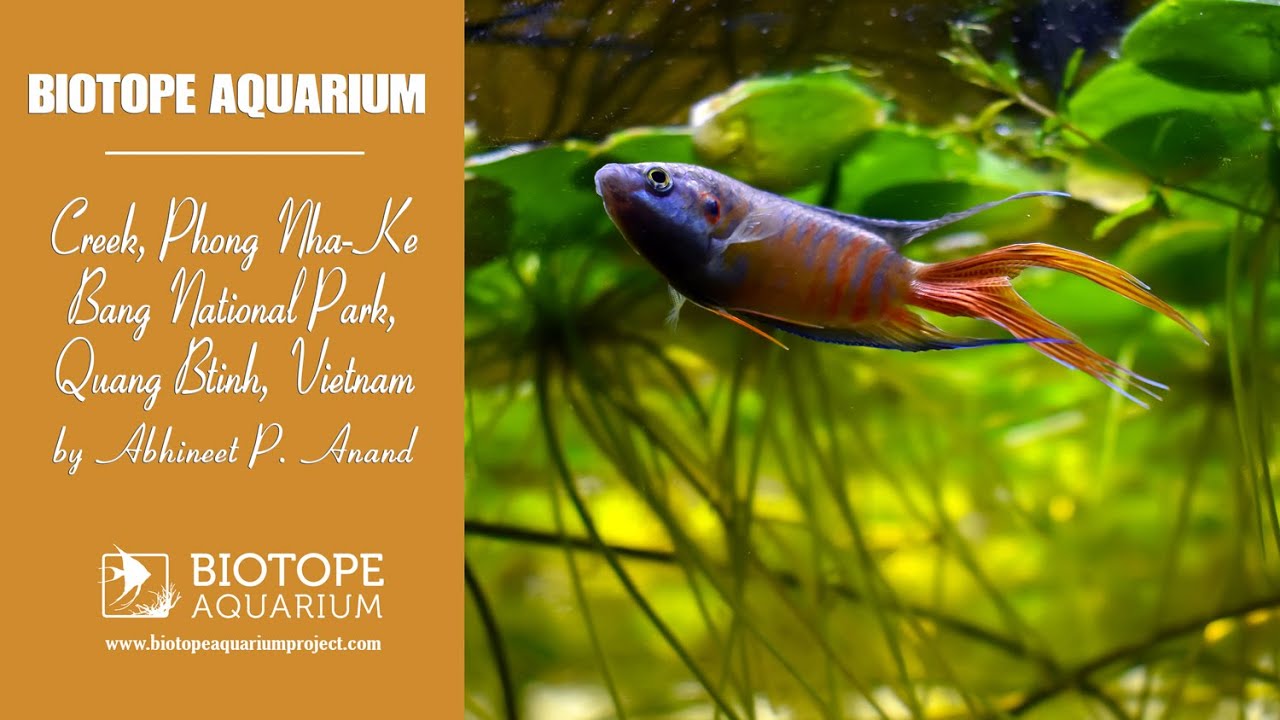
This 54L aquarium shows a fragment of Creek near the Phong Nha-Ke Bang National Park in Vietnam. The mysterious and unique atmosphere of this area inspired me to create a biotope for the Macropodus opercularis inhabiting this area.

The creek has numerous roots and branches. A small stream of water placed small stones on the sandy bottom of the reservoir between the larger rocks. At the bottom of the aquarium there are a lot of dry leaves and thus many organic compounds that provide tannins and humic compounds.

Delicate lighting, sufficient for the plants found here, creates a unique atmosphere. When the light penetrates between the leaves of floating plants, it creates a mystical underwater landscape with the Macropodus opercularis dwelling near the water surface.

Submitted by
Abhineet Prakash Anand
Approved by
Heiko Blessin, Heok Hee Ng & Greg Martin
GPS
17.5629787, 106.3016586
Geographical region
Southeastern Asia
Drainage Basin
South China Sea
River catchment
Gianh River
Water body type
Creek
Water body name
Unnamed stream
Water body part
Marsh land
Water body course
Lower course
Water body: tributary of
Creek
Tributary name
Son river

Videos above and below water

Warning: Undefined variable $fish_parent in /home/biotopea/public_html/wp-content/themes/bap/content-bam.php on line 85

Warning: Undefined array key "additional_species" in /home/biotopea/public_html/wp-content/themes/bap/functions/bap-fields.php on line 349

Water Chemistry

Water information

Water type
fresh-water
Water color
Clear water
Water transparency
High
Concentration of sediments
Medium
Water temperature
°C
Water flow/curent
Slow

Chemical parameters

pH
7.0
Conductivity
180
GH
142 mg/l
dGH
KH
5 mg/l
dKH
Dissolved Oxygen
70 %

Aquarium information

Aquarium description

Set-up date
January, 2024
Aquarium decoration

Stones with colors similar to those found in the natural biotope, along with sand and river gravel purchased from an aquarium shop, were used to build the layout in the aquarium. The effect of a naturally silted bottom was achieved over time through the accumulation of decomposing leaves. A small amount of garden soil was also sprinkled and, after rinsing, gently poured onto the surface – eventually settling at the bottom to enhance the natural look. Additionally, a mixture of peat and dried leaves was incorporated to enrich the substrate.

The setup is inspired by the shallow creeks of Vietnam, which are home to the beautiful fish species Macropodus opercularis. This aquarium houses one male and three females, which recently bred. I chose to document the stage when the fry became free-swimming and were being cared for by the father. In the video provided, the male’s protective and nurturing behavior is evident as he guards the fry from other inhabitants, such as snails. I aimed to capture this specific behavioral stage, which is why the biotope was designed to recreate and support it as closely as possible.

Aquarium equipment

Before the breeding stage, I used a hang-on-back canister filter with minimal flow.
After breeding, I removed the canister filter and added a sponge filter with an air stone.
Lighting: DIY setup.

Fish care

The setup recreates the ideal habitat for Macropodus opercularis. I use filtered RO water, re-mineralized with a GH booster to achieve water parameters suitable for both plants and fish. Since this setup houses one male and its fry, I have to be very careful with water changes – twice a week, 20% each time.

I used water lilies and frogbit as floating plants, allowing the fry to hide among their long roots and feed on microorganisms during their early growth stage.

Plant care

The aquatic plants used include water lilies, frogbit, and various types of moss naturally found in the water bodies of Vietnam. For snails, I used small ramshorn varieties that resemble those found in natural habitats. The roots of terrestrial plants were used to mimic the above-water plant roots typically seen in nature. Water changes are performed twice a week, and micro-dosing is done once a week, which suits the requirements of this setup.

Water care

I change 20% of the water twice a week using RO water, which I re-mineralize with a GH booster to maintain parameters suitable for both the flora and fauna in my biotope. An air conditioner is used to keep the temperature between 25–27°C.

Dimensions

Length
60 cm
Depth
30 cm
High
30 cm
Volume
54 L

Substrate in aquarium

Sand
Beige
Pebble/Gravel
Mixed
Stone
Grey
Stone form
Irregular
Silt/Mud
Beige
Leaves
Few
Driftwood
Few
Submerged terrestrial vegetation
Yes