bam Demanding level

Dambri Stream, Lam Vien Plateau, Lam Dong, Vietnam

Sponsored by

Viet Nam, Bao Loc, Lam Dong

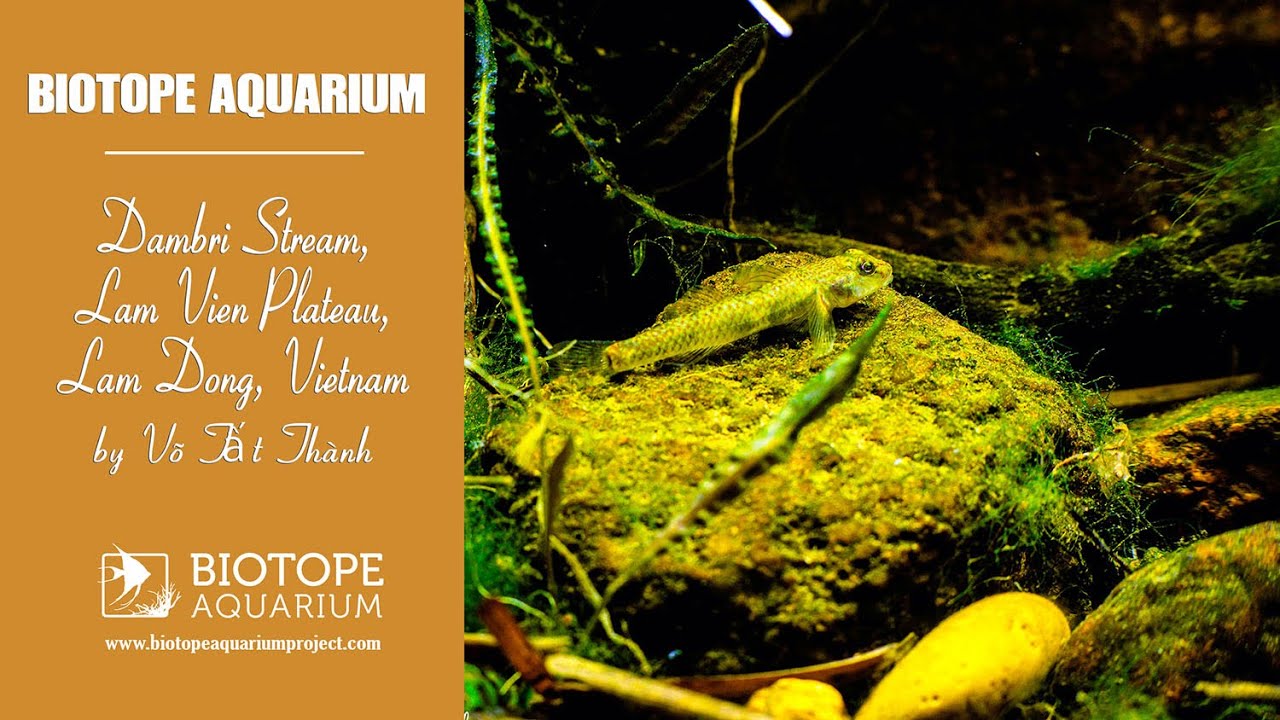
A 56L aquarium, only 20cm tall, recreates a section of a streambank in Dambri. This stream is known for its strong current, rich in oxygen, and high water volume, meandering through forests and valleys from Dambri Waterfall.

The described area is located just downstream of the falls during the dry season, around late March – when the water is clear, the flow is gentle, and the streambed is composed of pebbles and decaying leaves. The banks are lined with interspersed vegetation, home to many native species such as Macrognathus circumcinctus, Yunnanilus cruciatus, and others.

The flowing water reveals moss-covered rocks, gravel, fallen leaves, roots of Cryptocoryne plants, and decomposing foliage on red soil. Fish often hide beneath the substrate, only occasionally emerging. The constantly moving surface keeps the water well-oxygenated.

Submitted by
Võ Tất Thành
Approved by
Heiko Blessin, Heok Hee Ng & Greg Martin
GPS
11.6421909, 107.7428360
Geographical region
Southeastern Asia
Drainage Basin
Dong Nai River Basin
River catchment
Dambri Stream Catchment
Water body type
Creek
Water body name
Dambri Stream
Water body part
Waterfall
Water body course
Upper course
Water body: tributary of
River
Tributary name
La Nga River

Videos above and below water

Warning: Undefined variable $fish_parent in /home/biotopea/public_html/wp-content/themes/bap/content-bam.php on line 85

Warning: Undefined array key "additional_species" in /home/biotopea/public_html/wp-content/themes/bap/functions/bap-fields.php on line 349

Water Chemistry

Water information

Water type
fresh-water
Water color
Clear water
Water transparency
Medium
Concentration of sediments
No
Water temperature
26.0 °C
Water flow/curent
Strong

Chemical parameters

pH
7.0
Conductivity
40
GH
53.4 mg/l
dGH
KH
3 mg/l
dKH
Dissolved Oxygen
90 %

Aquarium information

Aquarium description

Set-up date
March, 2025
Aquarium decoration

The rocks and gravel were collected from the natural habitat and arranged to form two distinct zones: the streambank and the underwater section. In the shallow area, Chrysopogon zizanioides and Axonopus compressus were planted, both sourced from moist, sloped soil along the real streambank.

The underwater section was designed to look as natural as possible, starting with a base layer of basaltic soil, topped with rounded gravel and eroded stones, mixed with decomposed eucalyptus leaf litter to enrich the substrate. Cryptocoryne retrospiralis was planted following the direction of the stream’s flow, adding a sense of movement and realism.

Dry tree roots were positioned as a natural connection between the emersed and submerged zones, creating a seamless and wild transition. After one month, mosses were allowed to establish under carefully controlled lighting, giving the tank a wild, untouched look that reflects the true spirit of the habitat.

Aquarium equipment

Canister filter with an 8-liter media capacity and a 1500 L/h pump
Xima 40W LED light
Xima 5W spotlight
12V cooling fan

Fish care

The aquarium replicates the Dambri stream environment, creating an ideal habitat for Rhinogobius duospilus and Micronemacheilus cruciatus, with plenty of hiding spots and a thick substrate for the fish to burrow into. The environment is enriched with Cryptocoryne retrospiralis, which sends its roots deep into the rocky substrate.

A strong water flow ensures a high level of dissolved oxygen. The temperature is maintained between 24–26°C. After one month, a stable population of decomposer microorganisms (nitrifying bacteria, anaerobic bacteria, and cellulose-degrading bacteria) begins to establish.

Decaying leaves release tannins, which gently lower the pH and release organic compounds beneficial for both microorganisms and native fish. Aquatic plant roots assist with gas exchange and absorption of excess waste compounds (NH₄⁺, NO₃⁻).

Fish list:

  • Macrognathus circumcinctus (Mastacembelidae)
  • Rhinogobius duospilus (Gobiidae)
  • Danio albolineatus (Cyprinidae)

Mollusc list:

  • Physidae acuta (Physidae)
Plant care

The plants grown in the emersed (dry) section include Axonopus compressus and Chrysopogon zizanioides. These plants are rooted in a layer of red basaltic soil, where their root systems absorb nutrients. In nature, their roots also help stabilize the soil and prevent erosion or landslides. They require no special care.

The lighting is designed to mimic natural sunlight, promoting photosynthesis and healthy growth. Cryptocoryne retrospiralis, planted underwater, along with the extended roots from the emersed section, helps absorb NO₃⁻ and NH₄⁺, contributing to natural water filtration.

Aquatic plants:

  • Cryptocoryne retrospiralis (Araceae)

Wetland plants:

  • Chrysopogon zizanioides (Poaceae)
  • Axonopus compressus (Poaceae)
Water care

The aquarium is topped up with water every two weeks. The high-flow filter is cleaned every three months, and beneficial bacteria are added after each cleaning to maintain a healthy microbial balance.

Dimensions

Length
70 cm
Depth
40 cm
High
20 cm
Volume
56 L

Substrate in aquarium

Sand
None
Pebble/Gravel
Orange
Stone
Mixed
Stone form
Irregular
Silt/Mud
Reddish
Leaves
Few
Driftwood
Few
Submerged terrestrial vegetation
Yes