- Set-up date
- April, 2025
- Aquarium decoration
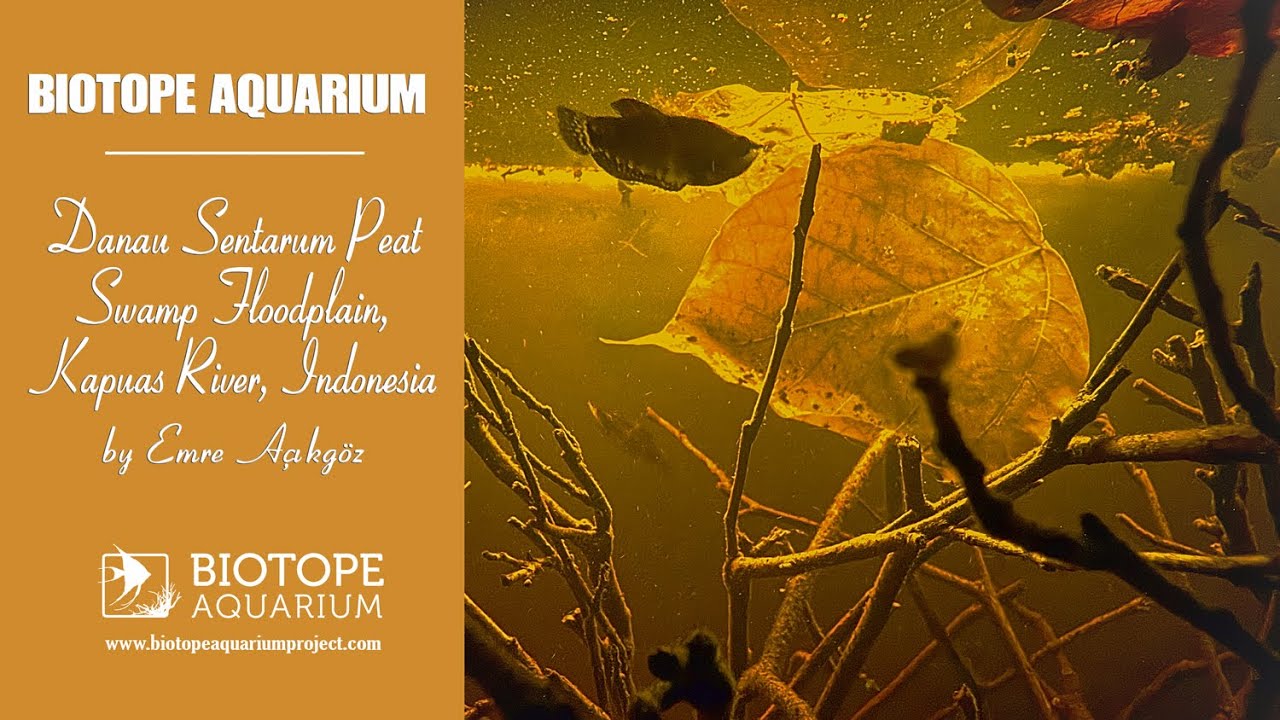
To recreate the natural look of a flooded peat swamp in southern Danau Sentarum, I avoided symmetrical or decorative layouts and instead followed the organic patterns observed in the wild. The goal was to reflect the randomness, decay, and stillness typical of blackwater forest habitats during the rainy season.
A thick layer of peat moss was used across the substrate to mimic the decomposing forest floor. This material not only replicates the visual texture of detritus but also plays a chemical role by releasing tannins and humic substances, naturally lowering the pH and creating the murky, tea-colored water typical of the region. Over time, the peat breaks down further, covering surfaces and creating a mature, untouched appearance.
Driftwood branches were placed in irregular positions, simulating roots and fallen debris moved by floodwaters. Dried leaves were scattered both on the bottom and at the surface, as they would be in the wild. Flow was kept to a minimum to replicate stagnant flood conditions, and no plants were added since this environment is too dark and acidic for rooted vegetation to thrive.
In such habitats, it is still possible to encounter detached but green, still-floating leaves of species like Cryptocoryne sp. and Blyxa sp., carried by floodwaters and slowly decomposing. Likewise, natural patches of moss or biofilm often develop on wood surfaces, adding to the realism and ecological complexity of the scene.
Every decision – from material choice to layout – was made to support the natural behavior of species like Sphaerichthys vaillanti, which depend on leaf litter, shadow, and stillness for camouflage and comfort.
- Aquarium equipment
Filtration: Sunsun HW-603B mini
Lighting: Custom-made LED light fixture
Heater: Tetra 100w
A layer of ADA Amazonia was placed beneath the visible substrate, completely hidden from view, to support the long-term stability of water parameters.
- Fish care
The species selected for this setup – Sphaerichthys vaillanti and Desmopuntius rhomboocellatus – require extremely soft, acidic water and a stress-free environment to thrive. Water parameters were carefully maintained with RO water, peat moss, and leaf litter, resulting in stable conditions: pH ~5.0, KH 0, GH 2-3, and TDS around 30ppm.
Multiple hiding spots were created using driftwood, leaf piles, and low light intensity to reduce stress and mimic the fish’s natural habitat. These cryptic surroundings allow Sphaerichthys vaillanti to exhibit its natural camouflage behavior and hierarchical social structure without disturbance.
The diet provided is varied and species-appropriate. Live food is offered regularly, including newly hatched Artemia, Grindal worms, and free-swimming microfauna such as nematodes that naturally emerge from decomposing organic matter. These are rich in protein and stimulate natural foraging behavior. In addition, a rotation of five high-quality dry foods is used – selected for sinking behavior, soft texture, and nutritional balance – to ensure a complete diet and minimize uneaten waste.
Feeding is done with caution to avoid overfeeding in this low-flow setup. Lighting is intentionally kept dim and short in duration to reduce stress and replicate the shaded conditions of a flooded forest.
Fish list:
- Sphaerichthys vaillanti (Osphronemidae)
- Desmopuntius rhomboocellatus (Cyprinidae)
- Plant care
There are no plants.
- Water care
To maintain water stability and support the immune system of sensitive species such as Sphaerichthys vaillanti, a 20% water change is performed every two weeks. pH, KH, GH, and nitrate levels are tested weekly. If any parameter shows undesirable results, corrective actions are taken earlier as needed.