bam Demanding level

#10494 Igarapé Tucano, Rio Negro, Brazil

Sponsored by

Brazil, Amazonas

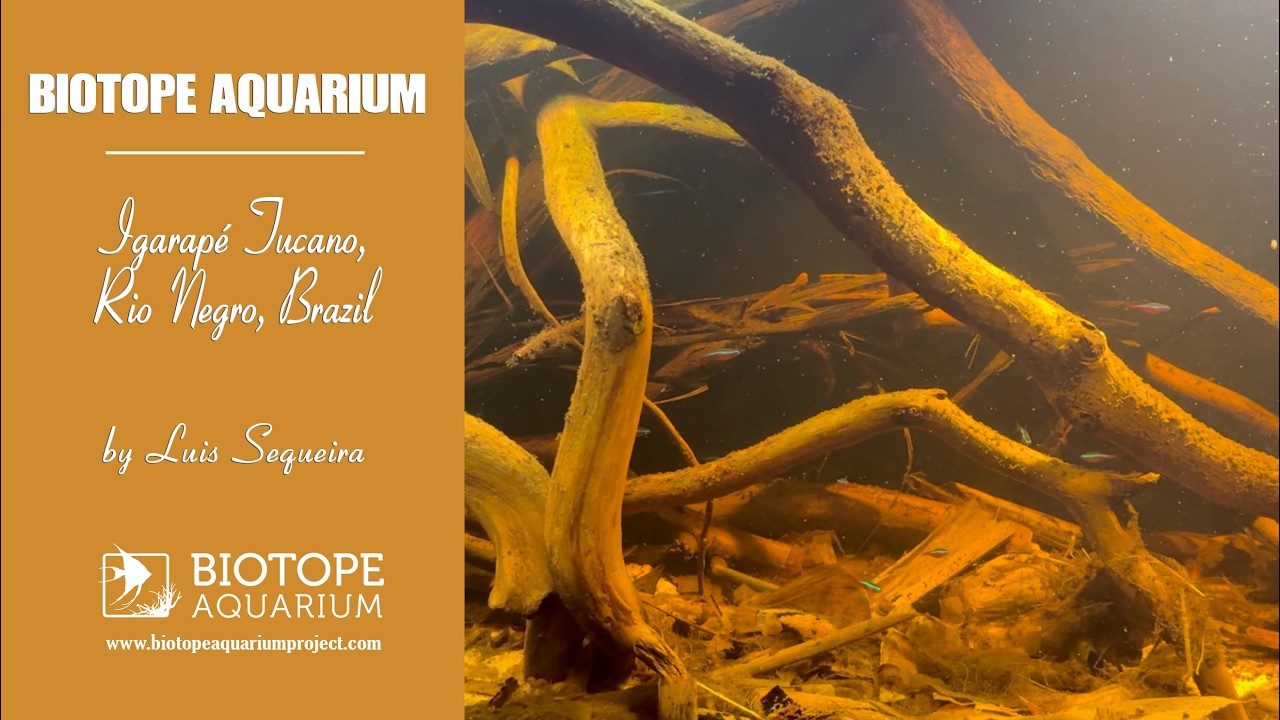
A Rio Negro blackwater stream biotope featuring fine sand, leaf litter, bark debris, and an intricate arrangement of submerged roots and driftwood. Tannin-stained water and dim lighting recreate the natural habitat of Cardinal Tetras and other Amazonian blackwater species.

Submitted by
Luis Sequeira
GPS
0.1134720, -67.8332214
Geographical region
South America
Drainage Basin
Rio Amazonas
River catchment
Rio Negro
Water body type
Igarapè
Water body name
Tucano
Water body part
Pool
Water body course
Lower course
Water body: tributary of
Rio
Tributary name
Negro

Videos above and below water


Warning: Undefined variable $fish_parent in /home/biotopea/public_html/wp-content/themes/bap/content-bam.php on line 85

Water Chemistry

Water information

Water type
Freshwater
Water color
Black water
Water transparency
Medium
Concentration of sediments
High
Water temperature
26 °C
Water flow/curent
Slow

Chemical parameters

pH
6.0
Conductivity
18
GH
9 mg/l
dGH
KH
8 mg/l
dKH
Dissolved Oxygen
60 %

Aquarium information

Aquarium description

Set-up date
15/01/2026
Aquarium decoration

This aquarium was designed to replicate a blackwater igarapé from the Rio Negro basin. The layout is centered around a dense arrangement of driftwood, roots, and branches to mimic the submerged woody structures commonly found in Amazonian forest streams. Fine sand was used as the substrate to resemble the natural riverbed, while leaf litter, bark fragments, and organic debris were added to recreate the appearance and ecological function of the habitat.

The open swimming areas between the wood provide space for schooling fish such as the Cardinal Tetra (Paracheirodon axelrodi), while the tangled root network offers shelter and security. The dark, tannin-rich water and limited use of aquatic plants reflect the natural conditions of Rio Negro blackwater environments, creating an authentic representation of this ecosystem.

Fish:

  • Paracheirodon axelrodi (Characidae) — 15 specimens

Aquatic plant:

  • Limnobium laevigatum (Hydrocharitaceae)
Aquarium equipment

A compact Oase canister filter was selected to provide gentle water circulation similar to the slow-moving conditions found in Amazonian blackwater streams. The reduced flow helps prevent excessive disturbance of the fine sand substrate, leaf litter, and organic debris, allowing the aquarium to maintain a natural appearance.

The filtration system also provides mechanical and biological filtration while preserving the calm environment preferred by many Rio Negro fish species. Lighting was kept moderate to reproduce the subdued conditions created by the forest canopy in the natural habitat.

Fish care

To keep the fish healthy and active, regular water changes were performed to maintain stable water quality and low levels of waste compounds. Water parameters such as temperature, pH, and conductivity were kept within the range typical of Rio Negro blackwater habitats. A varied, high-quality diet was provided to ensure proper nutrition and natural behavior.

The aquarium was designed with ample shelter among roots and driftwood to reduce stress, while open areas allowed for natural schooling and swimming activity. Care was taken to avoid sudden changes in water conditions, helping the fish remain healthy, active, and comfortable in their environment.

Plant care

Amazon Frogbit (Limnobium laevigatum) was maintained under moderate lighting and stable water conditions. Regular trimming prevented overcrowding and promoted healthy growth, while its roots provided additional shelter for the fish.

Water care

Weekly water changes were performed to maintain water quality and stability. Water parameters were regularly monitored, and replacement water was prepared with conditions similar to those in the aquarium to avoid sudden fluctuations. The aquarium was also inspected routinely to ensure the health of the fish and plants and to remove any excess debris.

Dimensions

Length
70 cm
Depth
30 cm
High
45 cm
Volume
114 L

Substrate in aquarium

Sand
Beige
Pebble/Gravel
Beige
Stone
Grey
Stone form
Irregular
Silt/Mud
Beige
Leaves
Adundant
Driftwood
Many
Submerged terrestrial vegetation
None