bam Demanding level

#10479 Lagoa Lua de Prata, Guarapari, Espirito Santo, Brazil

Sponsored by

Brazil, Espirito Santo, Guarapari

This aquarium represents one of the shores of Lua de Prata Lagoon, an environment with striking vegetation and partially submerged tree trunks forming small islands. To recreate this scene, I used long, dried leaves from native vegetation, fixed close to the trunk to resemble a clump growing against a submerged tree trunk, just as it can be observed in nature.

As a substrate, I used light-coloured sand covered with leaves of Myrcia sp. and jacaranda pods, both native to the region and found along the shores of the lagoon. The slightly turbid, tannin-rich water is one of the lagoon’s most distinctive characteristics, so I used a small amount of clay and botanical powder to reproduce this effect, which remains in the aquarium for weeks and is replenished during partial water changes.

The main species chosen to populate this aquarium is Deuterodon parahybae, selected for its size and because it is a native species characteristic of the lagoons of this region. As companions, I chose native shrimp and apple snails.

Submitted by
Franttiesco P. Muciaccia
GPS
-20.7150497, -40.5239754
Geographical region
South America
Drainage Basin
Southeast Atlantic
River catchment
Microbasins of Guarapari
Water body type
Lagoon
Water body name
Lagoa Lua de Prata
Water body part
Open water
Water body course
Water body: tributary of
Tributary name

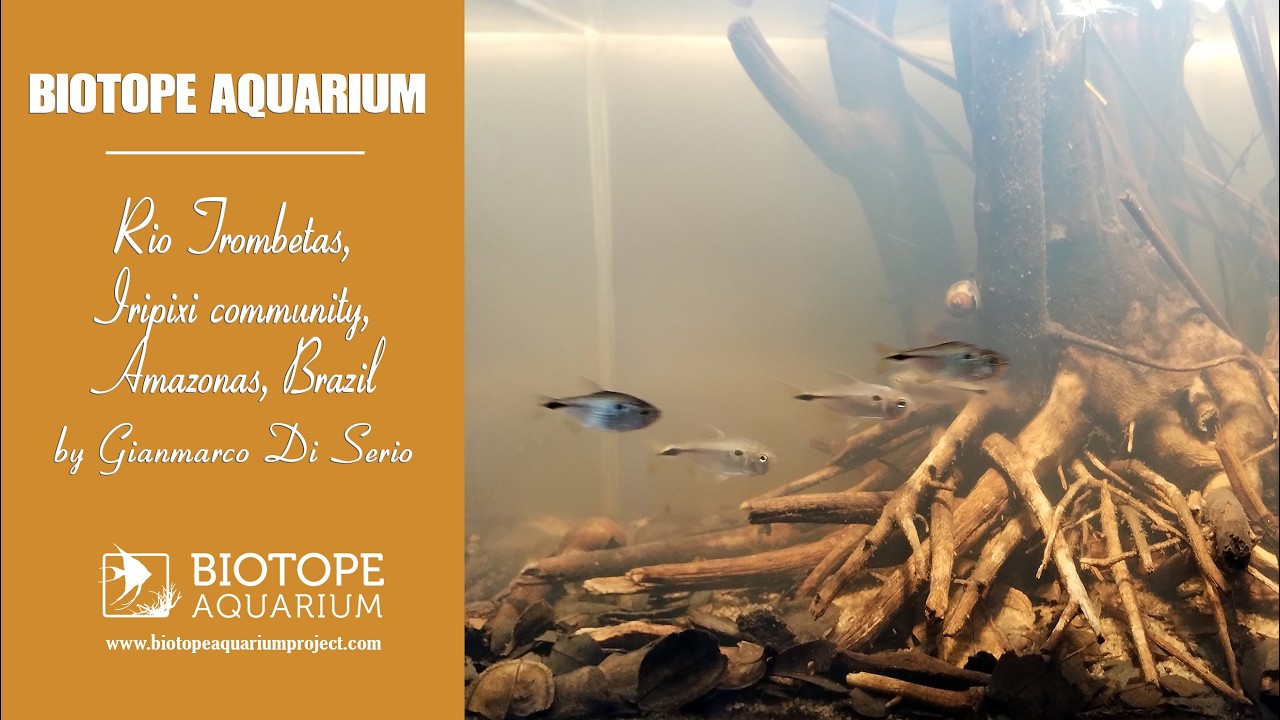
Videos above and below water

Warning: Undefined variable $fish_parent in /home/biotopea/public_html/wp-content/themes/bap/content-bam.php on line 85

Water Chemistry

Water information

Water type
Freshwater
Water color
Black water
Water transparency
Medium
Concentration of sediments
Medium
Water temperature
27 °C
Water flow/curent
None

Chemical parameters

pH
6.8
Conductivity
205
GH
17.85 mg/l
dGH
KH
35.6 mg/l
dKH
Dissolved Oxygen

Aquarium information

Aquarium description

Set-up date
April, 2026
Aquarium decoration

First, I created a layer of clay and a layer of sand, simulating the bottom of the lagoon’s banks. Above the sand, I added a layer of debris using leaves of Myrcia sp., jacaranda pods, native species found along the lagoon’s banks, and carefully arranged small pieces of branches. Over time, these elements developed a biofilm and acquired characteristics similar to those found in nature.

For the trunk, I searched for characteristics closest to the natural trunks found in the lagoon: straight trunks pointing upwards with exposed roots. To complement the scene, I used long leaves from the lagoon’s own vegetation to simulate the thickets that grow alongside submerged trunks, forming small islands of vegetation, wood, and dead leaves.

The water, with its characteristic colour and slight turbidity, was achieved using sachets of botanical powder and a small amount of clay in suspension. The botanical powder provides some turbidity but mainly releases tannins. All materials were carefully prepared for safe use, ensuring the protection of the animals.

Aquarium equipment

Filtration: Hang-on AquaTank 250 L/h with ceramic rings and filter floss.
Lighting: LED lamp 6500 K, 1350 lm.
Heating: 50 W heater with thermostat.

Fish care

The aquarium recreates an environment conducive to the fish and other animals, with hiding places and open areas for swimming and feeding. The water conditions are identical to their natural habitat, with a controlled temperature of around 27°C. I feed them flake food twice a day and offer insects as a treat several times a week.

Plant care
Water care

Perform partial water changes once a month, or as needed, replacing about 20% of the water and adjusting the parameters to maintain the water’s turbidity and color. Filter cleaning is done by replacing the filter pad when necessary and performing a more thorough cleaning once a month, without disturbing the beneficial bacteria, to maintain proper filter function and oxygenation for the fish.

Dimensions

Length
40 cm
Depth
25 cm
High
25 cm
Volume
25 L

Substrate in aquarium

Sand
Beige
Pebble/Gravel
Stone
Stone form
Silt/Mud
Leaves
Many
Driftwood
Few
Submerged terrestrial vegetation
Yes

Bibliography

Sitography

→ FishBase