- Set-up date
- April, 2025
- Aquarium decoration
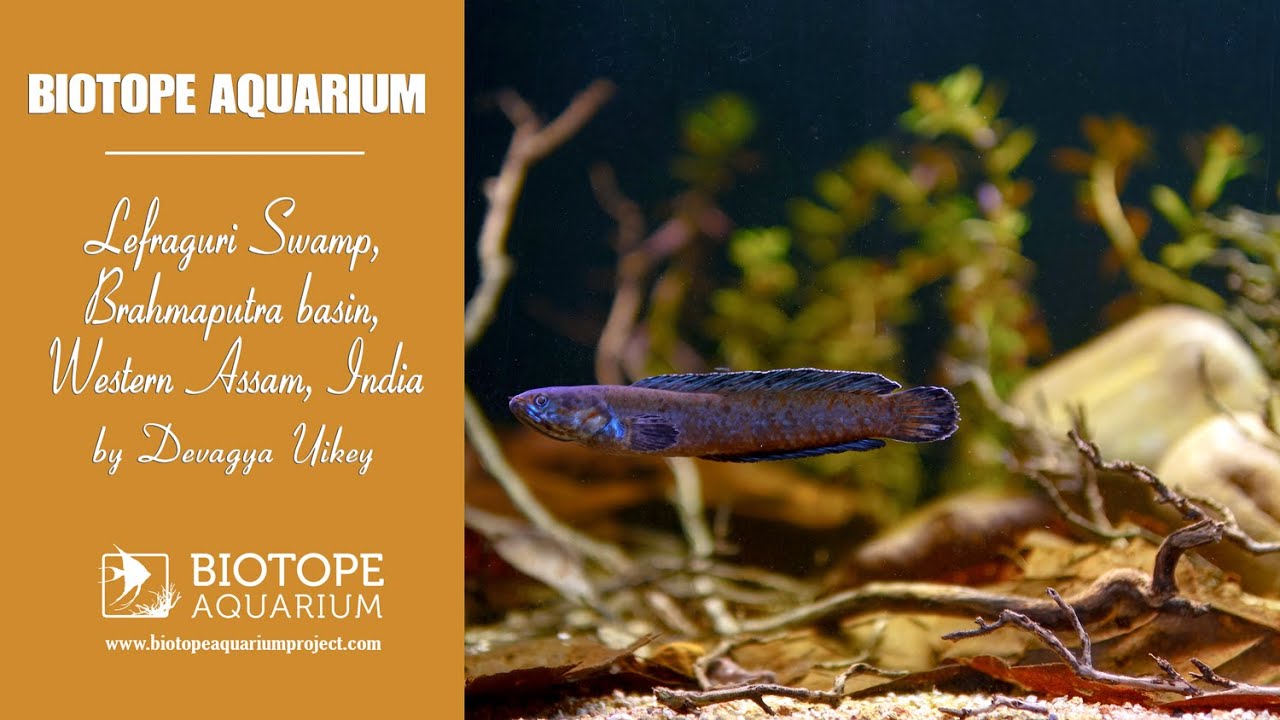
This aquarium was designed to resemble a shallow, slow-moving stream from the Brahmaputra foothills in Assam, close to Lefraguri Swamp. Since no clear/accurate underwater footage of the exact site exists, I relied on research, local ecology, and habitat descriptions from species records. The substrate consists of fine pale sand mixed with smooth river pebbles and gravel, mimicking the silty, leaf-covered bottoms found in such seasonal streams. Indian almond leaves, twigs, and driftwood were added to create a soft, tannin-rich environment that provides both visual realism and natural hiding spots for Channa andrao.
Plants were selected to match the sparse vegetation of shaded forest pools. I used Cryptocoryne crispatula, Hygrophila polysperma and Rotala in the substrate, and floating Salvinia cucullata to reduce surface light and simulate canopy shade. The layout leaves enough open space and complexity for the fish to explore, hide, and display natural behaviors.
Driftwood: Branchy Indian driftwood from Western Ghats, placed to create hiding spots. Stones: Mixed size river rocks and small pebbles, scattered naturally. Sand: Pale river sand, mixed with fine gravel, 2–3 cm deep. Leaf Litter: Dried Indian Almond leaves, dried mango tree leaves.
- Aquarium equipment
Filtration is handled by a Sunsun HBL-803 hang-on-back filter with a flow rate of 500 L/hour, which provides gentle surface agitation without strong current just like in the fish’s native calm waters. For lighting, I use 2 x Neo Helios Flat Nano S3 Plus 13W LED lights. These are dimmed by floating plants and run on a 7-hour photoperiod to replicate natural day length without promoting algae.
Water temperature is maintained naturally at around 27.1°C due to the stable indoor climate on the ground floor.
Fish list:
Channa andrao (Channidae)
Pethia conchonius (Cyprinidae)
Mollusc list:
Bellamya bengalensis (Viviparidae)
Aquatic plant list:
Cryptocoryne crispatula (Araceae)
Hygrophila polysperma (Acanthaceae)
Limnophila sessiliflora (Plantaginaceae)
Rotala rotundifolia (Lythraceae)
Wetland plant list:
Salvinia cucullata (Salviniaceae)
- Fish care
To keep Channa andrao healthy and stress-free, I maintain stable water quality, offer ample cover, and feed a high-quality, varied diet. Their diet includes floating pellets, freeze-dried foods, and live options such as mealworms, and insects, which stimulate natural hunting behavior.
I keep a bonded pair only, as this species is shy and territorial. They are allowed to claim and defend their preferred hiding areas. Recently. rosy barbs were added cautiously and monitored for compatibility, but they may be removed if they disturb the snakeheads. So far there has been no sign of aggression in both male/female and displays natural behavior.
- Plant care
Since this biotope is intentionally low-tech and lightly planted, I focus on stability over growth. The plants chosen: Cryptocoryne, Hygrophila, Limnophila, and Rotala are all hardy and tolerant of soft, low-light conditions. I use floating Salvinia to block harsh light and help control algae.
Liquid fertilizer is used sparingly, only once every two weeks or when leaf yellowing appears. Regular top-offs with soft water keep mineral levels balanced.
- Water care
I follow a bi-weekly routine that includes a 25–30% water change using RO water to keep hardness and TDS in check. I remove any floating debris and trim plants if needed (very rare). The glass is cleaned gently to avoid disturbing the ecosystem or stressing the fish.
Every four weeks, I rinse the filter sponge using tank water to maintain beneficial bacteria while improving flow. At the same time, I add fresh dried Indian almond leaves to replenish tannins and replicate the natural forest-floor input.