bam Demanding level

#10619 Peat Swamp Forest Ditch, North Kuala Langat, Malaysia

Sponsored by

Malaysia, Selagor, Kuala Langat District

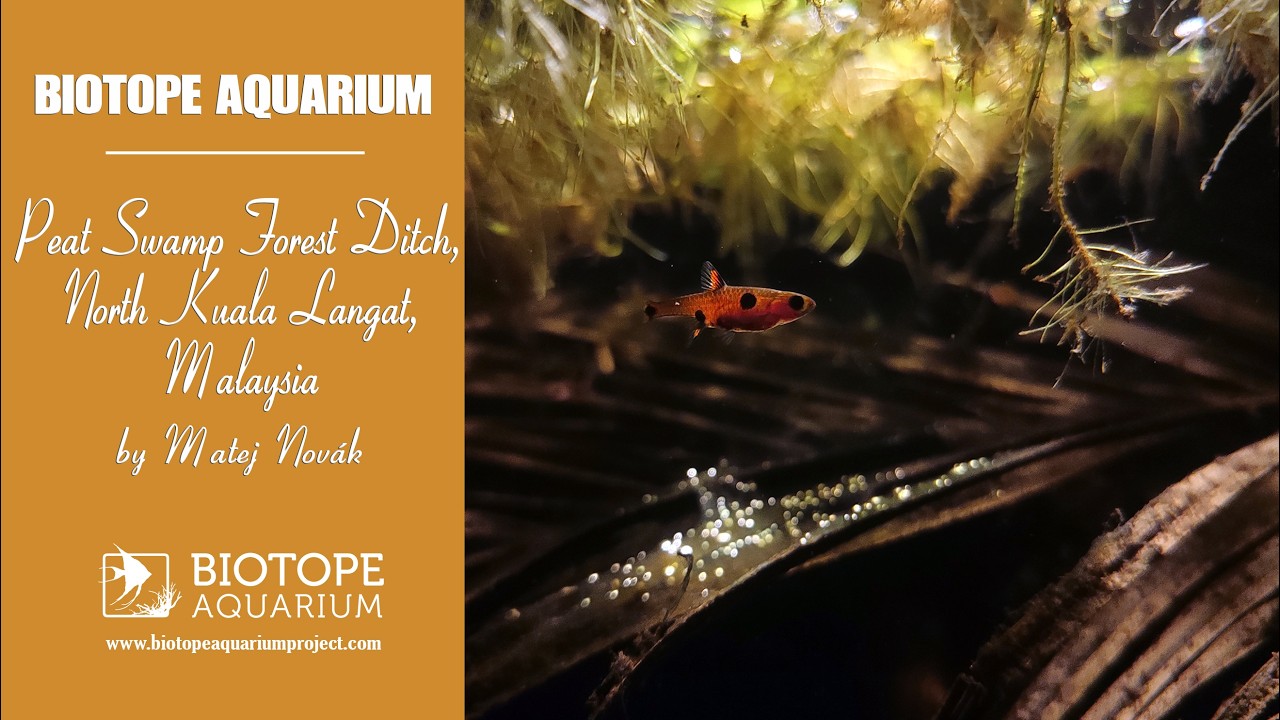
A shallow 33-litre aquarium replicates the underwater environment of a drainage canal within the North Kuala Langat Forest Reserve, Selangor, Malaysia. The aquarium is shaded by a dense layer of floating plants and filled with submerged branches and leaf litter, providing abundant natural shelter for the fish.

At first glance, a small shoal of Boraras maculatus can be seen, often accompanied by a group of Trichopsis pumila. The shy Betta imbellis usually remains hidden among the dense leaf litter, only occasionally venturing into open water. The dominant fish in the aquarium are Trichopsis vittata, which typically occupy the rear sections of the tank before moving forward to display their natural behaviour, including their distinctive croaking sounds.

Submitted by
Matěj Novák
GPS
2.9434249, 101.5971222
Geographical region
Southeastern Asia
Drainage Basin
Sungai Langat
River catchment
Langat River
Water body type
Wetland
Water body name
Peat Swamp Forest Ditch
Water body part
Water body course
Water body: tributary of
Tributary name

Videos above and below water

Warning: Undefined variable $fish_parent in /home/biotopea/public_html/wp-content/themes/bap/content-bam.php on line 85

Water Chemistry

Water information

Water type
Freshwater
Water color
Black water
Water transparency
Medium
Concentration of sediments
High
Water temperature
23 °C
Water flow/curent
None

Chemical parameters

pH
6.0
Conductivity
300
GH
110 mg/l
dGH
KH
50 mg/l
dKH
Dissolved Oxygen

Aquarium information

Aquarium description

Set-up date
September, 2025
Aquarium decoration

The custom-built aquarium was covered on the rear and side panels with automotive window tinting film to reduce transparency and limit light penetration from all directions.

The substrate consists of sand collected from a forest stream, selected for its distinctive colour and the irregular shape of its relatively coarse grains. Branches, logs, and leaves were collected during autumn walks along reservoirs and rivers near my home. All natural materials were thoroughly cleaned, boiled, and dried before use. The same preparation was applied to palm leaves, which I obtain from floral bouquets.

Rather than carefully arranging the hardscape, I intentionally scattered the leaves and wood naturally, allowing them to settle where they fell to create a more authentic and spontaneous appearance. As the leaf litter gradually decomposes, it is replenished approximately every three months.

Lighting is provided by a simple IKEA desk lamp. Its colour temperature and directional beam effectively replicate sunlight filtering through the forest canopy. Under these low-light conditions, only floating plants can be maintained successfully. In addition to providing shade, these plants offer essential support for labyrinth fishes during bubble nest construction.

Fish:

  • Trichopsis pumila (Osphronemidae)
  • Trichopsis vittata (Osphronemidae)
  • Betta imbellis (Osphronemidae)
  • Boraras maculatus (Danionidae)

Aquatic plants:

  • Salvinia natans (Salviniaceae)
  • Lemna minor (Araceae)
  • Pistia stratiotes (Araceae)
Aquarium equipment

Aeration: Invital Piezo air pump with a small sponge filter.

Lighting: IKEA NÄVLINGE LED light.

Fish care

The aquarium structure allows the fish to establish territories while providing abundant shelter and shade. A glass cover prevents fish from jumping out and maintains a warm, humid layer of air above the water surface, which is essential for labyrinth fishes.

The water temperature averages around 23°C and is maintained with a small heater during winter. The fish are fed appropriately sized foods according to their size. Their diet consists primarily of newly hatched Artemia nauplii, live Moina collected from a local reservoir, and frozen bloodworms.

Plant care

Floating plants require only occasional maintenance. From time to time, excess growth is removed to allow sufficient light to reach the substrate while maintaining adequate surface cover for the fish.

Water care

Given that the aquarium is well established and the fish are thriving, only minimal maintenance is required. When the gouramis are not maintaining bubble nests, I perform a partial water change of approximately one-third using aged water and clean the front glass to remove algae.

Dimensions

Length
45 cm
Depth
30 cm
High
25 cm
Volume
30 L

Substrate in aquarium

Sand
Beige
Pebble/Gravel
None
Stone
None
Stone form
Silt/Mud
None
Leaves
Many
Driftwood
Few
Submerged terrestrial vegetation