- Set-up date
- January, 2024
- Aquarium decoration
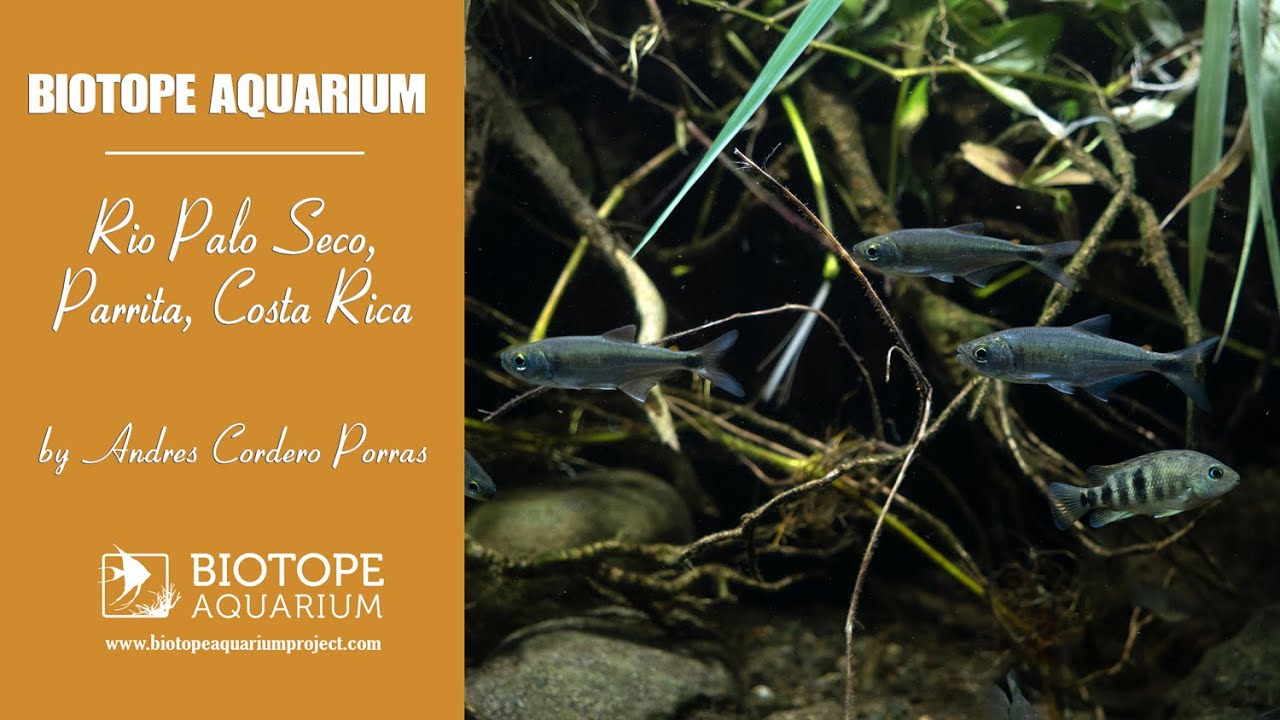
The aquarium features a false back panel where dry moss was used as substrate for terrestrial plants, encouraging them to establish and grow. As these plants expanded, their roots naturally extended into the water column. Small logs and roots were strategically placed in this rear section to mimic the natural process of roots entering from plants surrounding a riverbank. These elements interact with fine river sand and round stones, typical of such ecosystems. The substrate consists of a blend of fine river sand and small stones of varying sizes, replicating the riverbed, complemented by botanical additions like decomposing dry leaves that gradually cover the bottom with detritus.
Additionally, all stones in the aquarium are covered in biofilm and algae, serving as a constant food source for the fish that graze on these surfaces. To support the growth of terrestrial plants, two aquarium lamps and two indoor plant lamps were used, maintaining these plants over months. Pruned plant cuttings were also introduced into the aquarium to propagate them naturally and effectively. The roots developed by these plants create large shaded areas, resembling natural coverings found in their native habitats.
- Aquarium equipment
Filtration: Penn Plax Cascade 1500
Thermostat: Eheim Jager 300 watts
Light: 2 Kessil A360X and 2 indoor plant grow lights of 6500K
- Fish care
This aquarium represents the habitat of Astyanax orstedii, Brachyrhaphis rhabdophora, Poecilia mexicana, Amatitlania sajica, and Talamancaheros underwoodi. The Talamancaheros underwoodi are noted for moving in small groups and are found in the mid-water region, while Amatitlania sajica occupy the mid to lower parts of the tank, where they sift through the sand and feed on detritus. The aquarium aims to recreate an environment where these fish can exhibit their natural behaviors. Additionally, it provides open water areas for Astyanax orstedii to swiftly swim and wait for food to fall, while Brachyrhaphis rhabdophora and Poecilia mexicana stay near the surface, feeding on biofilm covering rocks and driftwood.
In terms of feeding, this aquarium requires tailored feeding strategies for each species based on their behavior. Amatitlania sajica, for instance, requires sinking foods that won’t be intercepted by the hungry Astyanax orstedii, who need surface or slow-sinking food to feed in the water column. The aquarium is structured with various zones and territories for each fish, minimizing aggression except for occasional chasing among males. Amatitlania sajica, known for its peaceful nature compared to other Amatitlania species, contributes to the overall harmony of the tank.
Fish list:
- Astyanax orstedii (Characidae)
- Brachyrhaphis rhabdophora (Poeciliidae)
- Poecilia mexicana (Poeciliidae)
- Amatitlania sajica (Cichlidae)
- Talamancaheros underwoodi (Cichlidae)
- Plant care
To maintain and promote plant growth, a 10-hour photoperiod is maintained using the light provided by the four aquarium lamps. The maintenance of these plants is straightforward, requiring occasional trimming and replanting of cuttings to ensure optimal coverage. Apart from these tasks, caring for the plants is relatively simple.
Wetland Plant:
- Wedelia trilobata (Asteraceae)
- Pennisetum purpureum (Poaceae)
- Water care
The water in the aquarium is changed every week, replacing 25% of the total volume, and the filter is cleaned monthly. During each water change, algae on the glass, caused by the necessary lighting for the plants, is cleaned off. New botanicals are also added to the aquarium substrate. This setup does not involve siphoning, as it aims to develop a layer of organic compounds at the bottom to closely mimic the natural environment.
The aquarium water is oxygenated by the canister filter’s waterfall, which also irrigates the roots of emergent plants. Over time, these plants have extended their roots and stems into the aquarium water, adapting to their environment.