bin
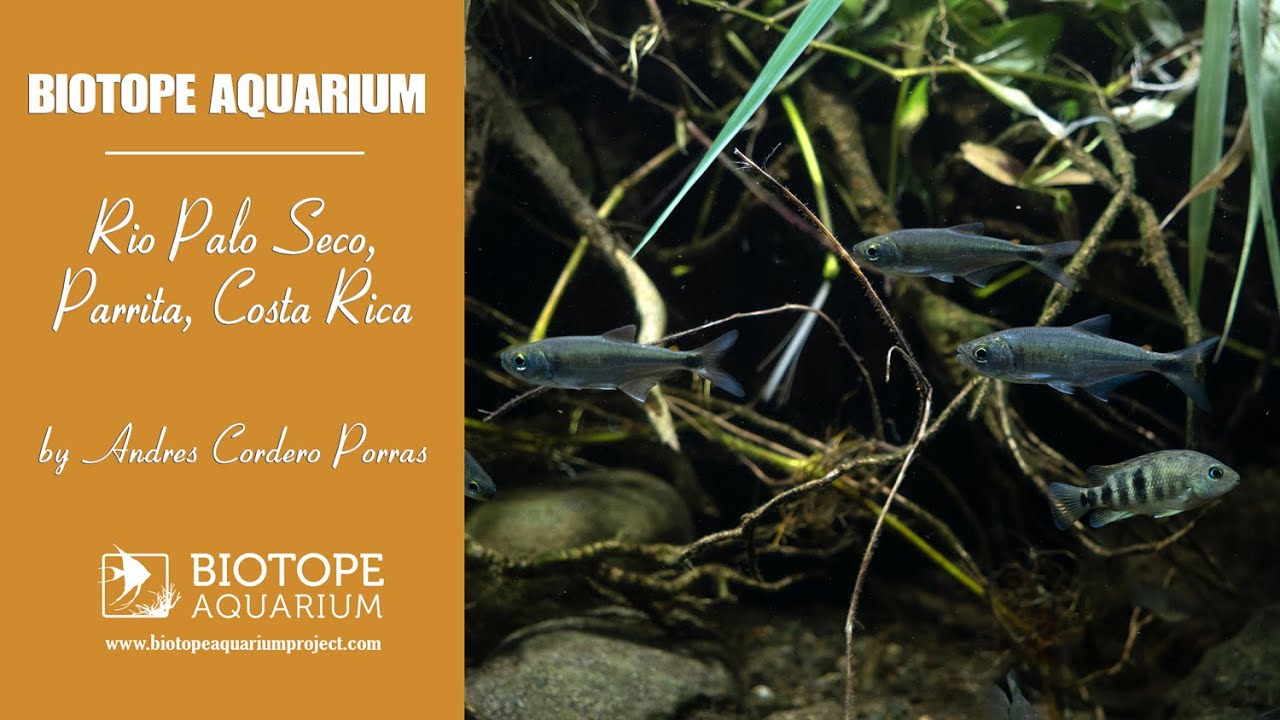
Río Palo Seco, Parrita, Costa Rica
Costa Rica, Puntarenas, Parrita
The Palo Seco River is a shallow, clear-water river that originates in the hills of Parrita and flows into the Pacific Ocean at the Palo Seco Estuary. This river is located in Parrita, a coastal area in the central Pacific region of Costa Rica. The area is renowned for its extensive oil palm plantations, featuring a landscape of vast agricultural zones, roads, and grazing lands. Along its course, the river competes with these human-modified environments to preserve the natural habitats of the region, resulting in riverbanks teeming with biodiversity.
- Submitted by
- Andres Cordero Porras
- Approved by
- Michael Köck & Jairo Arroyave
- GPS
- 9.5978708, -84.2507324
- Geographical region
- Central America
- Drainage Basin
- Pirris
- River catchment
- Palo Seco
- Water body type
- River
- Water body name
- Palo Seco
- Water body part
- Channel
- Water body course
- Headwaters
- Water body: tributary of
- River
- Tributary name
- Río Damas
Videos above and below water
Warning: Undefined variable $fish_parent in /home/biotopea/public_html/wp-content/themes/bap/content-bin.php on line 55
Water Chemistry
Water information
- Water type
- fresh-water
- Water color
- Clear water
- Water transparency
- High
- Concentration of sediments
- Medium
- Water temperature
- 29 °C
- Water flow/curent
- Slow
Chemical parameters
- pH
- 8
- Conductivity
- 120
- GH
- 7 mg/l
- dGH
- KH
- 3 mg/l
- dKH
- Dissolved Oxygen
- 89 %
Substrate in nature
- Sand
- Grey
- Pebble/Gravel
- Grey
- Stone
- Grey
- Stone form
- Roundish
- Silt/Mud
- None
- Leaves
- Many
- Driftwood
- Few
- Submerged terrestrial vegetation
- Yes
Aquatic Biotope
- Date of collecting
- 18 January, 2024
- Collecting area
- Open water
- Water depth
- 0,5m
- Air temperature
- 33 °C
- Sunlight
- Full sun
Environment
- Environment
- Affected by human activity
- Affected by human activity
- Agriculture
- Agriculture
- Advanced
- Surrounding area
The Palo Seco River is located in Parrita, the ninth canton of Puntarenas Province. This region is characterized by its relatively flat terrain, lacking proximity to large mountains, resulting in long, slow-flowing rivers. These rivers eventually flow into the Pacific Ocean, forming expansive estuaries at their mouths where freshwater and brackish water fauna converge. Due to its extensive plains, the area has been historically utilized for agriculture and ranching, with Parrita particularly renowned for its vast oil palm plantations. Notably, the Costanera Highway spans over the river, running along the Pacific coast for many kilometers, serving as a vital link connecting Costa Rica’s two borders.
- Underwater landscape
The Palo Seco River is characterized by its clear and warm waters, where sunlight directly hits the stones, fostering the growth of various algae and biofilms that serve as crucial food sources for fish. Poecilia mexicana, for instance, can be observed feeding directly on these algae. Additionally, the ecosystem is rich in detritus, which serves as food for fish like Amatitlania sajica, often seen nibbling at the detritus-laden riverbed.
The riverbed is predominantly composed of round rocks throughout its course, with banks lined by plant roots extending into the water, providing essential habitats. Welebia tribolata plants further enhance the ecosystem by casting shadows and offering refuge for fish among their roots. The river maintains a moderate flow that carries leaves and logs, which often get lodged between the stones, creating microhabitats where many fish congregate, particularly around decomposing leaf litter.
Unfortunately, the natural flow of the ecosystem is disrupted by a road crossing, dividing the biotope and hindering fish movement during dry seasons. This fragmentation poses challenges to the continuity of the ecosystem, impacting the fish populations’ ability to migrate and access essential habitats for feeding and reproduction.
Fishlist:
- Dormitator latifrons (Eleotridae)
- Poeciliopsis elongata (Poeciliidae)
- Poecilia mexicana (Poeciliidae)
- Brachyrhaphis rhabdophora (Poeciliidae)
- Astyanax orstedii (Characidae)
- Amatitlania sajica (Cichlidae)
- Talamancaheros underwoodi View Entry
- Cribroheros diquis (Cichlidae)
- Dormitator maculatus (Eleotridae)
- Eleotris picta (Eleotridae)
- Gobiomorus maculatus (Eleotridae)
- Gobiomorus polylepis (Eleotridae)
- Awaous transandeanus (Gobiidae)
- Sicydium salvini (Gobiidae)
Wetland plant:
- Wedelia trilobata (Asteraceae )
- Piper umbellatum (Piperaceae)
- Pennisetum purpureum (Poaceae)
- Gynerium sagittatum (Poaceae)
- Mimosa pudica (Fabaceae)
- Cecropia peltata (Urticaceae)
- Phyllostachys aurea (Poaceae)
- Miconia suberustala (Melastomataceae)
- Hibiscus schizopetalus (Malvaceae)
- Ficus retusa (Moraceae)
- Miconia imperialis (Melastomataceae)
- Cojoba arborea (Cojoba)
- Hamelia patens (Hamelia)
- Threats to ecology
One of the environmental issues faced by the Palo Seco River is its course through the oil palm plantations of the Palma Tica company. This company uses the river’s water for irrigating its extensive plantations, which cover approximately 24.800 hectares in Costa Rica. To facilitate irrigation, Palma Tica conducts river excavations, diverting it to cover large areas of their lands. Additionally, the river is affected by the construction of bridges that cut and pipe it in several sections to allow vehicle passage, disrupting aquatic ecosystems and affecting fish and other organisms. Residential houses are also found along the riverbanks, and in the upper areas, it is used for livestock to drink. Moreover, contamination from agrochemicals used in the palm plantations is another significant problem impacting the water quality of the Palo Seco River.
During a visit to the Palo Seco River, an environment was observed where Talamancaheros underwoodi were accompanied by a large school of fry, interacting with Amatitlania sajica species approaching them, and a small school of Awaous transandeanus exploring the territory. However, the following day, excavators were found modifying the river’s course to create new irrigation points for the palm plantations. This intervention completely alters the biotope, destroying the great diversity of microhabitats and homogenizing the environment into a gravel plane. Large logs and stones, which provided refuge for these cichlids and their fry, are removed, severely affecting their natural territories.
According to Bussing (2002), Amatitlania sajica used to be found in many more rivers from the sector known as Punta Mala. However, recent searches for this fish did not find it in those locations, appearing only in the biotope of the Palo Seco River. Bussing described this cichlid as inhabiting streams near the coast, but due to the significant impacts of the palm plantations, it has been forced to migrate to more distant streams. For this reason, it was found in large numbers several kilometers upstream from the Palo Seco River, in an area where the river barely reaches a maximum height of 40 cm and in many points only about 20 cm.
Riparian zone
- Trees near the aquatic habitat
-
Few -
Comment by the expert
Michael Köck: The research undertaken for the aquatic biotope including threats is outstanding, very well done!
Jairo Arroyave: The BIN is well described with photo and video both above and underwater, sufficient bibiliographic research and a thorough description of the ichthyofauna and aquatic plants.