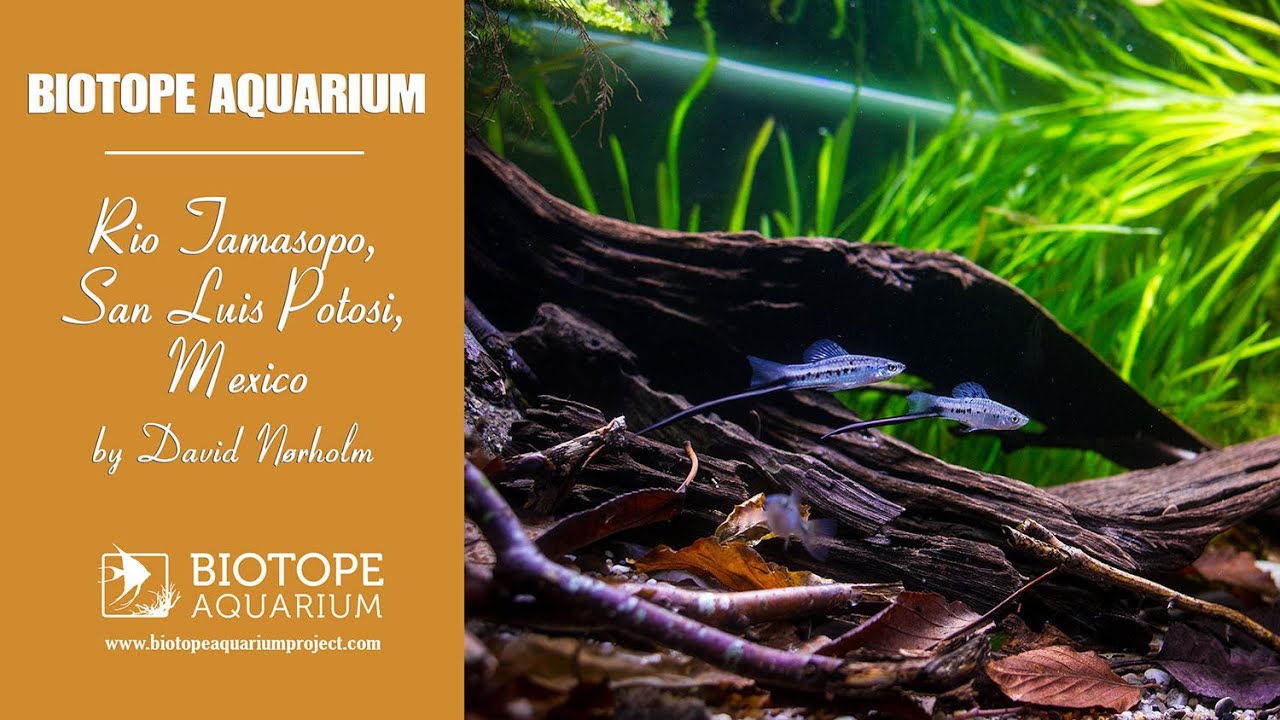
The composition and choice of hardscaping materials is based in my setup on the idea of recreating a natural looking riverbank.
On the left side, I have made a natural looking riverbank out of hobby concrete, where I have added dirt, stones, pebbles, sticks and branches. This riverbank piece is sloping down towards the right site of the tank. This is done to mimic the look of a natural looking riverbank, sloping down towards the deeper end of the river.
On the top of my riverbank imitation there is a fern, which is intended as an imitation of the vegetation that grows in the transition zone between land and water. The fern’s roots adds to the look of a natural looking riverbank with overhanging terrestrial vegetation. Furthermore, it serves as a hiding place for the fish fry.
Driftwood in various sizes are chosen to recreate the look of fallen logs and tree trunks. Rounded rocks are added to the right site of the tank, because rocks are more present away from the steep riverbank. A couple of stones are hidden in the riverbank though.
Branches, twigs, and leaf litter are added to create the feel of a Central American river bottom, with plenty of sediment. The substrate consists of multiple sizes of sand, pebbles, and gravel to help create the look of the river bottom.
I have chosen to add some Valisneria spiralis and Ceratophyllum demersum to the setup as well. Which is not biotope correct plants, but I have deliberately chosen that anyway. The Ceratophyllum demersum is an invasive species in the biotope, and is therefore partly correct. The Valisneria is not, but I have chosen this specific plant to help create the look of grass-like areas located in the transition zone between land and water.
These grassy types of vegetation get flooded and exposed during the seasonal changes of the river. Most natural present plants from the biotope are not available in the aquarium trade anyway, so some kind of compromise needed to be done. Furthermore, the denser plant growth serves an important purpose in terms of creating natural hiding places for females and subdued males.
Areas are made in the aquarium to help create hiding places for both fry, females and subdued males. This is done by both plants, roots and by use of terrestrial vegetation.
Furthermore I have deliberately chosen to have only one species in the aquarium, which I know is not appreciated by the judges though. For this particular setup adding more fish species from the biotope would either be close to impossible or create imbalance and stress for all fish. Most species from the biotope are not commonly available in the hobby, and have simply not been possible to find.
Poecilia mexicana is possible to find, but based on my experiences with it, I have chosen not to use it. My experiences with the fish shows that the commercially bred types tends to be very aggresive towards other livebeares, and is therefore not suitable along with the somewhat quieter Xiphophorus montezumae.
Fishes:
- Xiphophorus montezumae (Poeciliidae) – 6