bam Beginner-friendly level

Small stream, Hue Province, Vietnam

Sponsored by

Viet Nam, Thừa Thiên-Huế, Huế

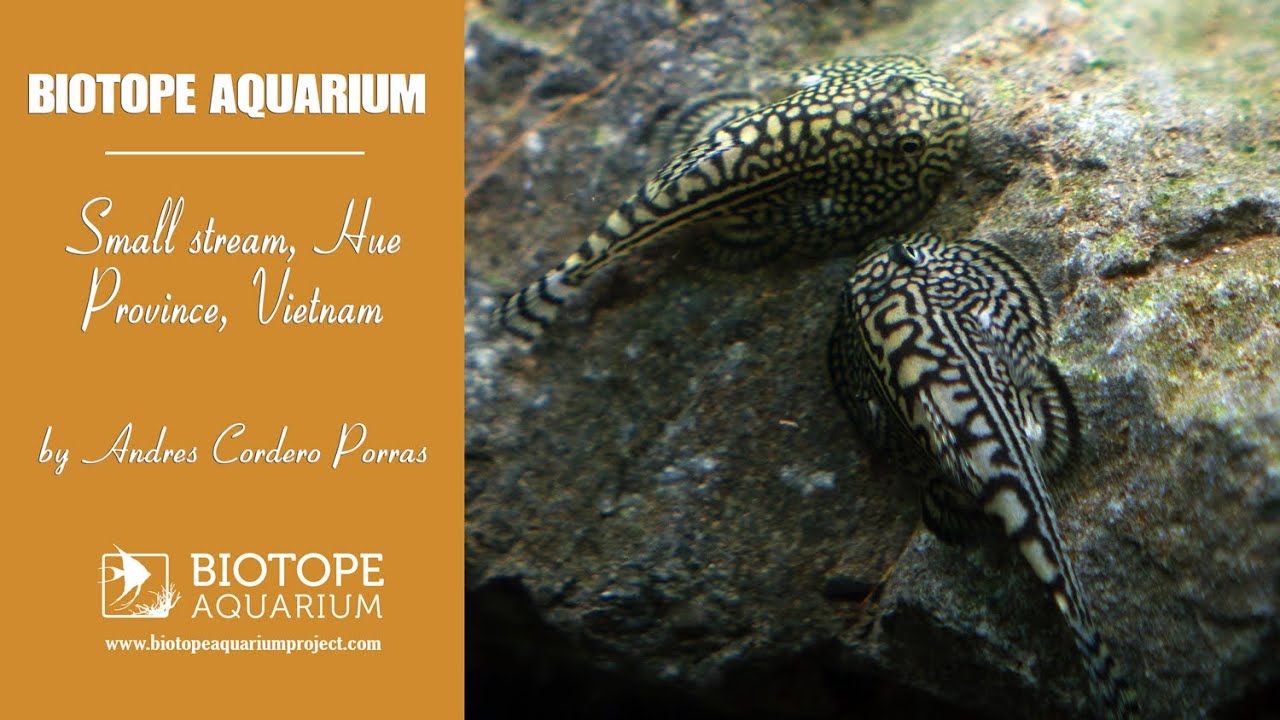
This 150-liter aquarium recreates the bedrock structures found in the natural biotope of the species Sewellia lineolata. The hardscape’s design allows water to flow over the stones, creating an environment where loaches can feed on algae and biofilm that naturally form on the rocks, as well as on the fish food provided, which is carried by the water flow and settles across the stone surfaces.

Additionally, since these fish do not typically swim in open water, the stone structure maximizes the aquarium’s space by establishing various levels, caves, crevices, and other features formed by these large stones.

Submitted by
Andres Cordero Porras
Approved by
Heiko Blessin, Heok Hee Ng & Greg Martin
GPS
16.4749908, 107.6080170
Geographical region
Southeastern Asia
Drainage Basin
Perfume River
River catchment
Tả Trạch River
Water body type
River
Water body name
Unnamed stream in Huế
Water body part
Rapids
Water body course
Upper course
Water body: tributary of
River
Tributary name
Perfume

Videos above and below water


Warning: Undefined variable $fish_parent in /home/biotopea/public_html/wp-content/themes/bap/content-bam.php on line 85

Warning: Undefined array key "additional_species" in /home/biotopea/public_html/wp-content/themes/bap/functions/bap-fields.php on line 349

Water Chemistry

Water information

Water type
fresh-water
Water color
Clear water
Water transparency
High
Concentration of sediments
Low
Water temperature
22 °C
Water flow/curent
Very strong

Chemical parameters

pH
7.0
Conductivity
GH
7 mg/l
dGH
KH
3 mg/l
dKH
Dissolved Oxygen
84 %

Aquarium information

Aquarium description

Set-up date
February, 2024
Aquarium decoration

The composition of this aquarium was based on the concept of recreating a bedrock structure where various parts of the rocks emerge from the water, resembling the flat surfaces where loaches naturally reside. Smooth-textured stones with large crevices were carefully selected to form a cohesive structure, giving the impression of a single unified formation. A central rock was chosen strategically to conceal the entrances and exits of the filters and WaveMaker, ensuring that water flow initiates from this point without interference. This design allows the full power of the filters and WaveMaker to be evenly distributed across the flat and horizontal surfaces of the other rocks in the aquarium.

In contrast to their natural habitat, dark spots were intentionally created using loose stones, providing hiding spots where loaches can seek refuge if they feel stressed by external factors within the aquarium.

Aquarium equipment
  • Filtration: Dolphin canister filter C700
  • Water pump: SunSun JVP-120 WaveMaker, 3000L/H
  • Lighting: Chihiros B Series 60cm
Fish care

The care of the fish primarily focuses on their diet. Since these loaches naturally feed on algae, detritus, biofilm, and small microorganisms found on the surfaces of river rocks, gel foods were placed on flat rocks in this biotope to replicate the feeding behavior of Sewellia lineolata in their natural habitat. To encourage the growth of algae and biofilm, an 8-hour light cycle was established, with the lights at full intensity for 4 of these hours.

Additionally, small rocks were placed in a barrel with botanicals and exposed to sunlight to promote natural algae and biofilm growth.

It is noteworthy that the loaches became extremely active upon introducing these new rocks to the biotope, quickly positioning themselves over the stones to feed. Every other day, freshly hatched brine shrimp were introduced, and the strong current in the tank allowed the shrimp to settle in the crevices of the rocks, where the loaches would feed.

Any leftover brine shrimp were drawn to the light of the aquarium lamp, attracting the loaches to the glass where they would gather to feed. These fish are somewhat shy, making it challenging to see all 12 individuals at once, but this also creates great excitement as they emerge one by one or in small groups to feed frenetically.

Plant care
Water care

The maintenance of this aquarium included weekly water changes of 30%, during which the front glass was cleaned to remove algae. The aquarium filter was inspected monthly, focusing on cleaning the mechanical filtration components to ensure optimal operation.

Dimensions

Length
75 cm
Depth
50 cm
High
40 cm
Volume
150 L

Substrate in aquarium

Sand
Beige
Pebble/Gravel
None
Stone
Beige
Stone form
Flat
Silt/Mud
None
Leaves
None
Driftwood
None
Submerged terrestrial vegetation
None

Comment by the expert

Heiko Blessin:

Heok Hee Ng: Aquarium resembles biotope, but does not represent its biotic diversity well. I would expect the hillstreams in the region to also have small cyprinids, snails and/or freshwater shrimp.

Greg Martin: A very effective biotope recreation. I would like to have seen video of the wild site.