- Set-up date
- January, 2026
- Aquarium decoration
River basalt stones form the primary structure of the aquascape, surrounded by small river pebbles that create a natural transition between the larger boulders and the sand-mud substrate. A mixture of aquarium silica sand and natural river sand of varying grain sizes was used to reproduce the light beige substrate typical of the natural spring habitat.
River driftwood and fine roots are positioned around the rock formations to soften their outlines and create a more natural underwater landscape. A small layer of fallen leaves has also been added to replicate the organic matter commonly found on the spring bottom.
All natural materials were thoroughly cleaned before use to ensure they were safe for the aquarium inhabitants.
Fish:
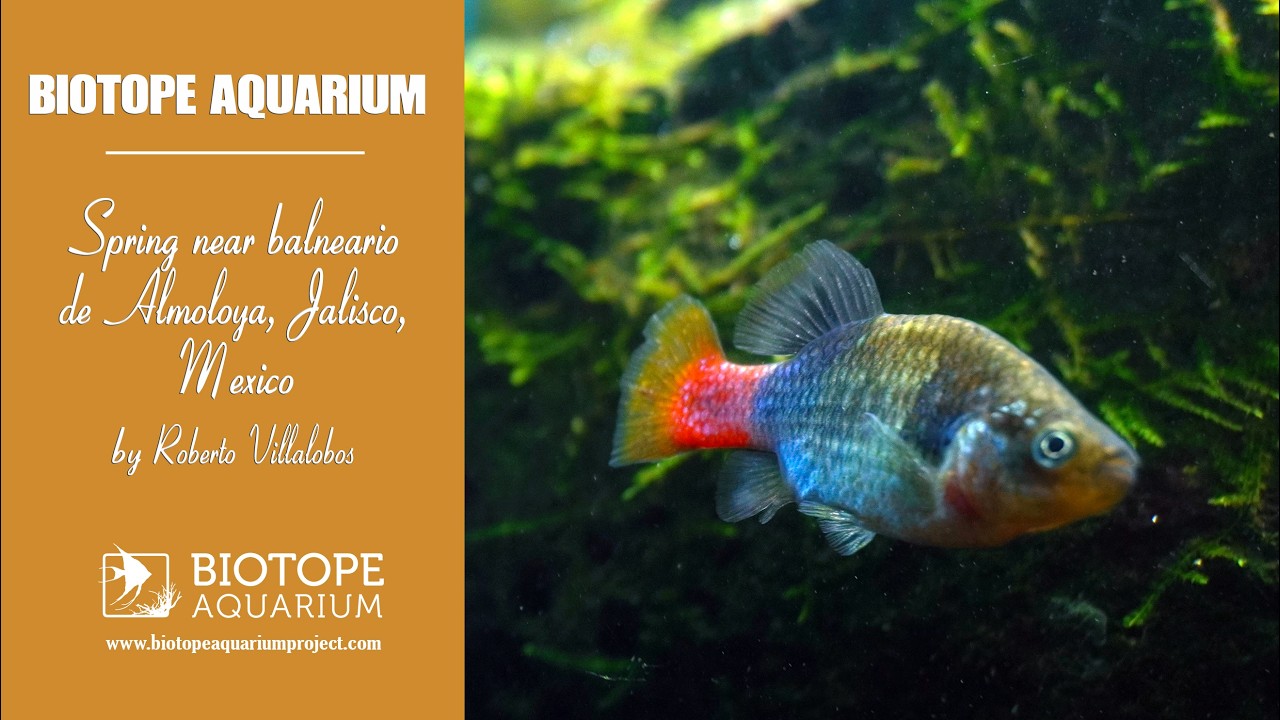
- Xenotoca doadrioi (Goodeidae) – 5
Aquatic plants:
- Pistia stratiotes (Araceae) – 7
- Salvinia minima (Salviniaceae) – 13
- Aquarium equipment
Filtration: The aquarium is equipped with a Fluval 207 external canister filter. The outlet has been modified to produce gentle water flow and subtle surface movement, while a mesh-protected intake prevents fish and fry from entering the filter.
Lighting: Illumination is provided by a Dymax white LED fixture together with a Chihiros VIVID 2 WRGB LED. The lighting is adjusted to create a subtle blue background and shaded areas, reproducing the cool underwater appearance commonly observed in many Mexican spring habitats.
- Fish care
The aquarium is equipped with a high-capacity filtration system that maintains excellent water quality while a modified outlet provides gentle water flow. A concealed, mesh-protected intake allows the fish to move freely throughout the aquarium without risk to adults or fry.
The rock formations create numerous shelters, feeding areas, and spawning sites, encouraging natural exploration, foraging, territorial behaviour, and reproduction. The floating plants provide shaded areas and additional refuge, while their roots offer habitat for small aquatic organisms and attract terrestrial insects that occasionally fall into the water and become a natural food source for the fish.
Water temperature is maintained below 24°C throughout the year, reflecting the cool conditions of the natural spring habitat.
The fish are fed daily with a varied diet consisting of high-quality dry foods and live foods.
Artificial lighting follows a natural photoperiod, switching on at 7:30 a.m. and off at 2:00 p.m. This schedule provides sufficient daylight for normal fish activity while helping to prevent overheating during the warmest part of the day.
- Plant care
The selected plant species are hardy and require minimal maintenance. In this aquarium, they receive strong illumination for approximately seven hours per day and do not require additional care.
The plants utilize nutrients derived from fish waste and dissolved minerals, growing rapidly and typically doubling in biomass each month. Excess plants are removed regularly to prevent overcrowding and avoid clogging the filtration system.
No fertilizers are added to the aquarium.
The aquarium also receives approximately one hour of direct morning sunlight, which contributes to healthy plant growth and supports the natural appearance of the habitat.
- Water care
A 10% water change is performed every morning using treated water from a 5,000-litre underground storage tank. The water is conditioned to remove chlorine and restore appropriate mineral content.
A larger 50% water change is carried out once per week to maintain excellent water quality and long-term system stability.
The filter is serviced once per month, while the aquarium glass is cleaned weekly.
The rocks and hardscape are not scrubbed or cleaned, allowing natural algae and biofilms to develop. These are kept under control by the grazing activity of the fish and snails, preserving the ecological character of the habitat.