bam Demanding level

Subansiri River tributary, Arunachal Pradesh, India

Sponsored by

India, Arunachal Pradesh, Changlang District

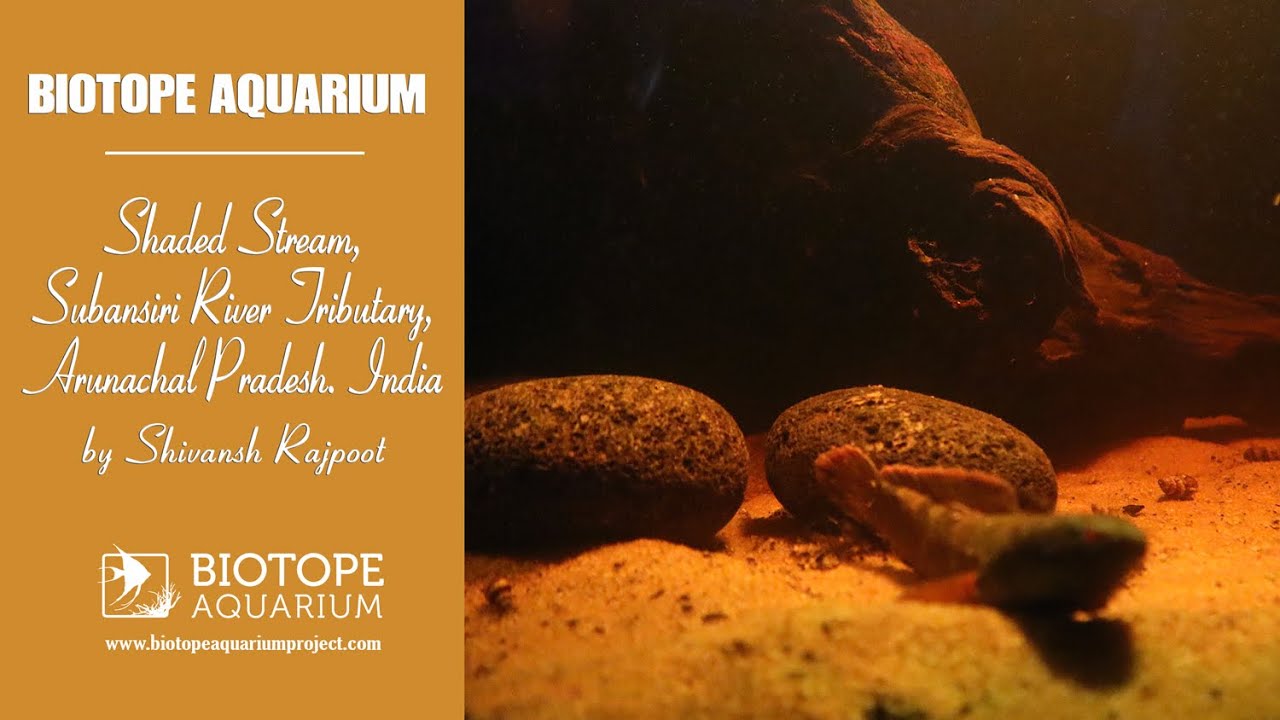
This 100L biotope aquarium replicates a shaded, slow-moving tributary of the Subansiri River in Northeast India, part of the Brahmaputra River basin. The scape mimics a shallow forest stream with a silty substrate layered over river sand, scattered rounded stones, and sunken driftwood and roots. Leaf litter and decomposing organic matter create a naturally acidic, tannin-rich environment. The design evokes the calm backwaters where Channa sp. “Fire and Ice” – a selectively bred variant of Channa andrao – would exhibit natural behaviors such as ambush hunting and surface breathing.

Lighting is minimal and warm to replicate canopy-filtered sunlight. Flow is kept gentle, avoiding surface skimming to maintain realism. The aquarium emphasizes biotope accuracy through natural materials, absence of artificial decor, and careful parameter control (pH ~6.4, TDS ~100 ppm, temp 23-25°C), fostering a near-authentic environment for observation and species well-being.

Submitted by
Shivansh Rajpoot
Approved by
Hans-Georg Evers & Friedrich Bitter
GPS
27.5035915, 96.3764572
Geographical region
Southern Asia
Drainage Basin
Brahmaputra
River catchment
Water body type
River
Water body name
Noa Dihing
Water body part
Flood plain
Water body course
Middle course
Water body: tributary of
River
Tributary name
Brahmaputra

Videos above and below water

Warning: Undefined variable $fish_parent in /home/biotopea/public_html/wp-content/themes/bap/content-bam.php on line 85

Warning: Undefined array key "additional_species" in /home/biotopea/public_html/wp-content/themes/bap/functions/bap-fields.php on line 349

Water Chemistry

Water information

Water type
fresh-water
Water color
Black water
Water transparency
Medium
Concentration of sediments
Low
Water temperature
24 °C
Water flow/curent
Slow

Chemical parameters

pH
6.5
Conductivity
130
GH
60 mg/l
dGH
KH
30 mg/l
dKH
Dissolved Oxygen
90 %

Aquarium information

Aquarium description

Set-up date
06, 2024
Aquarium decoration

The aquarium is designed to replicate a shallow, shaded, slow-moving stream from the foothills of Northeast India – a natural habitat of Channa sp. “Fire and Ice”.

Locally collected driftwood and root branches are arranged to create dense thickets and shaded caves that mimic submerged forest debris and root systems.

A mix of inert gravel, rounded river stones, and decomposed leaf litter forms the substrate. To simulate the naturally silted forest floor, a thin layer of sieved, rinsed garden soil was scattered and allowed to settle.

Dried forest leaves such as Indian almond and native forest litter are added to enhance the blackwater aesthetic and provide hiding spots.

No background is used — the lighting and organic décor establish natural depth and shadow, giving the tank a minimal, immersive look.

Aquarium equipment

• Filtration: Top filter with 1000 LPH flow rate, providing both mechanical and limited biological filtration
• Lighting: Fireglow RGB 25W — creates a warm, natural tone resembling filtered sunlight through the canopy
• No wave maker or surface skimmer
• No CO₂ or artificial aeration — relies on surface movement from the top filter

Fish list:

Channa sp. (Channidae)

Fish care

This biotope is home to a single specimen of Channa sp. “Fire and Ice”, a territorial and intelligent predatory species. The setup offers ample cover and visual barriers to reduce stress and mimic territorial boundaries found in the wild.

Feeding consists of gut-loaded frozen bloodworms, ghost shrimp, and occasional live earthworms. The water temperature is maintained between 22-24°C using passive cooling (fan + ambient air), matching seasonal hillstream conditions.

The water level is kept slightly lower than tank height to prevent escape. Weekly partial water changes (~20%) are done to maintain stable water quality without disrupting the blackwater chemistry.

Plant care

There are no submerged aquatic plants in this setup, in accordance with reference habitat conditions. Marginal plant growth is simulated above the waterline using dried grass and branches. The aquarium relies on leaf litter and driftwood tannins to maintain blackwater clarity. No fertilizers or CO₂ are used. Occasional algae or biofilm are allowed to grow naturally as part of the ecosystem.

Water care

• Water changes: 15–20% every 10 days
• Water conditioning: Aged, dechlorinated tap water buffered with natural botanicals
• Tannins: Maintained via monthly addition of dried leaves and bark
• Top filter media rinsed monthly; full cleaning every 3 months
• Surface agitation from filter output ensures oxygenation suitable for Channa’s facultative air-breathing behavior

Dimensions

Length
60 cm
Depth
45 cm
High
42 cm
Volume
120 L

Substrate in aquarium

Sand
Beige
Pebble/Gravel
Grey
Stone
Grey
Stone form
Roundish
Silt/Mud
None
Leaves
Few
Driftwood
Few
Submerged terrestrial vegetation
None

Bibliography

  • Journal of Threatened Taxa - Fish fauna of the Eastern Himalaya region by Krishnakumar, K., et al.
  • Oxford & IBH Publishing Co. - Inland Fishes of India and Adjacent Countries by Talwar, P.K., Jhingran A.G.

Comment by the expert

Hans-Georg Evers: A single fish is okay, but sooner or later it should get the opportunity to reproduce

Friedrich Bitter: Using a larger aquarium would provide more design options; water with only a slight tint would allow the colors of the inhabitants to stand out better.