bam Beginner-friendly level

Sumbu island, Lake Tanganyika, Zambia

Sponsored by

Zambia, Northern, Sumbu

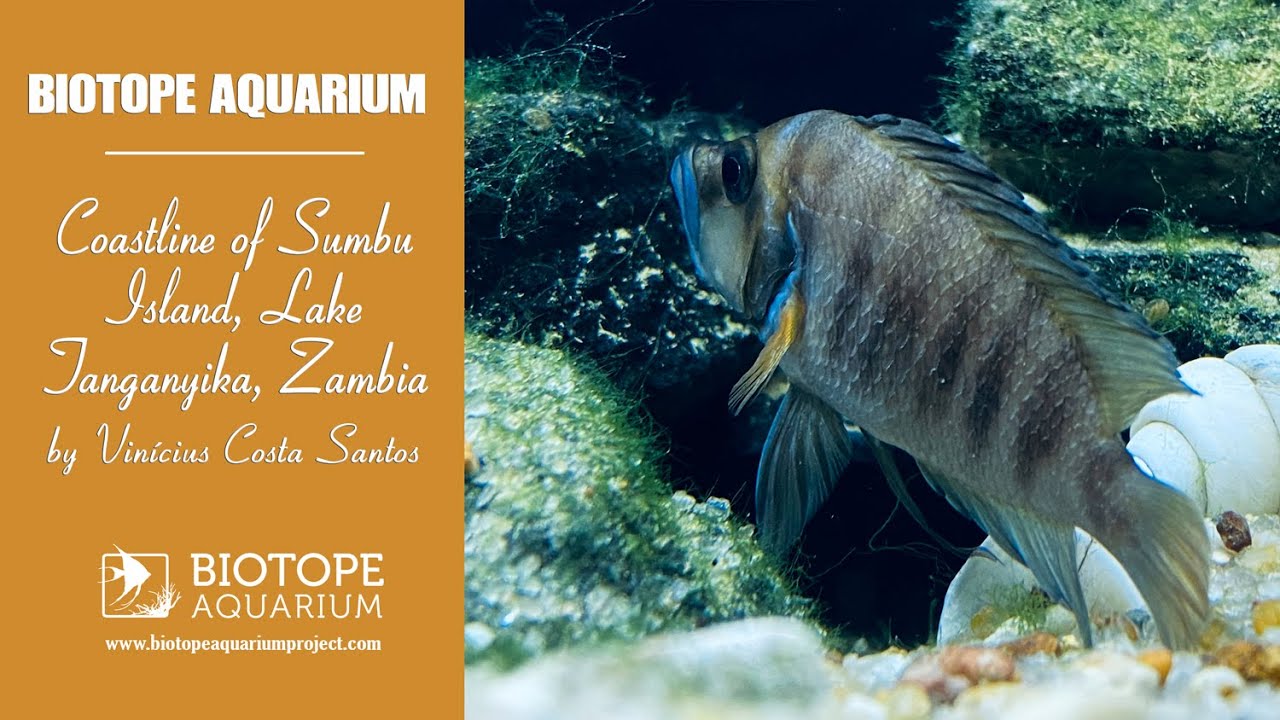
A 140-liter aquarium aiming to mimic a small bed of Neothauma tanganyicense shells amidst rocks, as found around Sumbu Island.

Submitted by
Vinícius Costa Santos
Approved by
Ad Konings & Anton Lamboj
GPS
-8.5031719, 30.4710579
Geographical region
Eastern Africa
Drainage Basin
River catchment
Water body type
Lake
Water body name
Lake Tanganyika
Water body part
Open water
Water body course
Water body: tributary of
Tributary name

Videos above and below water

Warning: Undefined variable $fish_parent in /home/biotopea/public_html/wp-content/themes/bap/content-bam.php on line 85

Warning: Undefined array key "additional_species" in /home/biotopea/public_html/wp-content/themes/bap/functions/bap-fields.php on line 349

Water Chemistry

Water information

Water type
fresh-water
Water color
Clear water
Water transparency
High
Concentration of sediments
Low
Water temperature
25-27 °C
Water flow/curent

Chemical parameters

pH
9.1
Conductivity
610
GH
220 mg/l
dGH
KH
311 mg/l
dKH
Dissolved Oxygen

Aquarium information

Aquarium description

Set-up date
October, 2023
Aquarium decoration

A 140-liter aquarium designed to mimic a small bed of Neothauma tanganyicense shells among rocks, as found around Sumbu Island, was set up exclusively to house a pair of Altolamprologus sp. “shell”. Irregularly shaped sandstone rocks form the base for a shell bed where the fish shelter and breed. The substrate has a large granulometric dispersion resulting from a mixture of sand from different beaches. The appropriate photoperiod allowed filamentous algae to cover the tops of the rocks.

Aquarium equipment

The filtration system consists of a Sunsun Hw-403b UV external filter, 35w, 1400L/h.

Fish care

The fish care starts with choosing the biotope aquarium culture. This BAM intends to go beyond aesthetic issues and is very concerned with the physicochemical conditions of water. In this way, it promotes the health of the fish.

Fish are fed once a day and in minimal amounts. NLS foods and Dr. Bassleer’s functional foods with vegetable extracts of garlic, açaí, and lapacho tree are used.

Fishes:

  • Altolamprologus sp. “shell
Plant care
Water care

Water care is a fundamental requirement of this project. The Degens et al. and Tiercelin et al. works guided the physicochemical conditions in which water must be maintained. The cations Na+, K+, Mg2+, Ca2+ and the anions Cl- (chloride), SO4– (sulfate) and the carbonates (CO3– and HCO3-) were considered the macroelements, and the main values of the concentrations were reproduced in the aquarium. Appropriate amounts of sodium bicarbonate, sodium carbonate, magnesium chloride hexahydrate, calcium chloride dihydrate and anhydrous potassium sulfate were measured and solubilized in tap water. Dosing each of the chemical elements was the way to guarantee the concentrations found in nature, as industrialized products are unable to reproduce the elementary ratios, especially if we refer to the Ca and Mg ions, responsible for the hardness of the water. GH values hide the exact concentrations of these elements and may represent different summations of Ca and Mg concentrations. Controlling the Na+/K+ ratio promotes sperm motility, favoring reproduction within the system.

50L of water in the system is changed every two weeks. The partial water change is made with water previously treated with conditioners, added with salts and in thermal balance with the aquarium so that there are no considerable oscillations.

Dimensions

Length
90 cm
Depth
40 cm
High
40 cm
Volume
140 L

Substrate in aquarium

Sand
Beige
Pebble/Gravel
Grey
Stone
Black
Stone form
Irregular
Silt/Mud
Leaves
Driftwood
Submerged terrestrial vegetation

Comment by the expert

Ad Konings: A lot of effort was given to explain what salts were used to replicate the composition of Lake Tanganyika water but there was no mention of how much of each salt was added per liter aquarium water, so nobody can replicate the specific setup. If a company’s mixture of Tanganyika salts were used, it should have been mentioned with the dosis used.

Anton Lamboj: Not really reflecting the character of the natural situation.