bam Beginner-friendly level

Uge River tributary, Mamberamo, Indonesia

Sponsored by

Indonesia, Mamberamo Raya Regency, Papua, Dabra, Mamberamo Hulu

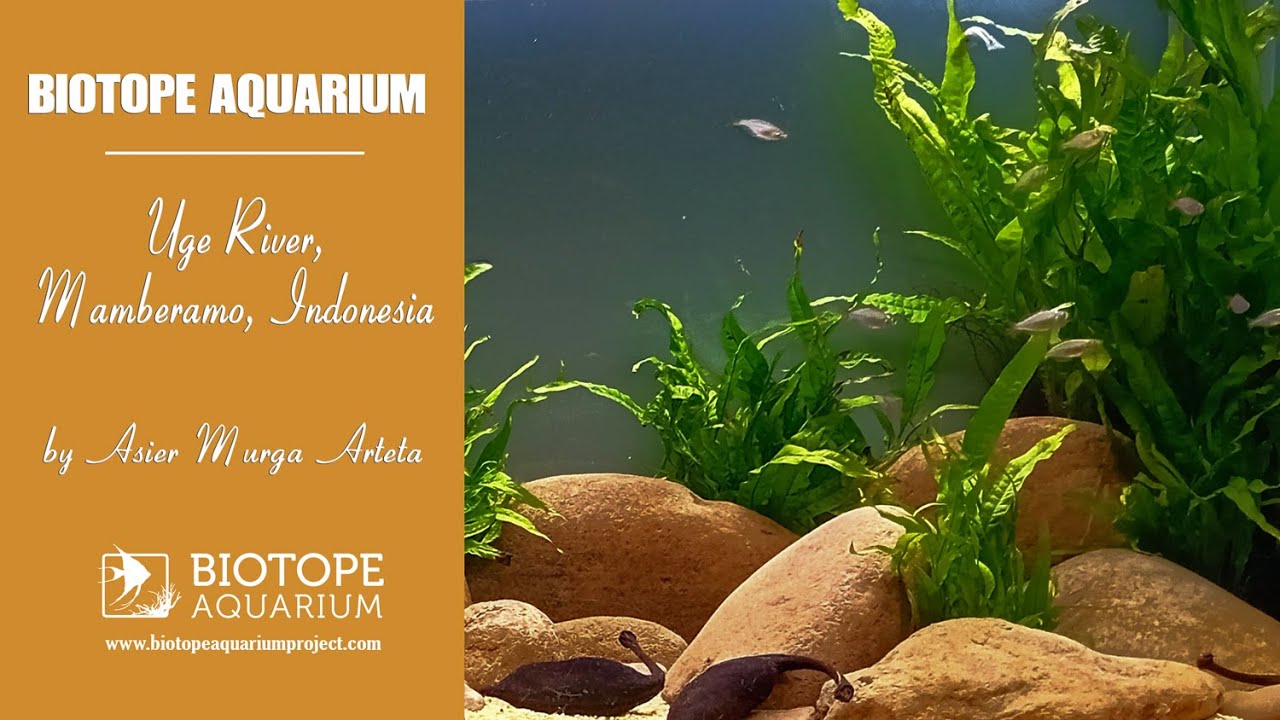
This is a 240L aquarium, where I tried to recreate a small part of a tributary stream of the Uge River in the Mamberamo Valley, Indonesia. As inhabitants I have added a group of 25 Melanotaenia praecox to make them feel at ease and bring out their best colours and natural behavior.

I have not added any other Melanotaenia sp. due to lack of space and no gobies either, because I could not find on the market those Heiko Bleher collected in that location.

The vegetation consists of Leptochilus pteropus, because it is easy to maintain. And the rest of the elements are those described by Heiko in his fantastic biotope book.

At the same time I have tried to give it a harmonious environment, always trying to ensure the well-being of the fishes in the aquarium.

I chose this biotope because I want to pay my humble homage to Heiko Bleher, to whom we aquarists owe so much, and to his “discovery of the century” in one of his expeditions, the Melanotaenia praecox.

Submitted by
Asier Murga Arteta
Approved by
Heiko Blessin, Heok Hee Ng & Greg Martin
GPS
-3.2626319, 138.6058350
Geographical region
Southeastern Asia
Drainage Basin
Mamberamo River
River catchment
Uge
Water body type
Stream
Water body name
Nameless
Water body part
Marsh land
Water body course
Lower course
Water body: tributary of
River
Tributary name
Uge

Videos above and below water


Warning: Undefined variable $fish_parent in /home/biotopea/public_html/wp-content/themes/bap/content-bam.php on line 85

Warning: Undefined array key "additional_species" in /home/biotopea/public_html/wp-content/themes/bap/functions/bap-fields.php on line 349

Water Chemistry

Water information

Water type
Water color
Water transparency
Concentration of sediments
Water temperature
°C
Water flow/curent

Chemical parameters

pH
Conductivity
GH
dGH
KH
dKH
Dissolved Oxygen

Aquarium information

Aquarium description

Set-up date
September, 2023
Aquarium decoration

I tried to imitate the biotope by creating a harmonious space, in which you see a root anchored to the ground, beige fine sand, stones and Leptochilus pteropus, placed in a way that makes it pleasant for the living creatures in the aquarium, where they have space to swim and to hide, to interact and to have a natural behavior.

With various seeds, fruits and leaves of Brachychiton populneus, Sterculia foetida and Nelumbo nucifera. These are all species of trees and terrestrial plants that surround the stream.

Aquarium equipment
  • Aquarium Eheim Vivaline 240.
  • 2 filters Oase Biomaster 350 loaded with biological material and sponges, with built in heater and 2 water outlets, one on each side, creating a circular flow on the surface.
  • For lighting there are 2 Eheim Classic Led Plants and a dimmer to simulate sunrise and sunset.
Fish care

The fish feel comfortable and behave naturally because they are surrounded by natural elements and water parameters and temperatures very similar to chose of their biotope. The dimmer makes them feel more at ease – they are not frightened when the lights go on or off, because it is progressive.

I feed them 3 times a day in small portions of a good quality dry food, and I also feed them 2 or 3 times a week with live Artemia, to awaken their natural instinct.

The water current is gentle but sufficient to oxygenate the entire surface and cause gas exchange. Water changes ar once a week of 20%, with the water at a temperature similar to that of the aquarium.

Every month I add live bacteria to reinforce the bacterial colony, also when clean the filter or the tubes. I like to have 2 filters because if one fails, or is cleaned, the other one is left untouched, so there are never any nitrite or nitrate problems.

Plant care

The plants thrive on the nitrogenous compounds generated by the fish and I also fertilise them 3 days a week, before the lights are switched on, with micros and macros.

The lighting consists of 6 hours a day, with imitation or sunrise and sunset, although for several hours more, the aquarium receives indirect light form the windows. As they are Leptochilus pteropus, they do not need nutrient substrate, as they are root-bound and in holes between rocks.

Water care

I change the water once a week, about 20%. Once a month I add live bacteria and change one of the two pre-filters, replacing the sponges with clean ones.

Every 4 or 5 months I clean one of the two filters, and add live bacteria. This way I make sure that as least one the two filters has the bacterial colony intact and the water flow is always continuous but not too strong, by regulating it with the tap on the filter tube.

Dimensions

Length
120 cm
Depth
40 cm
High
50 cm
Volume
240 L

Substrate in aquarium

Sand
Beige
Pebble/Gravel
Beige
Stone
Beige
Stone form
Roundish
Silt/Mud
Beige
Leaves
Few
Driftwood
Few
Submerged terrestrial vegetation
None

Bibliography

Comment by the expert

Heiko Blessin:

Heok Hee Ng: Reasonably accurate reconstruction, but could do with more diversity in the biotic fauna.

Greg Martin: Nice composition.