bin
Bayou Lafourche, Mississippi River, Louisiana, USA
United States, Louisiana, Lafourche
Bayou Lafourche stretches 170km starting from the town of Donaldsonville and draining into the Gulf of America. The word Lafourche means “ the fork” and the bayou splits off from the Mississippi river. Today 3Mln residents draw water from this bayou. Some of the wildlife found here are : waterfowl, alligators, catfish, snakes, and nutria rats.
The water hyacinth is an invasive floating plant which at times will clog the water ways. The water is heavy with tannins and visibility is only inches. I was born in Raceland Louisiana right on the water.
- Submitted by
- Jesse Domangue
- Approved by
- Lawrence Kent, Fritz Rohde & John T. Baxter
- GPS
- 29.7292690, -90.6009674
- Geographical region
- Northern America
- Drainage Basin
- Barataria Basin
- River catchment
- Mississippi River
- Water body type
- Channel
- Water body name
- Bayou Lafourche
- Water body part
- Outflow
- Water body course
- Lower course
- Water body: tributary of
- Stream
- Tributary name
- Bayou Blue
Videos above and below water
Warning: Undefined variable $fish_parent in /home/biotopea/public_html/wp-content/themes/bap/content-bin.php on line 55
Water Chemistry
Water information
- Water type
- fresh-water
- Water color
- Black water
- Water transparency
- Low
- Concentration of sediments
- Medium
- Water temperature
- 78 degrees f °C
- Water flow/curent
- Slow
Chemical parameters
- pH
- 7.0
- Conductivity
- 417
- GH
- 100 mg/l
- dGH
- KH
- dKH
- Dissolved Oxygen
- 0.00054 %
Substrate in nature
- Sand
- None
- Pebble/Gravel
- None
- Stone
- None
- Stone form
- Silt/Mud
- Brown
- Leaves
- Adundant
- Driftwood
- Many
- Submerged terrestrial vegetation
- Yes
Aquatic Biotope
- Date of collecting
- 27 April, 2025
- Collecting area
- River bank
- Water depth
- 0,2m
- Air temperature
- 28 °C
- Sunlight
- Full sun
Environment
- Environment
- Human settlements
- Human settlements
- Urban area
- Surrounding area
Bayou Lafourche is very narrow in certain places the banks are lined with oak and cypress trees as well as houses. Often the older trees will fall over into the water after strong storms. There are numerous small bridges crossing the bayou creating cover for fish and alligators.
- Underwater landscape
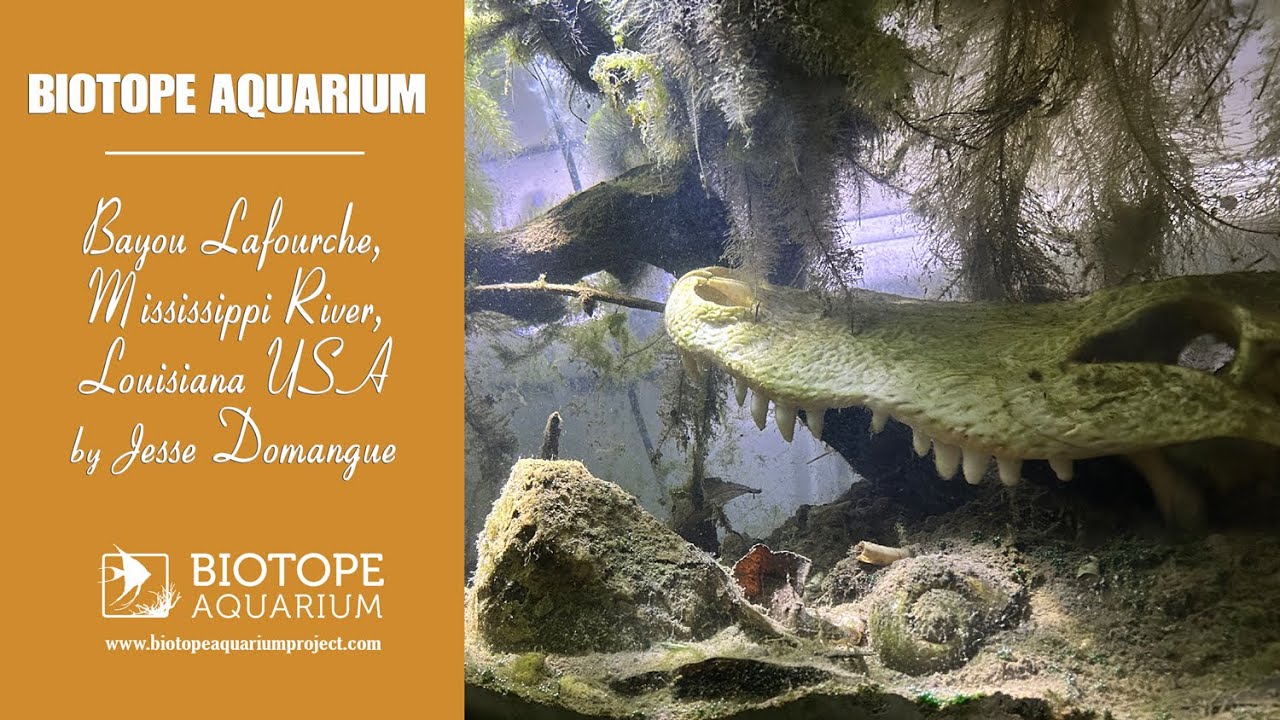
The water is always a deep brown from a high concentration of tannins. After a strong storm the muddy substrate is churned up and the water becomes cloudy. If the bottom was visible there would be dead leaves, branches, and stumps of broken trees. Close to the banks floating plants will collect draping their roots down.
Fish list:
- Gambusia affinis (Poeciliidae)
- Lepomis macrochirus (Centrachidae)
- Lepisosteus oculatus (Lepisosteidae)
- Ictalurus punctatus (Ictalurids)
Crustacean list:
- Palaemonetes Paludosus (Palaemonidae)
- Procambarus clarkii (Cambaridae)
Aquatic plant:
- Pontederia Crassipes (Pontederiaceae)
- Pistia Stratiotes (Araceae)
- Threats to ecology
Bayou Lafourche is the source of our tap water and must be protected from spills and trash dumping. Some of the invasive species here are apple snails, nutria, and the water hyacinth.
Riparian zone
- Trees near the aquatic habitat
-
Many -
Sitography