bin
Caño El Pozo, Orinoco basin, Venezuela
Venezuela, Bolivarian Republic of, Amazonas
Caño El Pozo is located in Amazonas State, Venezuela. It is a small tributary of the Orinoco River. It is about 4m wide and its length is unknown.
During the dry season its waters are clear and crystalline. Its horizontal transparency is about 10m. In rainy season the water takes on an amber color. It is an acidic water system, with a pH between 4.5 and 5.5, and temperatures between 25 and 27°C. The bottom substrate is predominantly white, fine-grained silica sand.
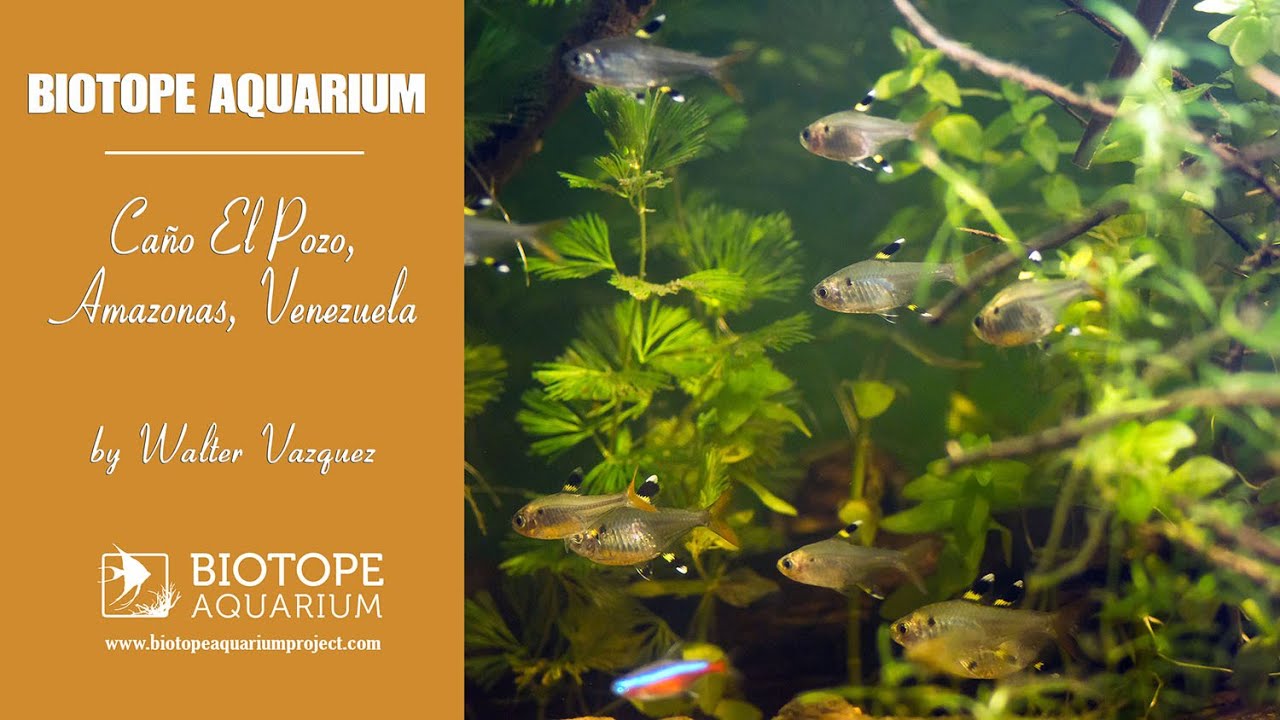
Tree roots, branches, and a large number of aquatic plants, both rooted and submerged, can be seen. This vegetation is part of a typical morichal vegetation of the Colombian-Venezuelan Orinoquia region. We find aquatic plants such as Tonina sp., Cabomba furcata, Bacopa callitrichoides, Eleocharis minima and Najas guadalupensis. Among its aquatic fauna we find Paracheirodon axelrodi, Pristella maxilaris, Nannostomus eques, Dicrosus gladicauda, Monocirrhus polyacanthus, and others.
- Submitted by
- Walter Vazquez
- Approved by
- Roberto E. Reis, Pablo C. Lehmann & Antonio Machado-Allison
- GPS
- 3.9850409, -67.6386948
- Geographical region
- South America
- Drainage Basin
- Western Guiana Shield
- River catchment
- Orinoco river
- Water body type
- Stream
- Water body name
- Caño El Pozo
- Water body part
- Channel
- Water body course
- Middle course
- Water body: tributary of
- River
- Tributary name
- Orinoco river
Videos above and below water
Warning: Undefined variable $fish_parent in /home/biotopea/public_html/wp-content/themes/bap/content-bin.php on line 55
Water Chemistry
Water information
- Water type
- fresh-water
- Water color
- Clear water
- Water transparency
- High
- Concentration of sediments
- Low
- Water temperature
- 25-27 °C
- Water flow/curent
- Slow
Chemical parameters
- pH
- 5.5
- Conductivity
- GH
- dGH
- KH
- dKH
- Dissolved Oxygen
Substrate in nature
- Sand
- White
- Pebble/Gravel
- None
- Stone
- Stone form
- Silt/Mud
- None
- Leaves
- Many
- Driftwood
- Many
- Submerged terrestrial vegetation
- Yes
Aquatic Biotope
- Date of collecting
- Collecting area
- Water depth
- Air temperature
- Sunlight
Environment
- Environment
- Affected by human activity
- Affected by human activity
- Pollution
- Pollution
- Moderate
- Surrounding area
Caño El Pozo is noted for its incredibly clear waters, which, according to Sioli’s limnological classification, are crystal clear. Under normal conditions, its horizontal transparency is about 10m. During periods of heavy rain, this transparency is reduced to about 8m. During these times, the water takes on an amber color, very similar to that of sewage.
The physical and chemical characteristics of this system are also very distinctive. It is an acidic water system, with a pH that varies between 4.5 and 5.5, and temperatures that range between 25 and 27°C.
The banks of Caño El Pozo are covered by dense forest vegetation that keeps the body of water shaded for virtually the entire day. The only area devoid of this vegetation cover is a small sandy beach that the people of the nearby town of San Fernando de Atabapo often use as a bathing resort to enjoy the jungle landscape.
- Underwater landscape
The bottom substrate is predominantly white, fine-grained silica sand. When you dive into this channel, the effect of sunlight hitting the white substrate, along with the minerals dissolved in the water, casts a greenish hue on the water column.
Tree roots, branches, and a large number of aquatic plants, both rooted and submerged, can be seen. This vegetation is part of a typical morichal vegetation of the Colombian-Venezuelan Orinoquia region. Among the most representative species are the moriche palms Mauritia flexuosa, the thorny Mauritiella aculeata, and other semi-aquatic and aquatic plants such as Desmoncus mitis, Thurnia sphaerocephala, Acisanthera quadrata, Montrichardia arborescens, Tonina sp., Urospatha sagittifolia, Cabomba furcata, Bacopa callitrichoides, Eleocharis mínima, Najas guadalupensis and many more that, together, create a visually and ecologically striking environment.
Fish list:
- Potamotrygon motoro (Potamotrygonidae)
- Acestridium dichromum (Loricariidae)
- Dekeyseria scaphirhyncha (Loricariidae)
- Acestrorhynchus falcatus (Acestrorhynchidae)
- Acestrorhynchus minimus (Acestrorhynchidae)
- Laemolyta orinocensis (Anostomidae)
- Leporinus klausewitzi (Anostomidae)
- Leporinus ortomaculatus (Anostomidae)
- Hyphessobrycon acaciae (Characidae)
- Hyphessobrycon sweglesi (Characidae)
- Moenkhausia copei (Characidae)
- Moenkhausia oligolepis (Characidae)
- Petitella bleheri (Characidae)
- Paracheirodon axelrodi (Characidae)
- Pristella maxillaris (Characidae)
- Ammocryptocharax elegans (Crenuchidae)
- Boulengerella lateristriga (Ctenoluciidae)
- Cyphocharax multilineatus (Curimatidae)
- Hoplias malabaricus (Erythrinidae)
- Carnegiella marthae (Gasteropelecidae)
- Hemiodus gracilis (Hemiodontidae)
- Bryconops giacopinii (Iguanodectidae)
- Iguanodectes cf. gracilis (Iguanodectidae)
- Iguanodectes cf. spilurus (guanodectidae)
- Copella eigenmanni (Lebiasinidae)
- Nannostomus eques (Lebiasinidae)
- Nannostomus marginatus (Lebiasinidae)
- Nannostomus unifasciatus (Lebiasinidae)
- Pyrrhulina lugubris (Lebiasinidae)
- Semaprochilodus kneri (Prochilodontidae)
- Acaronia vultuosa (Cichlidae)
- Aequidens metae (Cichlidae)
- Apistogramma megaptera (Cichlidae)
- Biotodoma wavrini (Cichlidae)
- Crenicichla cf. wallacii (Cichlidae)
- Dicrossus gladicauda (Cichlidae)
- Heros liberifer (Cichlidae)
- Heros severus (Cichlidae)
- Hypselecara coryphaenoides (Cichlidae)
- Laetacara fulvipinnis (Cichlidae)
- Mesonauta insignis (Cichlidae)
- Satanoperca daemon (Cichlidae)
- Satanoperca mapiritensis (Cichlidae)
- Monocirrhus polyacanthus (Polycentridae)
- Laimosemion tecminae (Rivulidae)
- Potamorrhaphis guianensis (Hemiramphidae)
- Pristobrycon careospinus (Serrasalmidae)
Aquatic plant list:
- Cabomba furcata (Cabombaceae)
- Eleocharis minima (Cyperaceae)
- Bacopa callitrichoides (Plantaginaceae)
- Naja guadalupensis (Hydrocharitaceae)
- Pontederis azurea (Pontederiaceae)
- Threats to ecology
Because nearby locals use this water system as a bathing resort, waste left behind by people can often be found in its coastal areas or on the water’s bottom.
Riparian zone
- Trees near the aquatic habitat
-
Many -
Comment by the expert
Roberto E. Reis: Fair description of environment, but little photographic support. Human posed threats fairly well described. A large number of fish and a plant listed for the aquatic habitat, including scientific names and families. Aquatic habitat pretty well described. A small number of references and websites used.
Pablo C. Lehmann: The research conducted by Walter Vázquez demonstrates excellent ecological understanding and integration of literature with personal observation. It convincingly portrays the Caño El Pozo biotope and provides solid scientific support for its replication in an aquarium.