bin
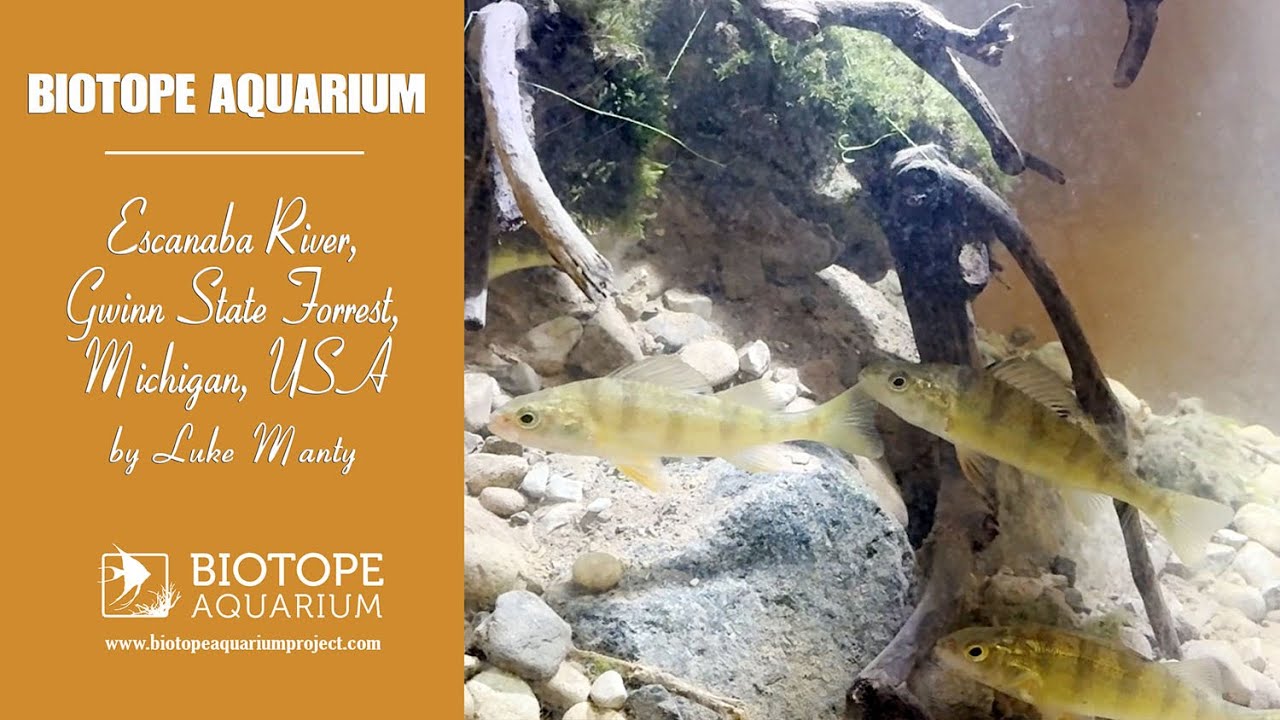
Escanaba River, Gwinn State Forrest, Michigan, USA
United States, Michigan, Gwinn State Forrest
Spanning approximately 84km, the Escanaba River is one of Michigan’s most iconic waterways. Originating in Marquette County, it winds its way through the landscape before emptying into Lake Michigan. The cold, clear waters support healthy populations of brook, brown, and rainbow trout. Game fish such as bass are also common, along with many typical lake species like perch, walleye, and northern pike.
The name “Escanaba” comes from the Ojibwa/Chippewa word meaning “flat rock.” Over time, the river has carved its way through limestone beds and rock formations, shaping the terrain. As it flows through scenic Northwoods forests, it features multiple waterfalls that feed into a series of rapids.
The river’s water is naturally stained an orangish-brown color due to iron deposits along its banks. However, for the purposes of this model, the water was kept clear. In the river’s slower sections, aquatic vegetation such as coontail thrives, while in faster-moving areas, green hair algae can be seen clinging to rocks where the current is less disruptive.
I’ve spent many summers along this river, and its beauty and ecological richness inspired me to recreate it in this biotope model.
- Submitted by
- Luke Manty
- Approved by
- Lawrence Kent, Fritz Rohde & John T. Baxter
- GPS
- 46.1497116, -87.4261475
- Geographical region
- Northern America
- Drainage Basin
- Lake Michigan
- River catchment
- Lake Michigan
- Water body type
- River
- Water body name
- Escanaba River
- Water body part
- Pool
- Water body course
- Middle course
- Water body: tributary of
- River
- Tributary name
- Black River
Videos above and below water
Warning: Undefined variable $fish_parent in /home/biotopea/public_html/wp-content/themes/bap/content-bin.php on line 55
Water Chemistry
Water information
- Water type
- fresh-water
- Water color
- Black water
- Water transparency
- Medium
- Concentration of sediments
- Medium
- Water temperature
- 19 °C
- Water flow/curent
- Strong
Chemical parameters
- pH
- 7.0
- Conductivity
- 121
- GH
- 130 mg/l
- dGH
- KH
- dKH
- Dissolved Oxygen
- 5 %
Substrate in nature
- Sand
- Beige
- Pebble/Gravel
- Grey
- Stone
- Grey
- Stone form
- Roundish
- Silt/Mud
- Beige
- Leaves
- Few
- Driftwood
- Few
- Submerged terrestrial vegetation
- Yes
Aquatic Biotope
- Date of collecting
- 11 April, 2024
- Collecting area
- River bank
- Water depth
- 1,0m
- Air temperature
- 17 °C
- Sunlight
- Full sun
Environment
- Environment
- Affected by human activity
- Affected by human activity
- Deforestation
- Deforestation
- Initial
- Surrounding area
The Escanaba River originates in Marquette County and flows all the way to Lake Michigan. Its upper reaches are surrounded by quiet backroads, forested areas, and open clearings. Over the years, deforestation has impacted the region, leading to a decline in local wildlife populations.
Further downstream, the river passes through the Gwinn State Forest, which spans approximately 1.125 km² of scenic, densely wooded landscape. As the Escanaba approaches Lake Michigan, it flows through more populated areas, where human influence becomes more pronounced.
Along its course, five hydroelectric dams have been constructed to harness the river’s energy potential, altering both its flow and ecological dynamics.
- Underwater landscape
The Escanaba River splits into three branches, each with its own distinct characteristics. The East Branch, which flows through Marquette County, features a sandy, silty riverbed and is well-suited for Smallmouth Bass and Trout fishing. The Middle Branch is characterized by numerous waterfalls and rapids, with smooth rock beds and rounded stones that have been carved by the water over time. Lastly, the West Branch is known for its sandy and gravelly bottom, offering excellent trout fishing opportunities thanks to its deep pools and rocky stretches.
Fish list:
- Salvelinus fontinalis (Salmonidae)
- Perca flavescens (Percidae)
- Micropterus dolomieu (Centrarchidae)
- Esox lucius (Esocidae)
Green algae:
- Derbesia marina (Derbesiaceae)
- Threats to ecology
The Escanaba River flows through the forests of Gwinn and surrounding areas. The few people present are typically there to enjoy the scenic beauty through activities like kayaking, floating, and hiking. However, recreational use can lead to the presence of litter along the riverbanks. Closer to Lake Michigan, five hydroelectric dams harness the river’s energy to power nearby communities. Deforestation poses the greatest threat to the ecosystem, as the removal of trees eliminates numerous microhabitats and niches for wildlife. Increased sunlight exposure due to deforestation may also impact water temperature, potentially affecting aquatic life.
Riparian zone
- Trees near the aquatic habitat
-
Many -