bin
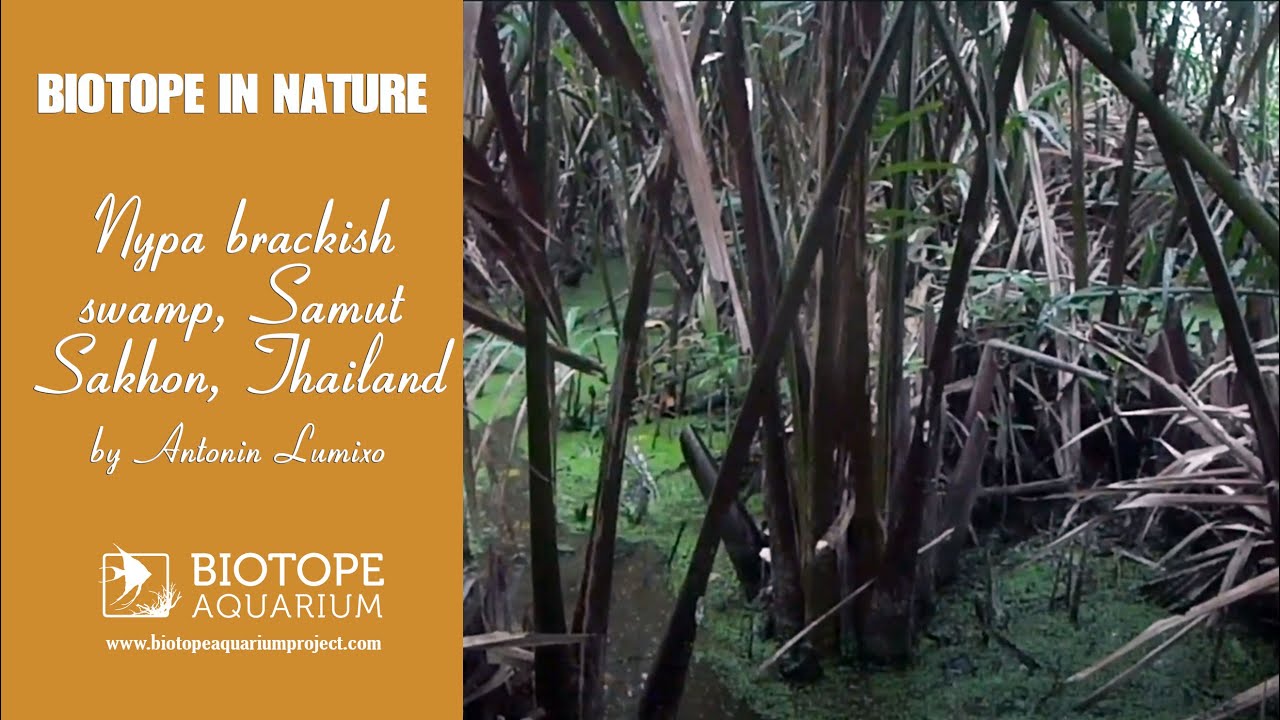
Nypa brackish swamp, Samut Sakhon, Thailand
Thailand, Central Thailand, Mueang Samut Sakhon District
This biotope is a brackish water swamp near the city of Bangkok in Thailand. There are a lot of Nypa fruticans – a palm species living in brackish water. Some of the fish live in this biotope hiding in the petioles, in the branches and roots of this palm. The others build their bubble nests in it. These unique habitats are shrinking all the time due to commercial development.
- Submitted by
- Antonin Lumixo
- Approved by
- Greg Martin & Peter Unmack
- GPS
- 13.5602779, 100.3068619
- Geographical region
- Southeastern Asia
- Drainage Basin
- Gulf of Thailand
- River catchment
- Maha Chai river
- Water body type
- Wetland
- Water body name
- Nypa Brackish Swamp
- Water body part
- Water body course
- Water body: tributary of
- Tributary name
Videos above and below water
Warning: Undefined variable $fish_parent in /home/biotopea/public_html/wp-content/themes/bap/content-bin.php on line 55
Water Chemistry
Water information
- Water type
- brackish-water
- Water color
- Clear water
- Water transparency
- Low
- Concentration of sediments
- High
- Water temperature
- 24-28 °C
- Water flow/curent
- None
Chemical parameters
- pH
- 7.5
- Conductivity
- 2000
- GH
- dGH
- KH
- dKH
- Dissolved Oxygen
Substrate in nature
- Sand
- None
- Pebble/Gravel
- None
- Stone
- None
- Stone form
- Silt/Mud
- Brown
- Leaves
- Many
- Driftwood
- None
- Submerged terrestrial vegetation
- no
Aquatic Biotope
- Date of collecting
- October 15, 2018
- Collecting area
- Middle waters
- Water depth
- 0,5m
- Air temperature
- 30 °C
- Sunlight
- Full shade
Environment
- Environment
- Affected by human activity
- Affected by human activity
- Pollution
- Pollution
- Advanced
- Surrounding area
Brackish-water swamps of Tha Chin river estuary have been largely converted to ricefields. The habitat is shrinking all the time due to commercial and agriculture developments near the biotope.
- Underwater landscape
The water looks very cloudy and dirty.
Fishes
- Oryzias javanicus (Adrianichthyidae)
- Anabas testudineus (Anabantidae)
- Aplocheilus panchax (Aplocheilidae)
- Channa striata (Channidae)
- Boraras urophthalmoides (Adrianichthyidae)
- Betta mahachaiensis (Osphronemidae)
- Trichopodus trichopterus (Osphronemidae)
- Trichopsis vittata (Osphronemidae)
- Dermogenys siamensis (Zenarchopteridae)
Mollusc
- Pila ampullacea (Ampullariidae)
Aquatic plant
- Lemna minor (Araceae) – some areas of the biotope do not have one.
Wetland plant
- Nypa fruticans (Arecaceae)
Note: The biotope data, more precisely on that of Betta mahachaiensis, is collected by the author’s friend.
- Threats to ecology
The estuary is already at risk due to pollution and activities in the estuary and this will be further compromised by floods, droughts, high sea levels and storms. High salinity levels and high temperatures will influence the health of mangrove and Nypoideae forests and affect the distribution of some of their plant species.
Riparian zone
- Trees near the aquatic habitat
-
Many - Nypa fruticans
Comment by the expert
Greg Martin: The footage of the biotope is ok but it would be good to see below the water insitu. Also I would have liked to hear about the threats to this environment.
Peter Unmack: I liked the video of the habitat, looks like a difficult place to access! Presume no underwater footage as it’s too hard to see anything? Background on fishes was good, bibliography was very minimal.