bin
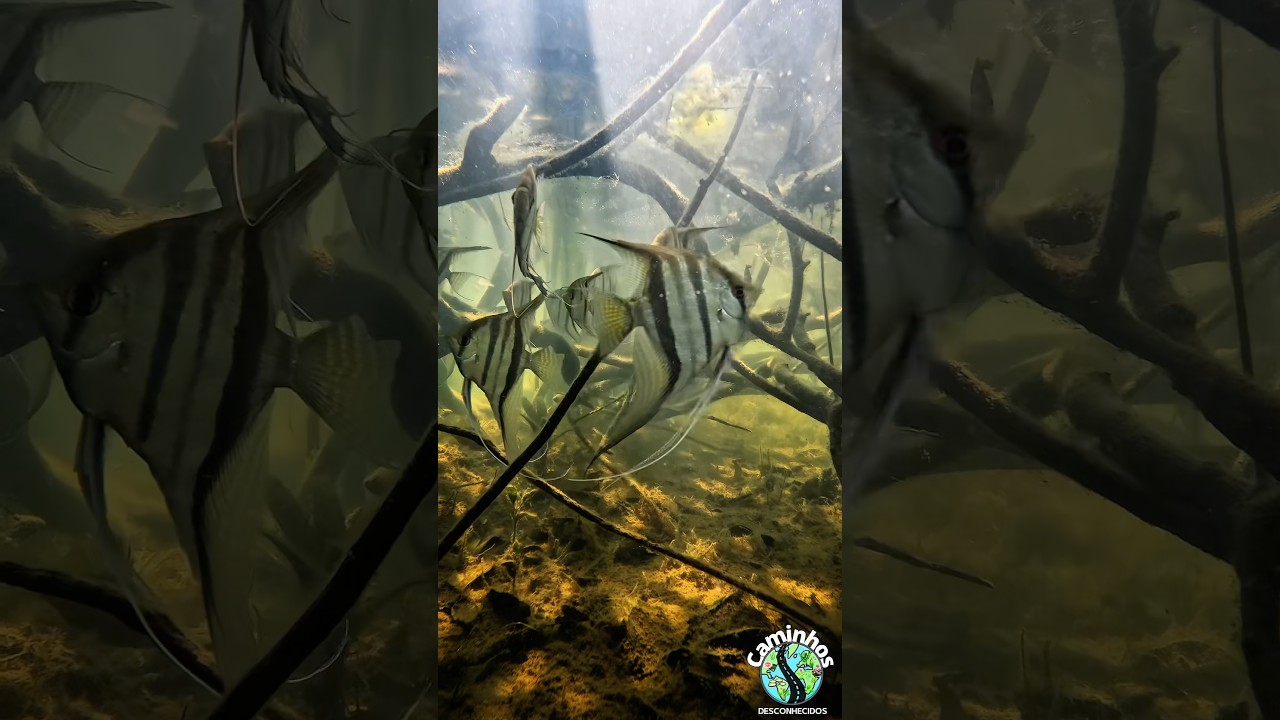
Rio Negro tributary, Amazonas, Brazil
Brazil, Amazonas
The Rio Negro is the largest blackwater tributary of the Amazon River in South America. It derives its name from its dark, tea-coloured water, which appears almost black due to high concentrations of dissolved tannins. The river joins the Amazon near Manaus, Brazil. With a total length of approximately 2.250 km, the Rio Negro is the largest blackwater river in the world.
The river supports an extraordinary diversity of freshwater fishes. Among the species that particularly inspired me are the Short-snouted Headstander, the Swallowtail Checkerboard Cichlid, and several species of pencilfishes. Their unique appearance and behaviour motivated me to recreate a biotope that reflects the natural habitat of these remarkable fishes.
- Submitted by
- Zhang PengFei
- Approved by
- Roberto E. Reis, Pablo C. Lehmann & Antonio Machado-Allison
- Geographical region
- South America
- Drainage Basin
- Rio Amazonas
- River catchment
- Rio Negro
- Water body type
- River
- Water body name
- Rio Negro
- Water body part
- Open water
- Water body course
- Lower course
- Water body: tributary of
- Tributary name
Videos above and below water
Warning: Undefined variable $fish_parent in /home/biotopea/public_html/wp-content/themes/bap/content-bin.php on line 55
Water Chemistry
Water information
- Water type
- Freshwater
- Water color
- Black water
- Water transparency
- Medium
- Concentration of sediments
- High
- Water temperature
- 22-26 °C
- Water flow/curent
- Slow
Chemical parameters
- pH
- Conductivity
- GH
- dGH
- KH
- dKH
- Dissolved Oxygen
Substrate in nature
- Sand
- Beige
- Pebble/Gravel
- Grey
- Stone
- Beige
- Stone form
- Irregular
- Silt/Mud
- Beige
- Leaves
- Many
- Driftwood
- Few
- Submerged terrestrial vegetation
- None
Aquatic Biotope
- Date of collecting
- Collecting area
- Water depth
- Air temperature
- Sunlight
Environment
- Environment
- Untouched
- Surrounding area
The Rio Negro is the largest blackwater tributary of the Amazon River in South America. It is named for its dark, tea-coloured water, which appears almost black due to high concentrations of humic substances released from decomposing leaves, wood, and other organic matter within the surrounding rainforest. The river joins the Amazon River near Manaus, Brazil.
With a total length of approximately 2.250 km, the Rio Negro is the largest blackwater river in the world. Its water is naturally soft, with very low mineral content, low conductivity, and an acidic pH that typically ranges from approximately 2.9 to 4.2 in the most strongly influenced blackwater sections. Despite its dark colour, the water is remarkably clear because it contains very little suspended sediment.
The Rio Negro originates in Colombia, flows through Venezuela and Brazil, and finally enters the Amazon River near Manaus. It carries the greatest volume of water of any Amazon tributary, with an average discharge of approximately 28.000-30.000 m³/s. In its lower reaches, the river widens considerably, reaching 30-50 km across in some sections.
The Rio Negro supports an extraordinary diversity of freshwater fishes and forms part of the greater Amazon Basin, which contains more than 2,500 described fish species, with many more yet to be documented. A notable feature of the lower river is the Rio Negro Bridge, opened in 2011, which connects Manaus with Iranduba in Brazil.
- Underwater landscape
-
- Threats to ecology
The Rio Negro plays a fundamental role in maintaining the ecological integrity of the Amazon Basin. Its seasonal water-level fluctuations regulate the hydrology of the main Amazon River, sustain the annual flood-pulse system of the surrounding rainforest, and drive nutrient cycling, fish migration, and the reproduction of countless aquatic organisms.
The river and its floodplain provide habitat for an extraordinary diversity of life, including insects, fishes, reptiles, birds, mammals, and many species that remain poorly studied or undiscovered. Human activities such as deforestation, infrastructure development, and other forms of habitat alteration may disrupt the delicate ecological balance of this unique blackwater ecosystem.
The exceptional ecological importance and biodiversity of the Rio Negro inspired me to recreate this native habitat in the aquarium, with the aim of faithfully representing one of the world’s most remarkable freshwater ecosystems.
Riparian zone
- Trees near the aquatic habitat
-
Many - Swietenia mahagoni (Meliaceae)