bin
Unnamed Pond in Zengcheng, Guangzhou, China
China, Guangdong
Chiling Village in Zengcheng District, Guangzhou, Guangdong Province, lies within South Asia’s subtropical hills, featuring an average annual temperature of 22°C and abundant rainfall. Forested hills encircle the area, sheltering a small pond sustained by rainwater and mountain seepage.
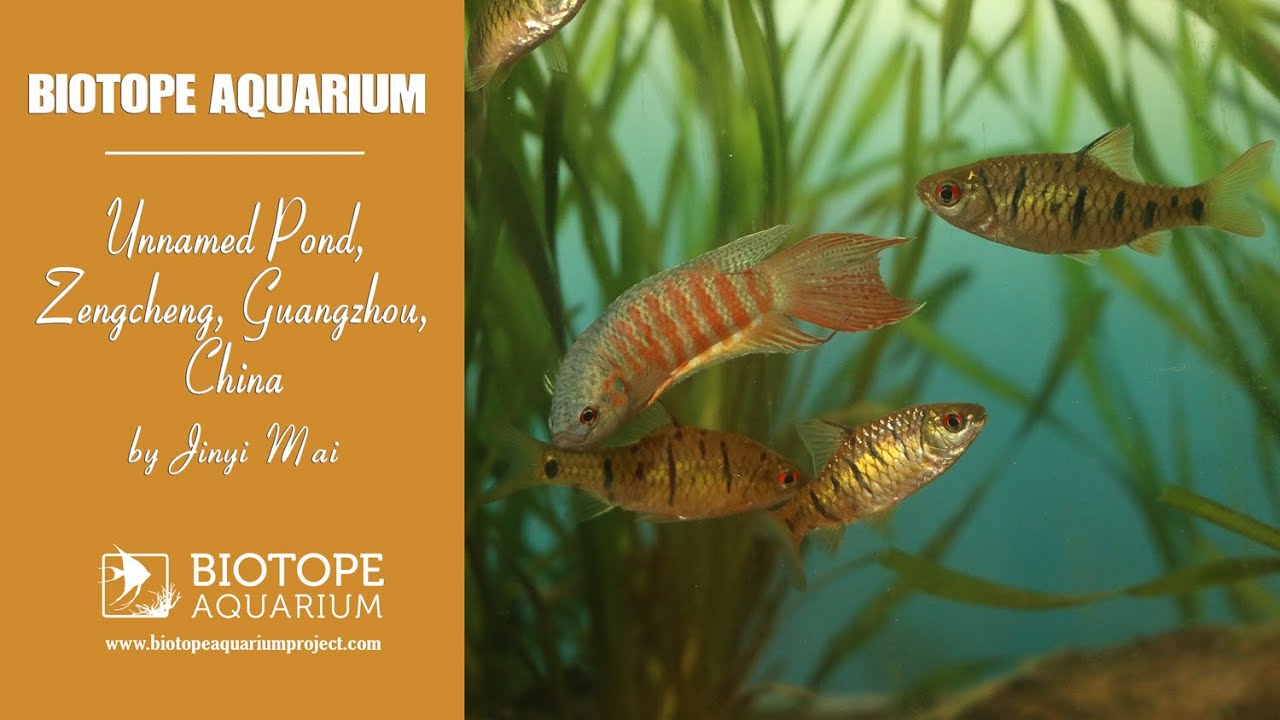
The pond’s shoreline is covered with secondary forest including Heptapleurum heptaphyllum. The shallows support wetland vegetation including Juncus effusus. From shallower margins to profundal zones, Vallisneria spiralis and diverse algae thrive, sustaining populations of Macropodus opercularis and Barbodes semifasciolatus. This preserved freshwater microhabitat serves as an exemplary model site for studying subtropical aquatic ecosystems.
- Submitted by
- Jinyi Mai
- Approved by
- Sun Kai & Zhou Hang
- GPS
- 23.4130688, 113.6056747
- Geographical region
- Eastern Asia
- Drainage Basin
- Pearl River Basin
- River catchment
- Zengjiang River
- Water body type
- Pond
- Water body name
- Unnamed pond
- Water body part
- Water body course
- Water body: tributary of
- Hill streams
- Tributary name
Videos above and below water
Warning: Undefined variable $fish_parent in /home/biotopea/public_html/wp-content/themes/bap/content-bin.php on line 55
Water Chemistry
Water information
- Water type
- Water color
- Clear water
- Water transparency
- Medium
- Concentration of sediments
- Medium
- Water temperature
- 13-26℃ °C
- Water flow/curent
- Slow
Chemical parameters
- pH
- 6.2
- Conductivity
- GH
- dGH
- KH
- dKH
- Dissolved Oxygen
Substrate in nature
- Sand
- Beige
- Pebble/Gravel
- Mixed
- Stone
- Grey
- Stone form
- Irregular
- Silt/Mud
- Beige
- Leaves
- Many
- Driftwood
- Many
- Submerged terrestrial vegetation
- Yes
Aquatic Biotope
- Date of collecting
- May, 2025
- Collecting area
- Side arm
- Water depth
- 0,2m
- Air temperature
- 27 °C
- Sunlight
- Full sun
Environment
- Surrounding area
The pond is surrounded by numerous low mountains and hills, with the mountain vegetation dominated by south subtropical evergreen broad – leaved forests. Patches of Phyllostachys edulis and Canarium pimela grow under the forest, forming a dense understory. The surrounding farmlands and ancient village settlements constitute a semi – natural ecosystem, where birds often forage on the pond shore at dawn and dusk. In summer, dragonfly larvae can be seen emerging from the water plants, completing their eclosion process.
- Underwater landscape
The underwater area of the pond is mainly dominated by Vallisneria spiralis and Hydrilla verticillata. As the shore is primarily covered by shrubs and herbaceous plants with minimal shading, the aquatic plants and stones underwater are covered with abundant algae.
Fish list:
- Macropodus opercularis (Osphronemidae)
- Barbodes semifasciolatus (Cyprinidae)
- Rhinogobius similis (Oxudercidae)
- Rhodeus ocellatus (Acheilognathidae)
- Coptodon zillii (Cichlidae) – IAS
Molluscs:
- Cipangopaludina cathayensis (Viviparidae)
Aquatic plants:
- Vallisneria spiralis (Hydrocharitaceae)
- Hydrilla verticillata (Hydrocharitaceae)
- Threats to ecology