- Set-up date
- February, 2025
- Aquarium decoration
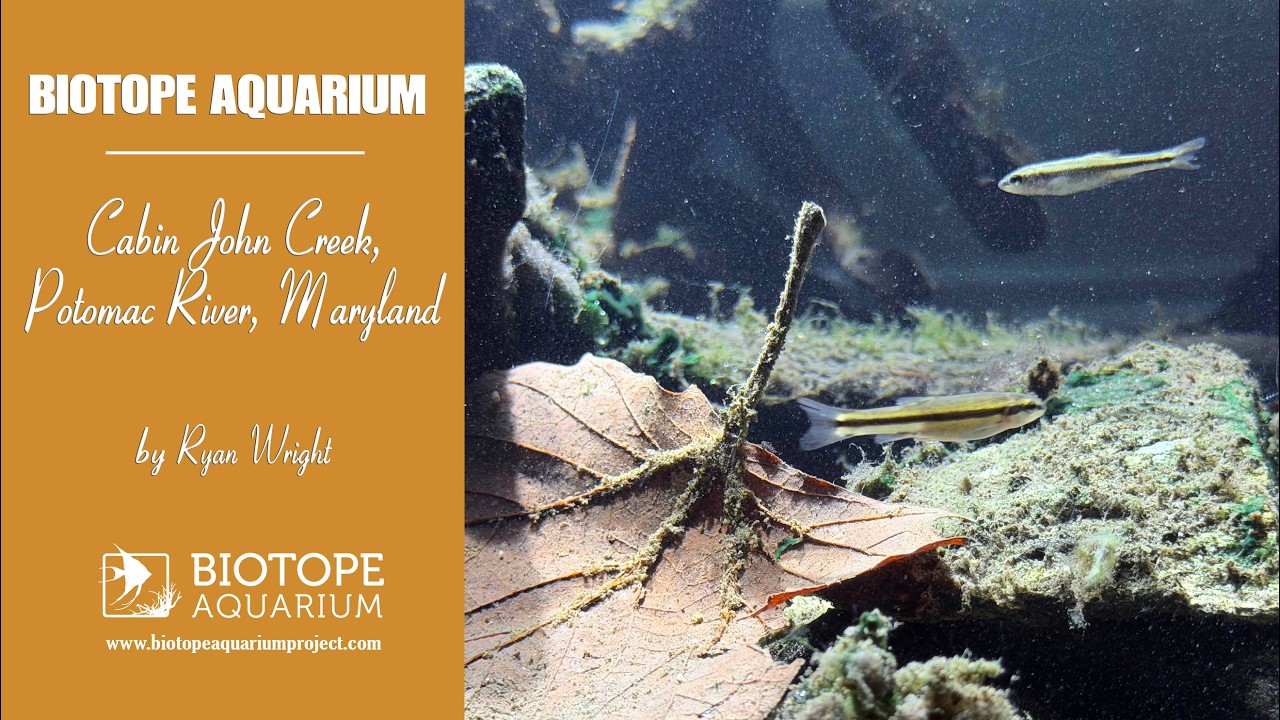
The background was covered in stripes of aquarium-safe silicone to allow foam to adhere to the glass. The filtration intake and outflow were glued into position and incorporated into the design. From there, I built up layers of spray foam to create a convincing background and shoreline structure, using locally purchased spiderwood to mimic roots emerging from the stream bed.
The spray foam was trimmed to achieve the desired shapes, then coated with original formula Gorilla Glue, The Pond Guy’s Aquatic Planting Substrate, and coconut coir to replicate the silt and organic material that form the stream bed.
I then collected a variety of rocks from alongside the stream, likely including a mixture of calcite, sedimentary stones, and quartz, to represent the natural stone composition found within the creek. A few stones were collected directly from the creek to introduce native algae and biofilm, which are abundant in the habitat.
I also incorporated two examples of human-made debris that had become part of the creek environment: the neck of a broken glass bottle and a fragment of pottery. The relative health of the stream, despite its proximity to major highways, sources of eutrophication, and suburban development, is inspiring. This aquarium celebrates the way human activity and natural processes have developed a tentative coexistence in this ecosystem.
- Aquarium equipment
Filtration: Aqua-El Max 1000
Heater: AquaTop 200 W Titanium Heater
Water Movement: Jebao SLW-5 Wavemaker
Aeration: Aquarium Co-Op Air Pump with Battery Backup
Lighting: Kessil A350WE LED Light
- Fish care
After collection, the fish were treated with IntestiPro (a combination of praziquantel and metronidazole) for nine days to support gut health and reduce the risk of internal parasites.
The fish are fed twice daily, with a varied diet. Frozen foods include mysis shrimp, bloodworms, and Rod’s Food Freshwater Small Mouth blend. Dry foods include a variety of Fluval Bug Bites and New Life Spectrum Tropical Fish Formula. In addition, the aquarium was seeded with Moina macrocopa. Although this is not a native species, it was introduced to support the adaptation of the Tessellated Darters to aquarium conditions.
High oxygen saturation is maintained by positioning the Aqua-El filter outlet near the surface and using an additional air pump. Water movement is provided by a Jebao SLW-5 wavemaker, creating sufficient current for the fish to exhibit natural swimming behaviour.
Fish:
- Etheostoma olmstedi (Percidae) – 4
- Rhinichthys atratulus (Leuciscidae) – 4
- Notropis amoenus (Leuciscidae) – 1
- Gambusia holbrooki (Poeciliidae) – 1
Molluscs:
- Ferrissia rivularis (Planorbidae) – 2
- Physella acuta (Physidae) – 3
- Plant care
The stream itself has minimal aquatic plant life; however, I found invasive starwort growing in the stream and allowed it to grow along the top of the aquascape, where it thrives with minimal maintenance. I ensure that the water level reaches the top of the aquarium and that the lights are on for 8 hours per day. Combined with the nutrients provided by the substrate, these conditions allow the plant to grow successfully.
Aquatic vegetation:
- Callitriche stagnalis (Plantaginaceae) – 1
- Water care
A 30% water change is performed twice per month, with replacement water treated with Seachem Prime. Seachem Alkaline Buffer is occasionally used as needed to maintain stable pH levels. Excess algae is regularly removed using a toothbrush during maintenance.
The filtration system is serviced monthly, using filter floss, biological sponges, ceramic biomedia, and ChemiPure Green.