bam Beginner-friendly level

#11521 Cueva de El Pachón, San Luis Potosí, Mexico

Sponsored by

Mexico, San Luis Potosí, Ciudad Valles Municipality

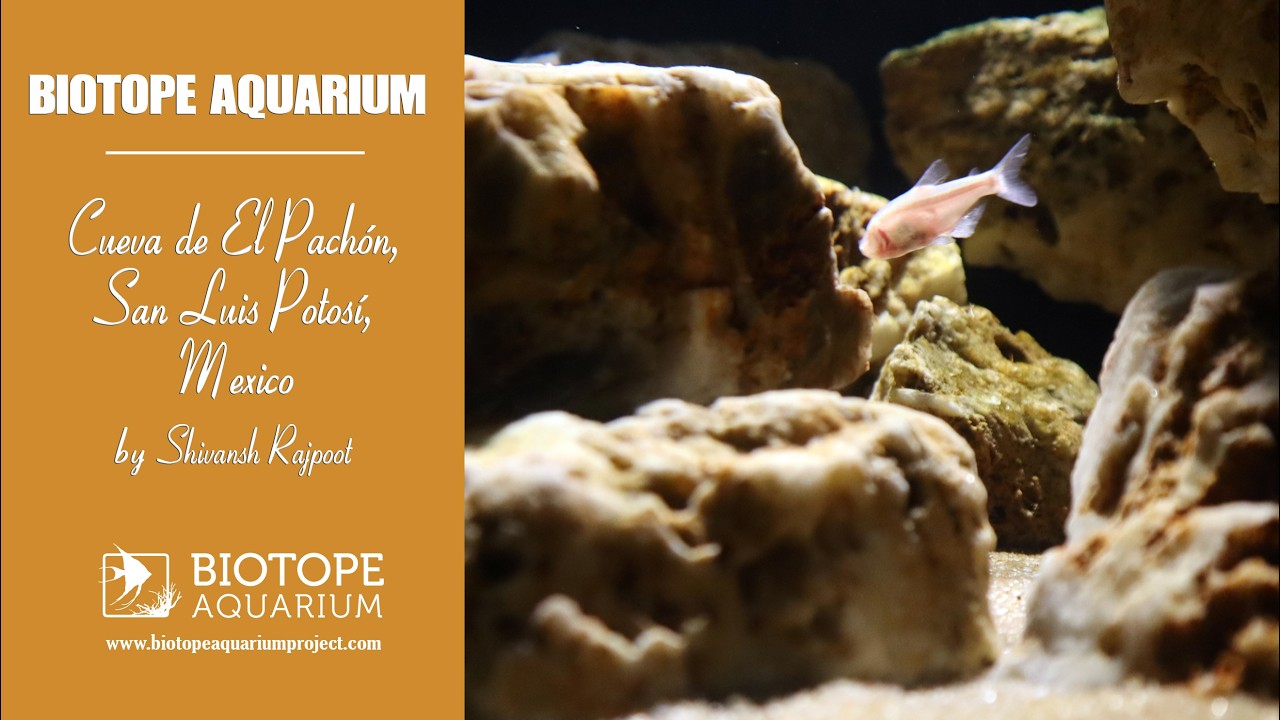
This aquarium recreates the subterranean pools of Cueva de El Pachón in the Sierra de El Abra karst region of San Luis Potosí, Mexico, the natural habitat of the Blind Cave Tetra (Astyanax mexicanus). The layout emphasises the geological character of the cave using porous limestone-like rocks to reproduce the eroded karst formations, crevices, and sheltered passages found in the natural environment.

A pale sand substrate and open swimming areas replicate the cave floor, while the absence of aquatic plants reflects the permanent darkness of this ecosystem. Water movement is kept gentle to simulate the slow circulation of underground pools, and lighting is intentionally subdued to highlight the unique adaptations and natural behaviour of the cavefish.

The aquarium focuses on ecological authenticity, recreating one of the world’s most remarkable freshwater cave environments while maintaining stable conditions that support the health and natural behaviour of its inhabitants.

Submitted by
Shivansh Rajpoot
GPS
22.6096554, -99.0245972
Geographical region
Central America
Drainage Basin
Río Panuco
River catchment
Río Tampaón
Water body type
Pool
Water body name
Cueva de El Pachón
Water body part
Pool
Water body course
Upper course
Water body: tributary of
River
Tributary name
Río Tampaón

Videos above and below water

Warning: Undefined variable $fish_parent in /home/biotopea/public_html/wp-content/themes/bap/content-bam.php on line 85

Water Chemistry

Water information

Water type
Freshwater
Water color
Clear water
Water transparency
High
Concentration of sediments
Low
Water temperature
24 °C
Water flow/curent
Slow

Chemical parameters

pH
7.4
Conductivity
520
GH
180 mg/l
dGH
KH
150 mg/l
dKH
Dissolved Oxygen
90 %

Aquarium information

Aquarium description

Set-up date
March, 2026
Aquarium decoration

The aquarium recreates the subterranean pools of Cueva de El Pachón using a layout inspired by the limestone cave formations of the Sierra de El Abra, Mexico. Chicken Bone Stone was selected for its porous texture and natural resemblance to eroded karst limestone, allowing the construction of caves, crevices, and sheltered passages similar to those found in the natural habitat.

A fine, light-coloured sand substrate reproduces the cave floor and contrasts with the limestone formations. No aquatic plants were included, reflecting the complete absence of vegetation in the permanently dark cave environment. The hardscape was arranged to create open swimming areas while providing numerous refuges, closely matching the underwater structure of the natural habitat.

Subdued lighting enhances the cave-like atmosphere and highlights the distinctive appearance and natural behaviour of the Blind Cave Tetra (Astyanax mexicanus).

Aquarium equipment

Aquarium: 60 × 45 × 40 cm.

Filtration: SunSun HW-304B external canister filter providing multi-stage mechanical and biological filtration.

Heating: Thermostatically controlled heater maintained at 24 °C.

Lighting: Low-intensity Chihiros Z LED lighting to simulate the dim conditions of a subterranean habitat while allowing observation of the fish.

The equipment was selected to maintain excellent water quality, stable water parameters, and gentle water movement characteristic of underground cave pools.

Fish care

The aquarium houses only Astyanax mexicanus (Blind Cave Tetra), maintaining ecological consistency with the referenced biotope. The rockwork provides numerous caves and sheltered areas that encourage natural exploration and social interactions.

The fish are fed a varied diet consisting of high-quality pellets, frozen bloodworms, brine shrimp, and other protein-rich foods. Water quality and fish behaviour are monitored regularly, while stable temperature and water chemistry are maintained to minimise stress and promote long-term health.

Fish:

  • Astyanax mexicanus – Blind cave morph (El Pachón population) (Characidae)
Plant care

No aquatic plants are maintained in this aquarium because the referenced natural habitat is a permanently dark limestone cave where aquatic vegetation is absent. Their omission is intentional and preserves the ecological authenticity of the recreated biotope.

Water care

Approximately 20% of the aquarium water is replaced every 10–14 days using conditioned water matched to the aquarium’s temperature and chemistry. Water parameters, including pH, conductivity, hardness, and temperature, are monitored regularly.

The external filter is serviced only when necessary to preserve beneficial bacterial colonies. Gentle water circulation and high oxygen levels are maintained to replicate the stable conditions of the natural cave habitat while ensuring excellent water quality for the fish.

Dimensions

Length
60 cm
Depth
45 cm
High
40 cm
Volume
100 L

Substrate in aquarium

Sand
Beige
Pebble/Gravel
Mixed
Stone
White
Stone form
Irregular
Silt/Mud
None
Leaves
None
Driftwood
None
Submerged terrestrial vegetation
None

Bibliography