bin
Cueva de El Pachón, San Luis Potosí, Mexico
Mexico, San Luis Potosí, Ciudad Valles Municipality
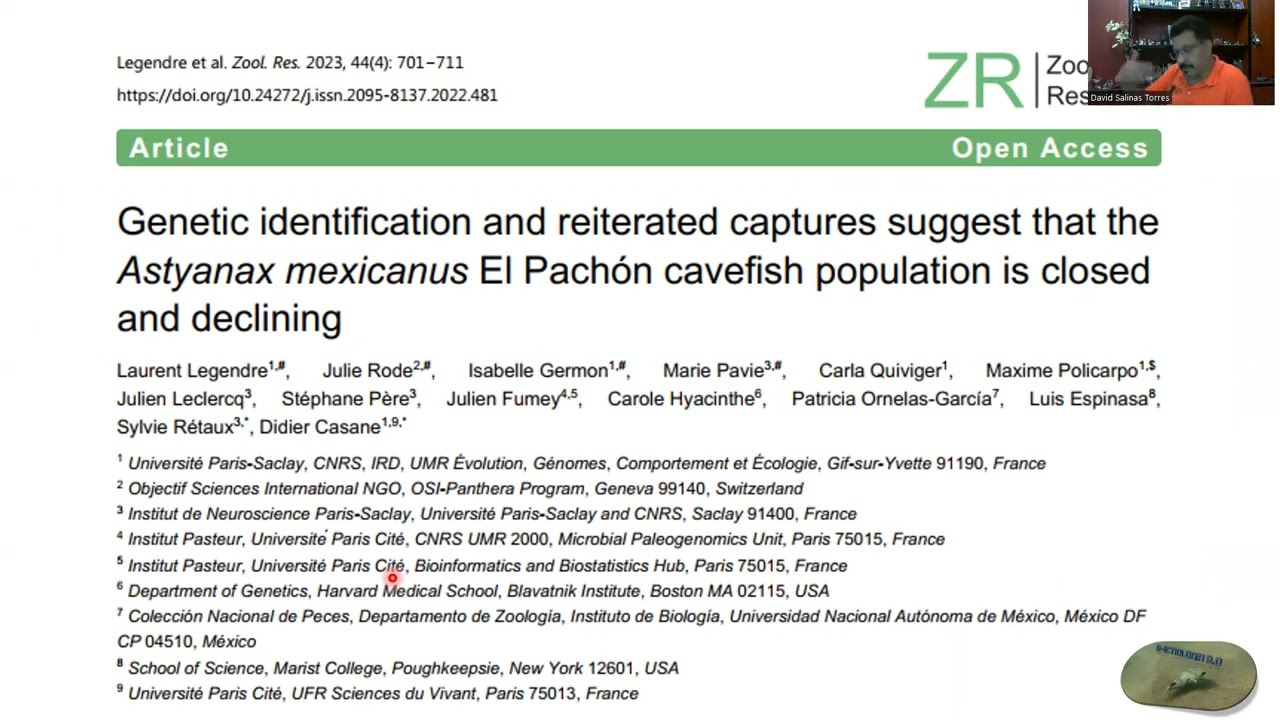
Cueva de El Pachón is a limestone cave located in the Sierra de El Abra karst region of San Luis Potosí, Mexico. Its underground pools and slow-moving streams form one of the best-known natural habitats of the Blind Cave Tetra (Astyanax mexicanus). Isolated in complete darkness for thousands of years, these fish evolved without functional eyes or body pigmentation, making this cave an important site for evolutionary and ecological research.
The habitat consists of clear, mineral-rich freshwater flowing through limestone passages with rocky substrates, gravel, and fine sediments. Aquatic plants are absent due to the lack of sunlight, while organic matter entering from the surface supports the cave food web. This unique subterranean ecosystem inspired the recreation of a biotope aquarium that reflects its geological structure, stable water conditions, and distinctive cave environment.
- Submitted by
- Shivansh Rajpoot
- Approved by
- Michael Köck & Jairo Arroyave
- GPS
- 22.6096554, -99.0245972
- Geographical region
- Central America
- Drainage Basin
- Río Panuco
- River catchment
- Río Tampaón
- Water body type
- Pool
- Water body name
- Cueva de El Pachón
- Water body part
- Pool
- Water body course
- Upper course
- Water body: tributary of
- River
- Tributary name
- Río Tampaón
Videos above and below water
Warning: Undefined variable $fish_parent in /home/biotopea/public_html/wp-content/themes/bap/content-bin.php on line 55
Water Chemistry
Water information
- Water type
- Freshwater
- Water color
- Clear water
- Water transparency
- High
- Concentration of sediments
- High
- Water temperature
- 24 °C
- Water flow/curent
- Slow
Chemical parameters
- pH
- 7.4
- Conductivity
- 520
- GH
- 180 mg/l
- dGH
- KH
- 150 mg/l
- dKH
- Dissolved Oxygen
- 85 %
Substrate in nature
- Sand
- White
- Pebble/Gravel
- Grey
- Stone
- White
- Stone form
- Irregular
- Silt/Mud
- None
- Leaves
- None
- Driftwood
- None
- Submerged terrestrial vegetation
- None
Aquatic Biotope
- Date of collecting
- 15 May, 2019
- Collecting area
- Open water
- Water depth
- over 2,0m
- Air temperature
- 26 °C
- Sunlight
- No sunlight
Environment
- Environment
- Untouched
- Surrounding area
Cueva de El Pachón is located in the Sierra de El Abra karst region of San Luis Potosí, northeastern Mexico, within the Pánuco River Basin. The cave lies beneath tropical semi-evergreen forests growing on limestone hills. Rainwater infiltrates the porous karst landscape, feeding underground streams and pools with clear, mineral-rich water. The cave maintains a stable environment throughout the year, with high humidity, constant temperatures, and complete darkness beyond the entrance. Organic matter entering from the surface provides the primary source of nutrients for the subterranean ecosystem.
- Underwater landscape
The habitat consists of clear underground pools connected by slow-flowing passages over limestone bedrock. The substrate is composed of limestone rocks, gravel, and fine calcareous sand, with very little suspended sediment. Aquatic vegetation is absent due to the lack of sunlight. The Blind Cave Tetra (Astyanax mexicanus) is the dominant fish species, accompanied by cave-adapted invertebrates such as freshwater shrimp. Rock crevices and submerged cavities provide shelter and potential breeding sites.
Fish:
- Astyanax mexicanus (Characidae) – Cave morph (El Pachón population)
Crustaceans:
- Typhlatya mitchelli (Atyidae)
- Macrobrachium cf. acanthochirus (Palaemonidae)
- Threats to ecology
Although relatively isolated, the cave ecosystem is vulnerable to groundwater pollution, excessive groundwater extraction, quarrying, land-use changes above the cave, and increasing tourism. Because cave species have evolved in highly stable environments, even small changes in water quality or hydrology can have significant ecological consequences. The conservation of the surrounding karst landscape is essential for protecting this unique subterranean ecosystem.
Riparian zone
- Trees near the aquatic habitat
-
Many - Ficus cotinifolia (Moraceae)
- Trees near the aquatic habitat
-
Many - Lysiloma divaricatum (Fabaceae)
- Trees near the aquatic habitat
-
Few - Bursera simaruba (Burseraceae)
Comment by the expert
Michael Köck: Except for the lack of video material of the habitat (there are only a few photos in the presentation), there’s nothing to criticize. Well researched.
Jairo Arroyave: No visual support for the BIN was provided yet the description in the text is satisfactory and allowed comprisons with BAM. BAM appears an accurate representation but it should be noted that the simplicty of this particular biotope meant that it was not as challenging to recreate, compared to most other biotopes of the region.