- Set-up date
- 25 January, 2025
- Aquarium decoration
Large river pebbles and driftwood fused with stone serve as the primary hardscape materials in this setup, faithfully replicating the microhabitat found along the swampy margins of Lake Sentarum. Through weathering and prolonged exposure to light, biofilm, mosses, and algae naturally develop across these surfaces, forming a vital food source for the resident fish species.
The substrate consists of a base layer of fine gray sand mixed with crushed pebbles and gravel, creating a textural representation of the lakebed. Above this lies a layer of dried botanical matter—guava, melaleuca (paperbark), coconut palm leaves, and driftwood—which gradually leaches tannins into the water, giving it the warm, tea-stained hue characteristic of blackwater ecosystems. This water chemistry closely mimics the naturally soft, acidic conditions of the lowland rainforest floodplains and peat swamp regions of Borneo.
At the bottom, a layer of TROPICAL aquasoil is used not only to stabilize water parameters but also to buffer the pH between 5.0 and 6.0, while providing minimal yet sufficient nutrients to support slow-growing aquatic plants. Together, these elements create a realistic and ecologically functional microcosm of a flooded forest fringe in Lake Sentarum.
- Aquarium equipment
Filtration: Sunsun XWA-5 filter (800L/h) with five compartments filled with Matrix filter media; auxiliary Marin filter filled with Netlea filter cotton.
Lighting: Week T90 Pro 3.0 RGB color system lamp (90W), with a color temperature range of 8000–12000K.
Cooling & Humidity: A cooling fan maintains the water temperature below 30 °C, and an automatic misting system keeps mosses and semi-aquatic plants consistently moist.
- Fish care
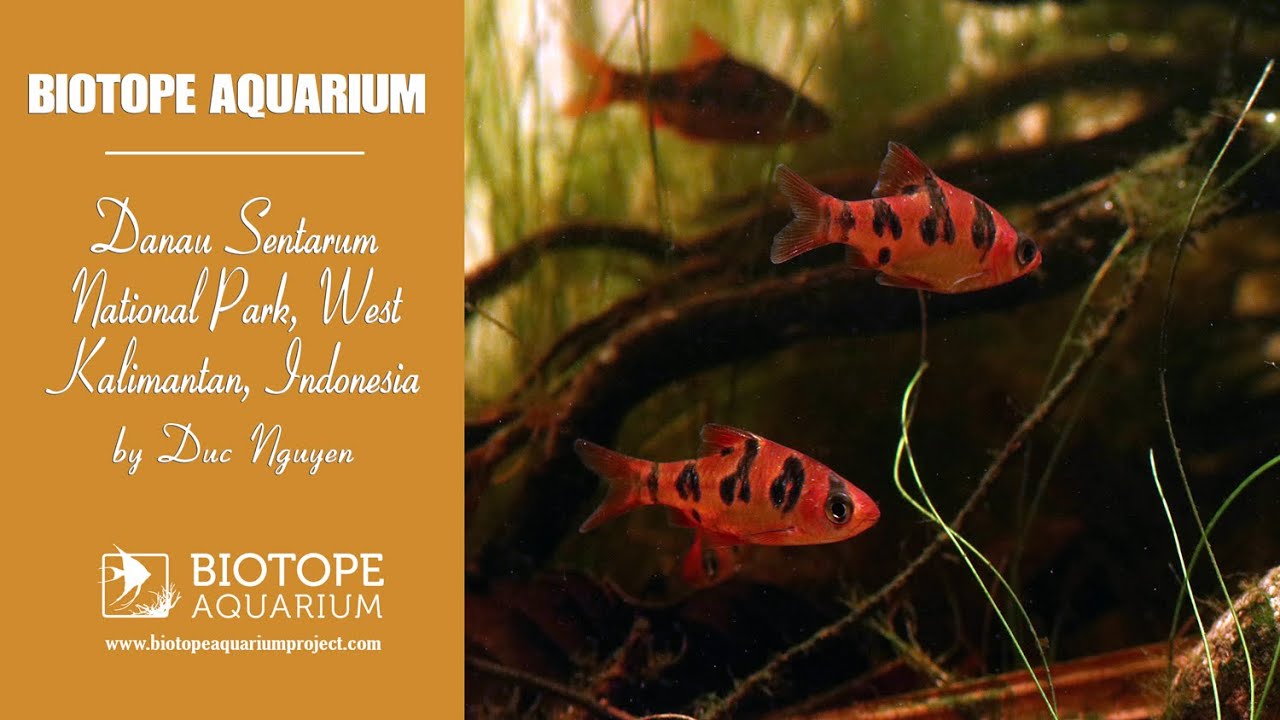
This aquarium replicates an acidic freshwater swamp environment, ideally suited for housing Desmopuntius rhomboocellatus and Sphaerichthys osphromenoides. All fish species were carefully selected from the same natural biotope, resulting in peaceful behavior, stable coexistence, and overall robust health. The environment offers ample shelter through a combination of rock crevices, submerged driftwood, and aquatic vegetation.
Additionally, the natural growth of biofilm and algae provides a small but valuable source of supplementary nutrition. Water temperature is maintained between 27-30°C, and pH levels are regularly monitored to ensure optimal conditions for fish well-being. The feeding regimen includes a balanced mix of fresh and dry foods, with appropriate proportions of protein and fiber.
Fish list:
- Sphaerichthys osphromenoides (Osphronemidae)
- Desmopuntius rhomboocellatus (Cyprinidae)
- Hemirhamphodon kuekenthali (Zenarchopteridae)
- Pangio shelfordii (Cobitidae)
- Pangio kuhlii (Cobitidae)
Mollusc list:
- Anentome helena (Nassariidae)
- Plant care
Submerged aquatic plants such as Eleocharis (hairgrass) and Cryptocoryne demonstrate remarkable resilience, requiring minimal maintenance under standard care routines. However, light duration can influence the growth of algae and biofilm on plant surfaces – an effect that closely mirrors natural conditions in the wild. A portion of this algal growth serves as a food source for the resident fish, while the excess is manually removed during regular maintenance, performed every 2 to 3 weeks.
Emergent plants such as ferns and Nepenthes are supported by an automated misting system that maintains high humidity levels. The system operates eight times per day in two-minute intervals.
Aquatic plants:
- Eleocharis sp.(Cyperaceae)
- Cryptocoryne sp. (Araceae)
Wetland plants:
- Bucephalandra sp. (Araceae)
- Bolbitis heteroclita (Dryopteridaceae)
Terrestial plants:
- Nepenthes ampullaria (Nepenthaceae)
- Water care
Water changes are performed every 2 to 3 weeks, with approximately 30% of the volume replaced each time. Additionally, water is topped off as needed to compensate for evaporation. Once a month, dried leaf clippings are boiled, cooled, and added to the tank to enrich the natural tannin content. Beneficial bacteria supplements are occasionally introduced to support biological balance. The filtration system is inspected and cleaned periodically, approximately once every six months.