bam Beginner-friendly level

Headwaters wetland, Pigeon River, Ontario, Canada

Sponsored by

Canada, Ontario, Kawartha Lakes

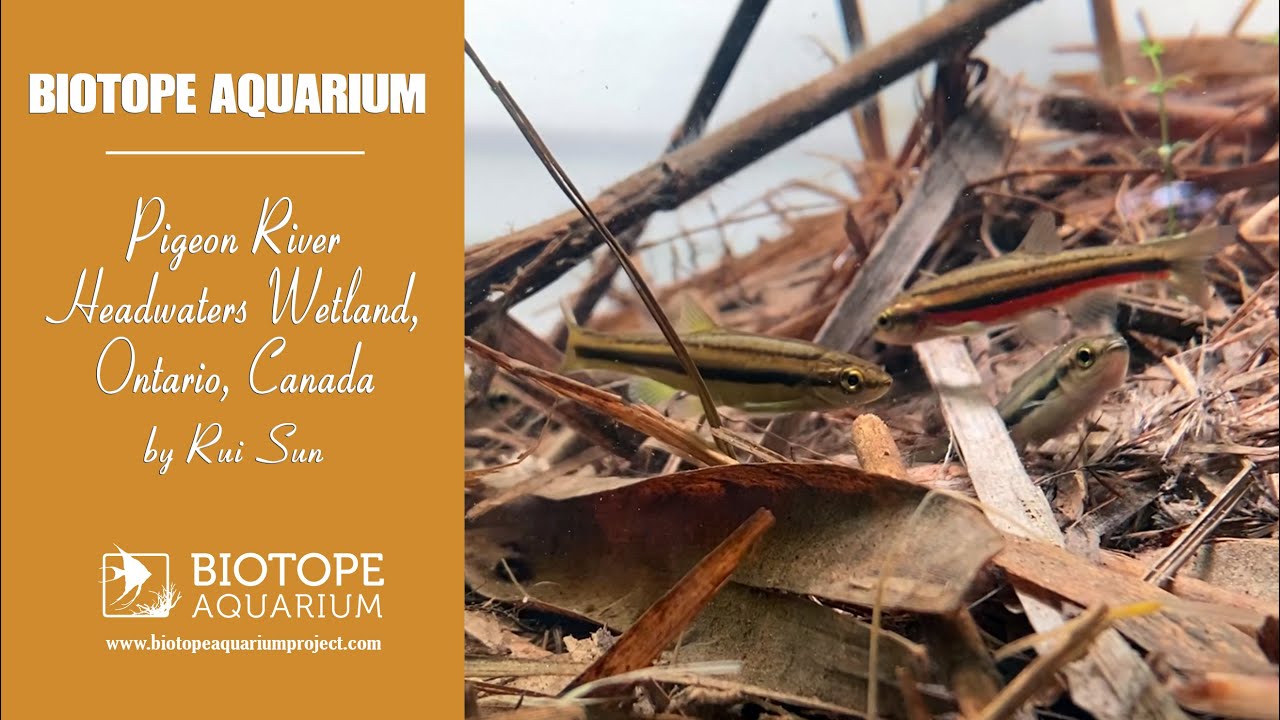
This 84L biotope aquarium recreates the shallow littoral wetland zone of the Pigeon River headwaters in Kawartha Lakes, Ontario. Inspired by field observations made during spring, the setup mimics the slow spring-fed water movement observed in nature, aiming to reflect the subdued, biodiverse, and functionally complex nature of this coldwater wetland habitat.

The aquarium features a sediment layer with naturalistic coloration, replicating the silt-mud and sand mix of the site. Submerged Ludwigia palustris provides vegetation structure, while scattered fallen reed stems and spawning sedges. The fish includes brassy minnows (Hybognathus hankinsoni), northern redbelly dace (Chrosomus eos), central mudminnows (Umbra limi), and marsh pondsnails (Ladislavella elodes), all of which are native to or observed in the original biotope.

Submitted by
Rui Sun
Approved by
Lawrence Kent, Fritz Rohde & John T. Baxter
GPS
44.2089043, -78.6827240
Geographical region
Northern America
Drainage Basin
Lake Ontario drainage basin
River catchment
Pigeon River Catchment
Water body type
Wetland
Water body name
Pigeon River Headwaters Wetland
Water body part
Marsh land
Water body course
Headwaters
Water body: tributary of
Wetland
Tributary name
Unnamed headwater tributary of the Pigeon River

Videos above and below water

Warning: Undefined variable $fish_parent in /home/biotopea/public_html/wp-content/themes/bap/content-bam.php on line 85

Warning: Undefined array key "additional_species" in /home/biotopea/public_html/wp-content/themes/bap/functions/bap-fields.php on line 349

Water Chemistry

Water information

Water type
fresh-water
Water color
Mixed water
Water transparency
High
Concentration of sediments
Low
Water temperature
20 °C
Water flow/curent
Slow

Chemical parameters

pH
6.7
Conductivity
200
GH
100 mg/l
dGH
KH
79 mg/l
dKH
Dissolved Oxygen
90 %

Aquarium information

Aquarium description

Set-up date
May, 2025
Aquarium decoration

The aquarium’s composition is carefully designed to replicate the littoral zone of a cold, spring-fed wetland found at the headwaters of the Pigeon River. The substrate consists of a natural-colored mix of fine sand, silt, and leaf litter to mimic the soft, organic bottom observed during fieldwork. The hardscape includes scattered, waterlogged reed stems—recreated using trimmed, sterilized stalks of Phragmites australis – to reflect the fallen vegetation commonly seen in the natural site.

A gentle, left-to-right water flow is created using a low-output filter positioned at the left rear corner, simulating the natural movement of water across a shallow wetland channel. Submerged Ludwigia palustris provides authentic plant structure and visual continuity with the natural habitat. The layout is kept open and lightly structured, allowing schooling and browsing behavior by Brassy Minnows, Northern Redbelly Dace, and Central Mudminnows, while Marsh Pondsnails graze across organic debris.

Aquarium equipment
  • Filtration: Fluval 207 with stainless steel in flow and out flow. 60% close of the lever on the filter allows a slow but steady flow that mimics the natural spring fed water.
  • Lighting: Chihiros WRGB2 60cm allowing underwater growth and above water grow of plants.

Fish list:

  • Umbra limi (Umbridae)
  • Chrosomus eos (Leuciscidae)
  • Hybognathus hankinsoni (Leuciscidae)

Mollusc list:

  • Ladislavella elodes (Lymnaeidae)

Aquatic plant list:

  • Ludwigia palustris (Onagraceae)

Wetland plant list:

  • Carex lacustris (Cyperaceae)


Fish care

To ensure the health and activity of the fish, I selected peaceful, cold-water species that naturally coexist in the same wetland biotope, minimizing aggression and stress. Their habitat is enriched with fine organic debris, branches, and submerged reed stems and leaves, closely resembling their native environment and encouraging natural foraging and schooling behaviors.

Water temperature is maintained at a stable 20-22°C, replicating the cool conditions of spring-fed wetlands.

A varied diet of crushed flakes and bloodworms is provided to meet their nutritional needs, promoting proper growth, color, and energy levels.

Plant care

To support healthy plant growth, I selected native aquatic and emergent species such as Ludwigia palustris and Carex lacustris, which are well-adapted to the cool, shallow water conditions of the biotope. The aquarium receives moderate full-spectrum lighting for 8–9 hours at 25w settting daily to support photosynthesis without promoting excessive algae growth.

The substrate is nutrient-rich, mimicking natural wetland soils with a mix of fine sand, silt, and organic matter to anchor roots and supply minerals. Water temperature is maintained at 20-22 °C, consistent with the plants’ natural habitat.

Water care

During the initial acclimation phase, I perform 60% water changes every three days for the first week, followed by weekly 50% changes to maintain optimal water quality. Water parameters are regularly tested to ensure a safe environment.

Dimensions

Length
90 cm
Depth
40 cm
High
25 cm
Volume
84 L

Substrate in aquarium

Sand
Beige
Pebble/Gravel
None
Stone
None
Stone form
Silt/Mud
Beige
Leaves
Adundant
Driftwood
Few
Submerged terrestrial vegetation
Yes

Comment by the expert

Lawrence Kent: Fish species are very well chosen and interesting. The mudminnow looks particularly at home. Although not aesthetically stunning, the tank looks realistic, carefully mimicking nature (e.g., gentle spring flow). Could improve with a few more vertical green stems.

Fritz Rohde: This biotope was an accurate portrayal of a disturbed habitat, which unfortunately doesn’t have “natural beauty.” Fish appeared well fed and adapted to the biotope, not skittish or hiding. Water very clear. It’s only been a couple of months since construction (May) so i’m curious how well it will mainatin the clarity etc.

John T. Baxter: I perhaps expected a more tannin-stained appearance to the water, but the reference video shows crystal clear conditions. Very represnetative and compatible group of fishes chosen.