bin
Headwaters wetland, Pigeon River, Ontario, Canada
Canada, Ontario, Kawartha Lakes
The Pigeon River Headwaters Wetland, located at the intersection of Fleetwood Rd and Chipmunk Rd in Kawartha Lakes, Ontario, is part of a cold, spring-fed tributary system within the Oak Ridges Moraine – a geologically significant landform shaped by glacial activity over 12.000 years ago. This headwater region contributes to the Lake Ontario drainage basin and is ecologically important for its role in groundwater recharge, sediment filtering, and biodiversity support.
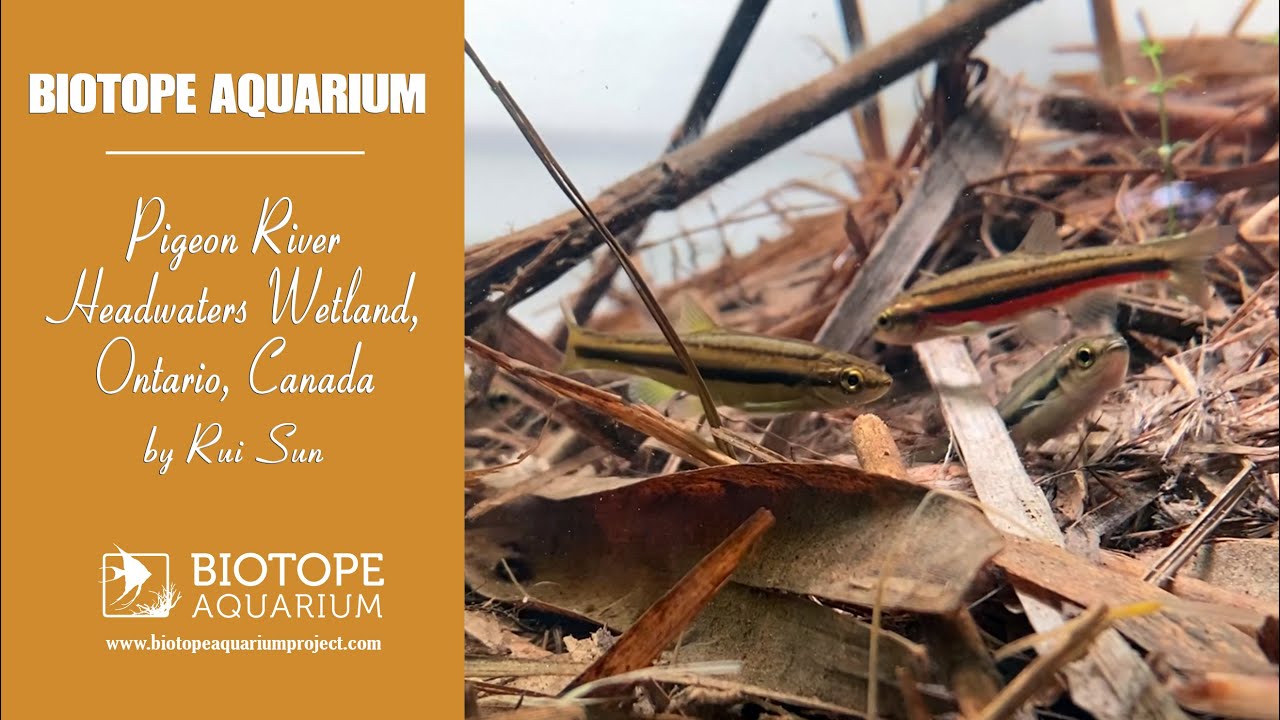
Flora includes native species such as Ludwigia palustris and likely Carex lacustris, alongside invasive Phragmites australis subsp. australis, which forms dense monocultures. Fauna observed include Northern Redbelly Dace (Chrosomus eos), Central Mudminnow (Umbra limi), Brook Stickleback (Culaea inconstans), and the Marsh Pondsnail (Ladislavella elodes).
- Submitted by
- Rui Sun
- Approved by
- Lawrence Kent, Fritz Rohde & John T. Baxter
- GPS
- 44.2089043, -78.6827240
- Geographical region
- Northern America
- Drainage Basin
- Lake Ontario drainage basin
- River catchment
- Pigeon River Catchment
- Water body type
- Wetland
- Water body name
- Pigeon River Headwaters Wetland
- Water body part
- Marsh land
- Water body course
- Headwaters
- Water body: tributary of
- Wetland
- Tributary name
- Unnamed headwater tributary of the Pigeon River
Videos above and below water
Warning: Undefined variable $fish_parent in /home/biotopea/public_html/wp-content/themes/bap/content-bin.php on line 55
Water Chemistry
Water information
- Water type
- fresh-water
- Water color
- Mixed water
- Water transparency
- High
- Concentration of sediments
- Low
- Water temperature
- 13 °C
- Water flow/curent
- Slow
Chemical parameters
- pH
- 7.5
- Conductivity
- 200
- GH
- 120 mg/l
- dGH
- KH
- 80 mg/l
- dKH
- Dissolved Oxygen
- 90 %
Substrate in nature
- Sand
- Beige
- Pebble/Gravel
- Mixed
- Stone
- Brown
- Stone form
- Roundish
- Silt/Mud
- Beige
- Leaves
- Adundant
- Driftwood
- Many
- Submerged terrestrial vegetation
- Yes
Aquatic Biotope
- Date of collecting
- May 2, 2025
- Collecting area
- Centre
- Water depth
- 0,5m
- Air temperature
- 15 °C
- Sunlight
- Partial shade
Environment
- Environment
- Affected by human activity
- Affected by human activity
- Deforestation
- Deforestation
- Initial
- Surrounding area
The wetland is situated at the edge of a rural road intersection (Fleetwood Rd & Chipmunk Rd) surrounded by mixed secondary forest, agricultural fields, and low-traffic gravel roads.
The riparian zone features native vegetation such as sedges and low shrubs, but is increasingly encroached upon by invasive Phragmites australis subsp. australis forming dense monocultures that displace native flora. Runoff from adjacent roads and farmland contributes to nutrient and sediment input, potentially affecting water quality.
- Underwater landscape
The underwater environment is a shallow littoral zone (5-30cm depth) with slow-flowing, clear water over a soft organic substrate composed of silt, decomposing leaf litter, fine sand, and submerged vegetation. Aquatic plant cover includes Ludwigia palustris and submerged portions of emergent sedges and reeds.
Terrestrial vegetation list:
- Phragmites australis (Poaceae)
- Carex lacustris (Cyperaceae)
Fish list:
- Chrosomus eos (Leuciscidae)
- Umbra limi (Umbridae)
- Hybognathus hankinsoni (Leuciscidae)
Mollusc list:
- Ladislavella elodes (Lymnaeidae)
Aquatic vegetation list:
- Ludwigia palustris (Onagraceae)
- Threats to ecology
This biotope is threatened by invasive Phragmites australis, which displaces native plants and alters wetland structure. Runoff from nearby roads and agriculture introduces excess nutrients and sediment, leading to potential eutrophication. Hydrological changes from culverts and seasonal disturbances disrupt natural water flow and habitat stability.
Additionally, the small size and roadside location make the wetland vulnerable to fragmentation, while climate change may impact water temperature and oxygen levels, posing risks to cold-water species.
Riparian zone
- Trees near the aquatic habitat
-
Many -
Comment by the expert
Lawrence Kent: Data and description of the biotope are detailed, unusual, and interesting.
Fritz Rohde: Covered well.
John T. Baxter: I felt that the Pigeon River biotope really captured the reference stream video, and had a good variety of well-suited fish.