bam Beginner-friendly level

#10937 Igapó, Upper Rio Negro tributary, Brazil

Sponsored by

Brazil, Amazonas

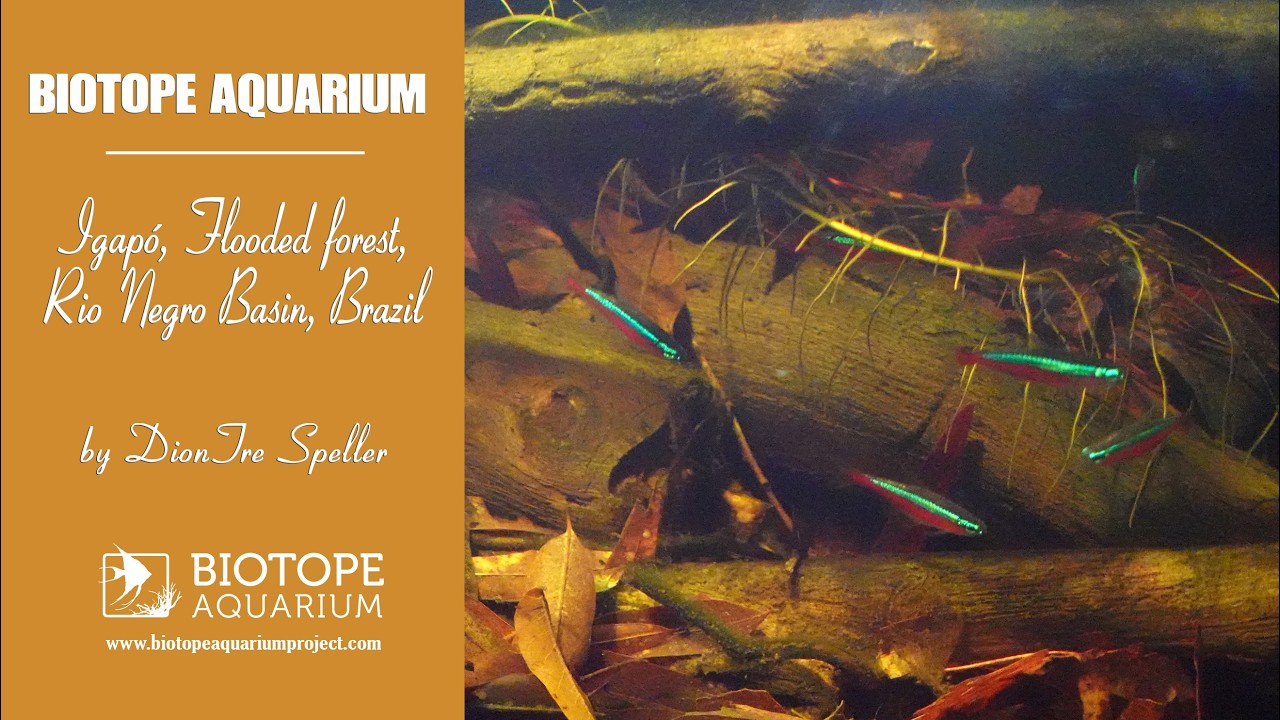
The aquarium represents a flooded forest (igapó) tributary system within the Upper Rio Negro basin, where seasonal inundation creates a complex blackwater habitat rich in submerged root structures, driftwood, and decomposing leaf litter. These environments are characterized by extremely low mineral content, acidic water conditions, and a dark tea-colored appearance caused by high concentrations of humic substances.

The aquascape was designed to replicate these ecological conditions using a deep tannin environment, layered wood structures, and a continuous leaf litter bed to simulate natural decomposition processes. The layout emphasizes horizontal flow of open water areas combined with dense structural cover to reflect the spatial complexity of submerged rainforest edges.

Submitted by
DionTre Speller
Geographical region
South America
Drainage Basin
Rio Negro Basin
River catchment
Water body type
River
Water body name
Igapó floodplain tributary
Water body part
Water body course
Water body: tributary of
River
Tributary name
Rio Negro

Videos above and below water

Warning: Undefined variable $fish_parent in /home/biotopea/public_html/wp-content/themes/bap/content-bam.php on line 85

Water Chemistry

Water information

Water type
Freshwater
Water color
Black water
Water transparency
Low
Concentration of sediments
Low
Water temperature
23 °C
Water flow/curent
Slow

Chemical parameters

pH
6
Conductivity
GH
dGH
KH
dKH
Dissolved Oxygen

Aquarium information

Aquarium description

Set-up date
February, 2026
Aquarium decoration

The aquarium was designed as a horizontal blackwater floodplain section with emphasis on submerged wood structures and accumulated leaf litter. The hardscape consists of driftwood arranged to mimic fallen branches and root tangles typical of igapó forest edges. Oak leaves were used as a functional analogue for tropical leaf litter to replicate decomposition-driven substrate layering and tannin release.

Fish:

  • Paracheirodon axelrodi (Characidae)

Wetland plant:

  • Syngonium podophyllum (Araceae)
Aquarium equipment

Standard hang-on-back filtration is used with flow reduced to maintain a slow-current blackwater environment. Heating is applied to stabilize tropical temperature conditions consistent with Rio Negro tributaries. Lighting is kept low to simulate canopy shading and reduce algae growth while enhancing the natural appearance of the dark-water environment. The lights used were an Asta 20 light and a grow light.

Equipment placement is minimized visually to avoid disrupting the natural appearance of submerged habitat structures.

Fish care

The fish are fed six times a week and fasted for one day. Their diet is varied between high-quality fish flakes and frozen brine shrimp to provide balanced nutrition. Maintaining a stable water temperature also contributes to their overall health and well-being.

Plant care

Syngonium podophyllum is maintained as an emergent wetland plant, with its leaves growing above the water surface and its roots submerged within the aquarium. The submerged root system provides additional habitat complexity for fish and microorganisms while contributing to nutrient uptake and water quality improvement. The leaves also create additional shade, helping to replicate the reduced light conditions found in flooded forest environments.

Water care

A 20–30% water change is performed weekly to maintain stable water quality and overall aquarium health. Additional leaves are added every two weeks to simulate the continuous input of falling botanical material found in natural flooded forest environments and to maintain the leaf litter layer.

Dimensions

Length
76 cm
Depth
30 cm
High
30 cm
Volume
75.7 L

Substrate in aquarium

Sand
Beige
Pebble/Gravel
None
Stone
None
Stone form
Silt/Mud
Beige
Leaves
Adundant
Driftwood
Many
Submerged terrestrial vegetation
None