bin
Igapó, Upper Rio Negro tributary, Brazil
Brazil, Amazonas
The Rio Negro basin in the upper Amazon is one of the largest blackwater systems in the world, characterized by extremely acidic, nutrient-poor waters stained dark brown by humic substances released from decomposing forest material. These flooded forest environments, known as igapó, undergo seasonal inundation that transforms the forest floor into a submerged aquatic habitat.
Aquatic life in these systems has evolved under conditions of very low mineral content, limited visibility, and high concentrations of natural tannins. Fish communities are typically composed of small schooling species adapted to soft water and dense submerged root systems.
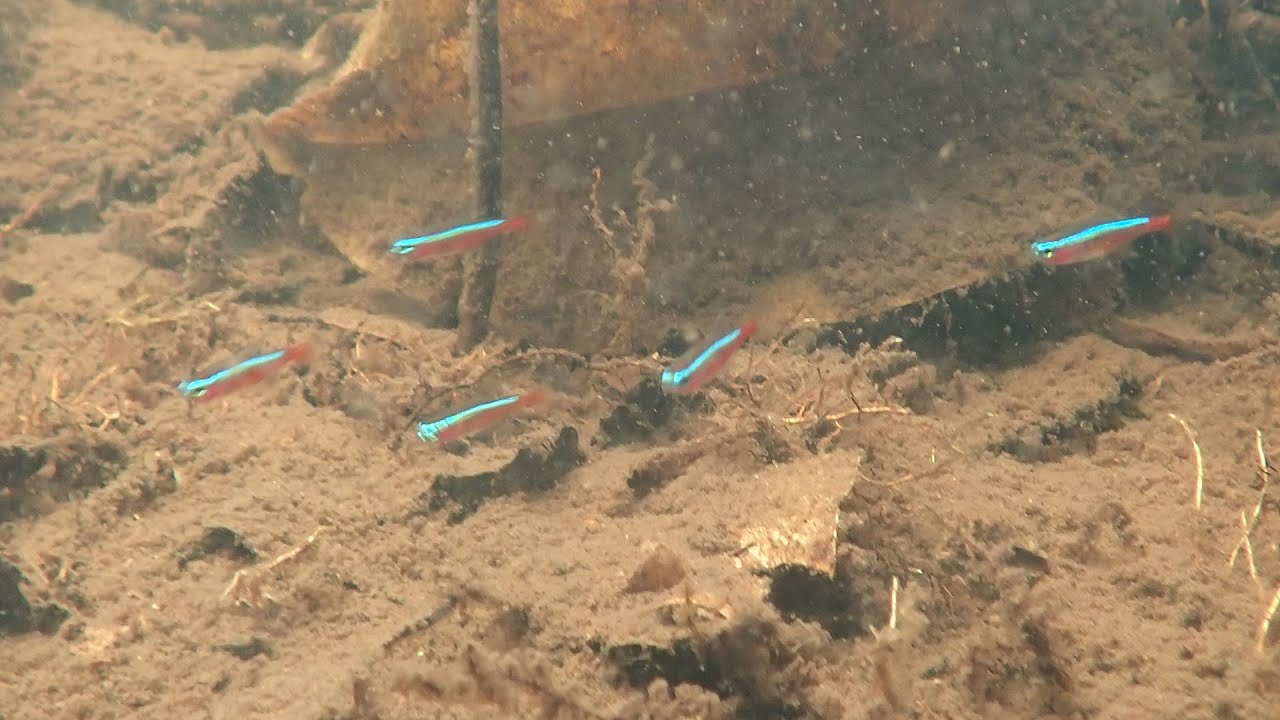
This biotope was selected because of its ecological importance within the Amazon Basin and its distinctive blackwater conditions, which create a highly specialized environment for species such as Paracheirodon axelrodi.
- Submitted by
- DionTre Speller
- Approved by
- Roberto E. Reis, Pablo C. Lehmann & Antonio Machado-Allison
- Geographical region
- South America
- Drainage Basin
- Rio Negro Basin
- River catchment
- Water body type
- River
- Water body name
- Igapó floodplain tributary
- Water body part
- Water body course
- Water body: tributary of
- River
- Tributary name
- Rio Negro
Videos above and below water
Warning: Undefined variable $fish_parent in /home/biotopea/public_html/wp-content/themes/bap/content-bin.php on line 55
Water Chemistry
Water information
- Water type
- Freshwater
- Water color
- Black water
- Water transparency
- Low
- Concentration of sediments
- Low
- Water temperature
- 24-28 °C
- Water flow/curent
- Slow
Chemical parameters
- pH
- Conductivity
- GH
- dGH
- KH
- dKH
- Dissolved Oxygen
Substrate in nature
- Sand
- Beige
- Pebble/Gravel
- None
- Stone
- None
- Stone form
- Silt/Mud
- Beige
- Leaves
- Adundant
- Driftwood
- Many
- Submerged terrestrial vegetation
- Yes
Aquatic Biotope
- Date of collecting
- October, 2025
- Collecting area
- Flooded area
- Water depth
- 0,5m
- Air temperature
- Sunlight
Environment
- Environment
- Affected by human activity
- Affected by human activity
- Deforestation
- Deforestation
- Advanced
- Surrounding area
The surrounding area consists of lowland tropical rainforest within the Upper Amazon Basin, specifically the Rio Negro drainage. The landscape is dominated by dense, seasonally flooded forests (igapó), where flat terrain allows river systems to expand laterally during periods of high water.
These regions are characterized by nutrient-poor, sandy soils and extensive forest cover, with minimal elevation change. During seasonal flooding, large portions of the forest floor become submerged, creating a transition zone between terrestrial and aquatic environments. The absence of significant sediment input results in exceptionally clear yet dark-stained waters, shaped primarily by dissolved organic matter rather than suspended particles.
Fish:
- Nannostomus sp. (Lebiasinidae)
- Paracheirodon axelrodi (Characidae)
- Carnegiella strigata (Gasteropelecidae)
- Crenicichla sp. (Cichlidae)
- Cichla temensis (Cichlidae)
Aquatic plant:
- Utricularia sp. (Lentibulariaceae)
Wetland plant:
- Syngonium podophyllum (Araceae)
- Underwater landscape
The underwater environment is structurally complex but biologically sparse in terms of plant growth. The substrate is composed primarily of fine sand and decomposing organic material, including a thick layer of fallen leaves, twigs, and woody debris.
Submerged root systems and fallen branches form intricate networks that provide shelter and orientation points for fish species. Visibility is low due to the dark coloration of the water, and light penetration is minimal because of both the dense canopy cover and the high concentration of tannins.
Aquatic vegetation is generally absent or extremely limited in these environments. Instead, ecological structure is driven by physical elements such as wood, roots, and leaf litter rather than living plant biomass. These features create microhabitats that support small invertebrates and provide feeding grounds for species such as Paracheirodon axelrodi.
- Threats to ecology
Despite their remote nature, Rio Negro blackwater ecosystems face increasing environmental pressures. Deforestation in surrounding regions can disrupt the natural input of organic matter and alter hydrological cycles, affecting water chemistry and habitat structure.
Climate change poses a significant threat by altering rainfall patterns and flood cycles, which are critical for maintaining igapó ecosystems. Changes in seasonal flooding can affect breeding cycles, food availability, and habitat accessibility for aquatic species.
Additionally, human activities such as mining, logging, and expanding infrastructure increase the risk of pollution and habitat fragmentation. Although blackwater systems are naturally low in nutrients, they are highly sensitive to chemical disturbances, making them vulnerable to even minor environmental changes.
Riparian zone
- Trees near the aquatic habitat
-
Many -
Comment by the expert
Roberto E. Reis: Description of location fair, but few photos/videos. Diversity of fish and other organisms described pretty low. Bibliography absent.
Pablo C. Lehmann: A coherent but fairly generic Upper Rio Negro/igapó overview. The surrounding-area and underwater descriptions are reasonable, and the fish/plant list has moderate diversity, though several identifications remain only at genus level and invertebrates are absent. The largest weakness in the habitat criterion is the complete absence of measured pH, conductivity, hardness and dissolved oxygen. Source quality is also weak: the references are mainly Wikipedia and aquarium-hobby websites rather than primary scientific or locality-specific literature.
Antonio Machado-Allison: Good.