bam Beginner-friendly level

Lake of the Societies, Kolkata, India

Sponsored by

India, West Bengal, Kolkata Municipal Corporation

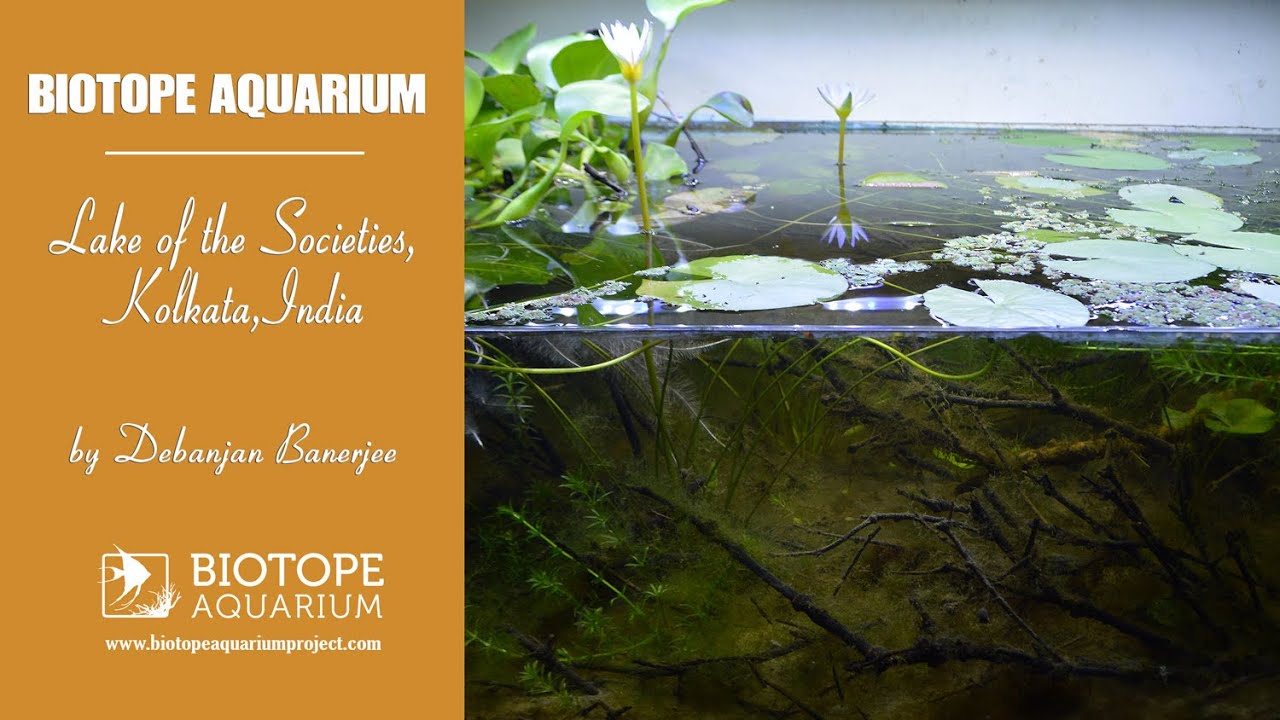
The 135L aquarium is a small replica of the beautiful natural Lake of the Societies, Kolkata, India.

I was mostly motivated by seeing the fact that not much of data on the internet is available on Brachygobius nunus habitat. There are very few audio visual data which motivated me last year to work on a water body that consists a beautiful nano fish. Brachygobius nunus are mostly carnivorous and nocturnal which is also an amazing thing to witness very closely in an aquarium.

This aquarium is replicated as much as possible with the original biotope using wild collected proper aquatic plants and floaters from the lake. It was an amazing experience seeing this tiny creatures crossing through dense foliage’s and hardscape. Also the natural shading from the Nymphea pods and water hyacinth roots gave the aquarium a shade for the fishes to feel safe.

Submitted by
Debanjan Banerjee
Approved by
Hans-Georg Evers & Friedrich Bitter
GPS
22.4533138, 88.3024902
Geographical region
Southern Asia
Drainage Basin
Southwest
River catchment
Hooghly River
Water body type
Lake
Water body name
Lake of the Societies
Water body part
Open water
Water body course
Source
Water body: tributary of
Tributary name

Videos above and below water

Warning: Undefined variable $fish_parent in /home/biotopea/public_html/wp-content/themes/bap/content-bam.php on line 85

Warning: Undefined array key "additional_species" in /home/biotopea/public_html/wp-content/themes/bap/functions/bap-fields.php on line 349

Water Chemistry

Water information

Water type
fresh-water
Water color
Clear water
Water transparency
High
Concentration of sediments
High
Water temperature
29.4 °C
Water flow/curent
Slow

Chemical parameters

pH
8.2
Conductivity
140
GH
dGH
KH
7 mg/l
dKH
Dissolved Oxygen
7 %

Aquarium information

Aquarium description

Set-up date
November, 2024
Aquarium decoration

The composite of wood, plants and soil is very minimalistic and tricky on making this biotope tank. I used clay soil as a substrate medium and let it sink in for more than a year to get the desired beige color. Also in this 1 year period the clay soil became less course and gets compact over time like in nature.

I collected a tree branch locally, washed it and let it release the tannins in the water body very naturally. After than I introduced some Nitella and Cladophora algae to on the centre top of the wood and soil to make it look like the sunlight exposed areas of the lake.

After a month I added the floaters and Nymphaea nouchali on the left. My goal was to not letting the algae grow everywhere on the aquarium. I also did pruning and removed chunks of algae so the fishes can roam freely, hunt and take rest on them.

After a period of 3 months I added the Hydrilla and after adding that the gobies started to breed in the tank though I don’t know what happened to the fries. Lastly water hyacinths were added to give the tank the desired look and provide shade in the tank.

Aquarium equipment

A Sunsun JY-03 surface skimmer was added from the very day for aeration and filtration of the tank. I cleaned it once in a month.

As the biotope is replicating a waterbody that doesn’t have flow, the surface skimmer well hidden behind the Hydrilla plants did the job well. The Hydrilla absorbed the primary waves. For lighting I used Sobo and Sunsun lights daily for 6 hours.

Fish care

To recreate the habitat of the lake, I have added water hyacinths and Azolla to cover up some of the surface area which let me control the light to reach the bottom of the tank in which fishes feel a lot safer. As these are wild caught fish, I fed them tubifex worms. I fed them every alternate days so that they can digest the heavy protein diet.

Fish list:

  • Brachygobius nunus (Oxudercidae)

Mollusc list:

  • Planorbarius sp. (Planorbidae)


Plant care

The aquatic plants used in this aquarium are very easy to grow and requires low maintenance. 6 hours of photo period and nutrient rich clay soil was enough for them to thrive. I only trimmed the decaying leaves, pods and flower buds.

Aquatic plant list:

  • Hydrilla verticillata (Hydrocharitaceae)
  • Nymphaea nouchali (Nymphaeaceae)
  • Pontederia crassipes (Pontederiaceae)

Aufwuchs list:

  • Nitella sp. (Characeae)
  • Cladophora sp (Cladophoraceae)
  • Azolla sp. (Salviniaceae)
Water care

I did timely water changes so the water parameter doesn’t stress out the fishes. Also I added beneficial bacteria after every water changes and during the first 3 weeks of building the tank. I gently started doing water changes by not disturbing the clay soil, on twice a week to 4 times a month after completion of 1 month. From the 3rd month I started doing water changes twice a month.

Dimensions

Length
90 cm
Depth
60 cm
High
25.4 cm
Volume
135 L

Substrate in aquarium

Sand
None
Pebble/Gravel
None
Stone
None
Stone form
Silt/Mud
Beige
Leaves
None
Driftwood
Many
Submerged terrestrial vegetation
None

Bibliography

  • → JEEST by Tohap Simangunsong, Jefri Anjaini, Petrus Hary Tjahja Soedibya, Chun-Hung Liu

Sitography

→ Seriouslyfish

Comment by the expert

Hans-Georg Evers: Good copy of nature. Maybe some more open space recommended for better view

Friedrich Bitter: Very accurate and meticulously designed aquarium that absolutely corresponds to a natural biotope.